

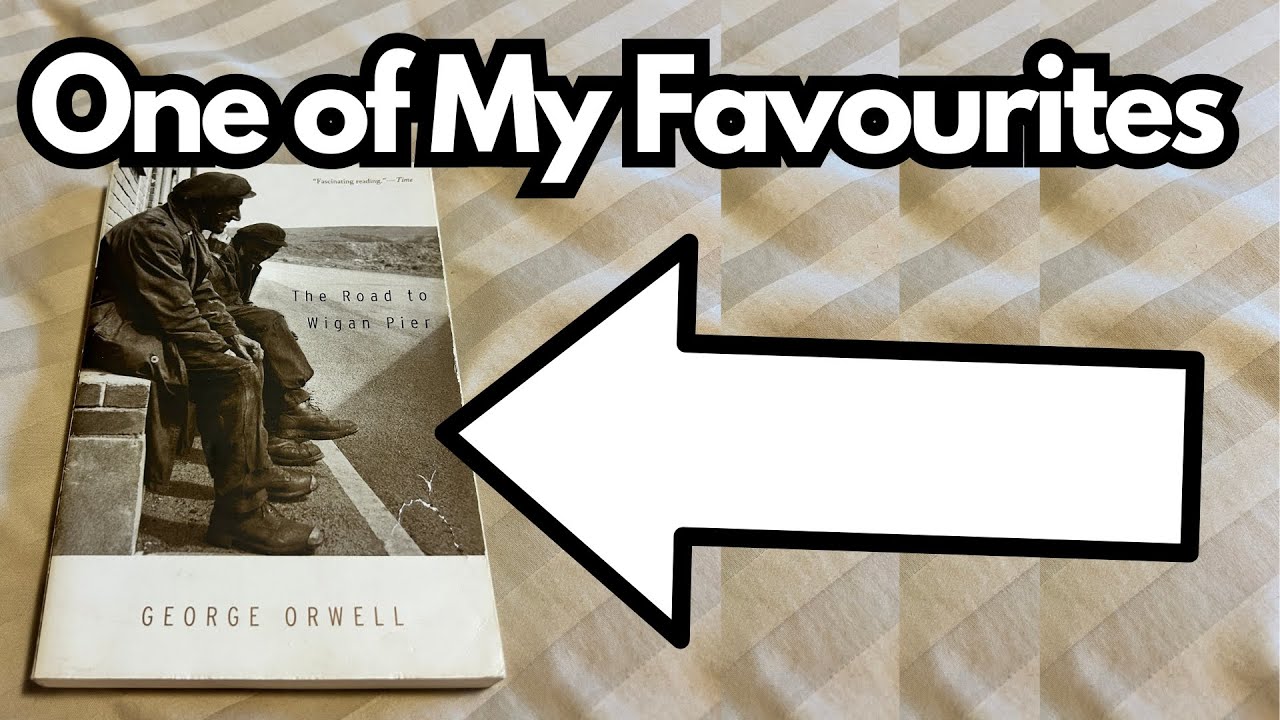
George Orwell’s The Road to Wigan Pier isn’t as instantly famous as Animal Farm or 1984, but it’s one of his most powerful and relevant works—especially if you care about class, politics, or how ideas get divorced from real life.
This book is for you if:
- You’re interested in working‑class life and social justice.
- You want to understand socialism beyond slogans and social media.
- You like Orwell’s writing and want to see where a lot of his thinking really crystallized.
Below is a quick guide to what the book is, why it matters, and why it still feels uncomfortably current. You can grab it here on Amazon if you’re interested.
Overview / First Impressions
The Road to Wigan Pier is essentially two books in one:
- A documentary-style account of working‑class life in 1930s industrial England, especially coal miners and their families.
- An intellectual and political critique of how socialism is presented and who tends to champion it.
Both halves are strong in different ways. The first is vivid, physical, and often brutal. The second is sharp, analytical, and sometimes scathing. Together they form a kind of reality check: what life is actually like for workers, and how disconnected a lot of self‑described socialists are from that reality.
Orwell’s publisher originally wanted to cut the more argumentative part of the book, but keeping both halves is exactly what makes it so compelling. You get the lived experience and the political analysis side by side.
General Vibe of the Book
Think of this less like a smooth, glossy “product” and more like a well-used, road‑worn instrument: it’s raw, honest, and built to be used, not admired from a distance.
- Structure: Two distinct parts—reportage first, critique second.
- Tone: Clear, direct, and unpretentious. Orwell doesn’t hide behind jargon.
- Style: He blends storytelling, observation, and argument in a way that keeps you turning pages even when the subject matter is heavy.
There’s no fluff here. Every chapter serves the overall purpose: to show what working‑class life really looks like and then to interrogate the politics that claim to speak for it.
Features & Functions
Here’s what the book actually does:
1. Documents Working‑Class Life
Orwell spends time in mining towns, boarding houses, and slums. He describes:
- The conditions coal miners work in.
- The cramped, unhealthy housing.
- The daily grind and physical toll of manual labor.
It’s not romanticized. It’s not theoretical. It’s observational and often shocking.
2. Critiques Middle‑Class Socialism
In the second half, Orwell turns his attention to socialist intellectuals and activists—especially those from comfortable, educated backgrounds. He argues that:
- Many socialists are out of touch with real working‑class experience.
- They often come across as snobbish, eccentric, or hostile to ordinary tastes and habits.
- Their cultural attitudes can actively push away the very people they claim to represent.
He’s not attacking the idea of socialism so much as the way it’s packaged and presented by people who have never done physical labor or lived in real poverty.
3. Explores Class and Perception
A big part of the book is about how different classes see each other:
- The working class often distrusts “posh” socialists.
- Middle‑class socialists can be blind to their own prejudices and assumptions.
- Both sides misunderstand each other in ways that sabotage real change.
Use Cases for the Book / Who It’s For
If this were a piece of gear, it would be that brutally honest amp that shows every detail of your playing—no sugar‑coating, no effects to hide behind.
You’d “use” this book when you want:
- Reality, not theory – It grounds big political ideas in actual lived conditions.
- Perspective on modern discourse – A lot of what Orwell describes about 1930s socialists feels eerily similar to how some modern political conversations play out, especially online.
- A check on your own assumptions – Whether you lean left, right, or neither, it forces you to ask: “Do I really understand the people I claim to care about or talk about?”
For anyone who talks about “the working class,” “the poor,” or “ordinary people,” this is a necessary reality check.
Limitations / Things to Know
A few points to keep in mind:
- It’s of its time. The setting is 1930s industrial England. Some references and attitudes are dated, and some language may feel harsh by today’s standards.
- It can be uncomfortable. Orwell doesn’t spare anyone—not the rich, not the poor, and not the well‑meaning intellectuals. If you’re used to sanitized political writing, this can feel abrasive.
- It’s not a simple manifesto. If you’re looking for a clean, one‑page “here’s the solution” political program, you won’t find it. It’s more about diagnosis than prescription.
That said, the core insight—about the gap between those who talk about social change and those who live the conditions that need changing—is still laser‑sharp.
Why It Feels So Relevant Now
One of the most striking things about The Road to Wigan Pier is how current it feels. The dynamic Orwell describes is still everywhere:
- People who talk about socialism or class politics are often university‑educated and relatively comfortable.
- They speak passionately about workers and the poor but have never done manual labor or lived in real deprivation.
- There’s often a cultural and class gap between activists and the people they say they represent.
That disconnect shows up today in online debates, political campaigns, and media commentary. Orwell saw it clearly almost a century ago, and his analysis still maps neatly onto our moment.
Final Thoughts
The Road to Wigan Pier may not be as famous as Animal Farm, but it’s every bit as important—and in some ways, more directly connected to real life.
It’s a book that:
- Shows you what working‑class life actually looked like in industrial England.
- Challenges the way political ideas are presented by people far removed from the realities they’re describing.
- Forces you to think hard about class, authenticity, and who gets to speak for whom.
If you care about politics, class, or just honest writing about real people, this is absolutely worth your time. It’s sharp, uncomfortable, and incredibly relevant—and that’s exactly why it matters.