

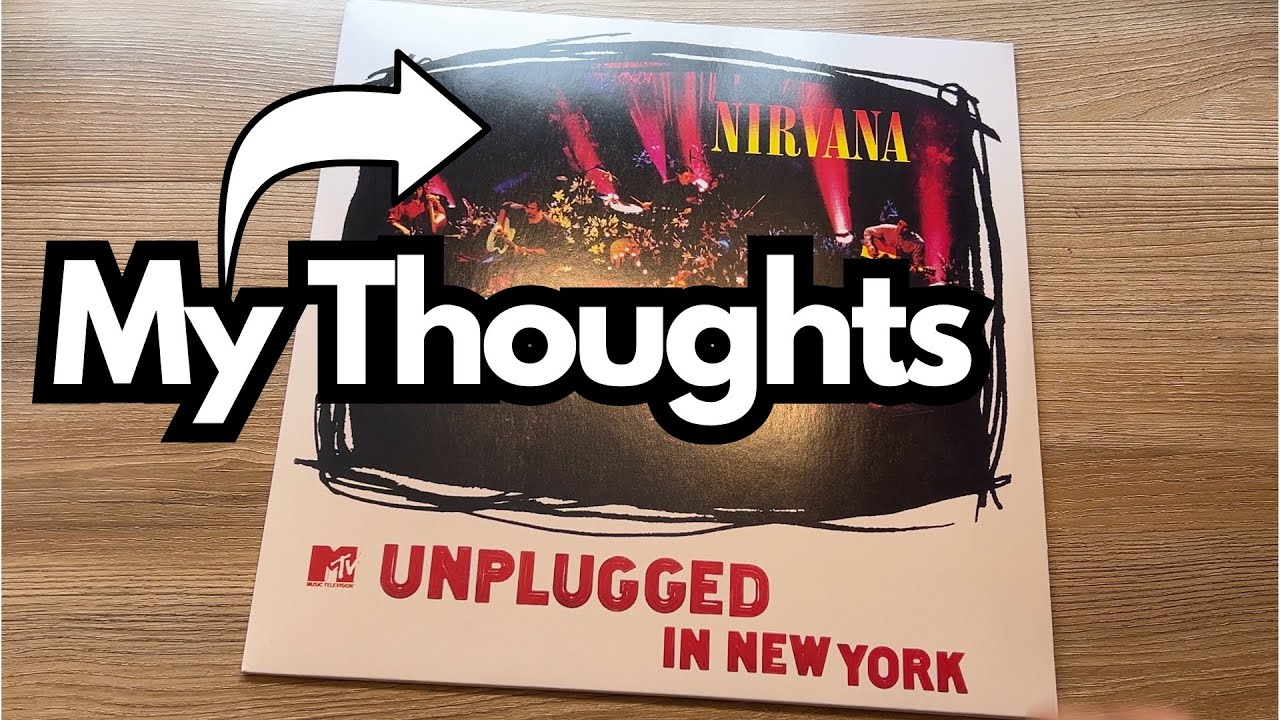
Nirvana’s MTV Unplugged in New York (on Amazon) isn’t just another live record—it’s one of the most important documents of rock music in the ’90s. For guitarists and music fans alike, it’s a masterclass in how powerful songs can be when you strip away the distortion, the stacks of amps, and the studio sheen.
If you mainly know Nirvana for the chaos of Nevermind or In Utero, this album shows a very different side of Kurt Cobain: raw, vulnerable, and painfully human.
Overview / First Impressions
Recorded for MTV’s Unplugged series and released just months before Kurt Cobain’s death, MTV Unplugged in New York has taken on an almost mythic status. Interestingly, it wasn’t instantly hailed as a masterpiece when it first came out. People liked it, but it didn’t carry the same weight it does now.
In hindsight, the context around it is impossible to ignore. Knowing what happened shortly after the performance, listeners hear every crack in Cobain’s voice, every lyric, and every moment of silence through a different lens. That emotional weight has turned a “good live album” into something iconic.
From a guitarist’s perspective, it’s also a fascinating document of how a band known for loud, distorted grunge can translate their songs—and other people’s songs—into a stripped-down, acoustic setting without losing impact.
Build Quality & Design (The Show, Not the Gear)
This isn’t a pedal or amp review, but it’s worth talking about the “design” of this performance, because it’s part of what makes the record so compelling.
The set is intentionally understated:
- Dim lighting and candles
- Simple staging
- No big rock theatrics
- A band that looks almost uncomfortable with the spotlight
Visually and sonically, it feels fragile. Cobain doesn’t come across like a polished TV performer; he seems guarded, tired, and at times deeply unhappy. At the time, many people assumed that was just part of his persona and the band’s brand—aloof, disaffected, grunge cool. With hindsight, it’s clearer that he was struggling.
That tension—between the intimacy of the setting and the visible discomfort of the frontman—adds a layer of intensity to every performance.
Features & Functions (What’s On the Album)
What makes MTV Unplugged in New York stand out from other Unplugged sessions is the song choice. Nirvana didn’t just run through their biggest hits acoustically; they crafted a set that leans heavily on covers and deep cuts.
Key elements:
- Covers from unexpected influences:
- Meat Puppets – Several songs from their catalog, with the Meat Puppets themselves joining onstage.
- David Bowie – A haunting version of “The Man Who Sold the World.”
- Lead Belly – “Where Did You Sleep Last Night,” which closes the album in devastating fashion.
- The Vaselines – Another nod to Cobain’s love of underground and alternative bands.
- Nirvana originals reimagined:
- Stripped-down versions of their own material that highlight songwriting over volume.
- Acoustic arrangements that rely more on dynamics, chord voicings, and vocal delivery than on distortion and aggression.
For guitar players, this album is a reminder that a strong song survives any arrangement. The way Cobain and the band rework these tunes shows how much power there is in simple chords, strong melodies, and honest delivery.
How It Sounds / Use Cases (For Listeners and Guitarists)
Sonically, the record is raw in the best way. It doesn’t sound like a pristine studio album; it sounds like a real band in a room, playing on the edge of their comfort zone.
From a guitarist’s angle, this album is great for:
- Studying stripped-down arrangements
Hear how to take rock songs and present them with acoustic guitars without losing edge or emotion. - Learning alternative covers
The Meat Puppets, Bowie, Lead Belly, and Vaselines tracks are a goldmine if you’re looking for non-obvious cover songs to add to your own set. - Understanding dynamics and space
The band leaves a lot of space in the arrangements. Notes ring out. Silence is used intentionally. It’s a good lesson in not overplaying. - Appreciating imperfection
This is not a “perfect” performance in a clinical sense—and that’s exactly why it feels so alive. Slight imperfections make it human and relatable.
If you’re a guitarist who’s mostly lived in the world of high gain and loud amps, this record is a powerful argument for learning how to make an acoustic set just as intense as a full electric show.
Limitations / Things to Know
A few things to keep in mind:
- It’s not a “best-of Nirvana” show.
If you’re expecting a hit parade of all the big singles, this isn’t that. The strength of the set lies more in mood and curation than in chart-toppers. - The vibe is heavy.
Cobain doesn’t look or sound like a guy having a great time. That emotional weight is part of what makes the album so compelling, but it also makes it a more intense listen than a typical live record. - The rawness may not be for everyone.
If you prefer super-polished live albums, the slightly rough edges here might feel jarring. For many fans, though, that’s exactly what makes it special.
Final Thoughts
MTV Unplugged in New York has earned its place as one of the great live albums—not just because of the tragedy that followed, but because of the performance itself. It’s raw, unguarded, and unpolished in a way that feels almost impossible in today’s hyper-edited world.
For guitarists, it’s a must-hear example of:
- How to reinvent songs in an acoustic context
- How covers can reveal your influences and expand your sound
- How vulnerability and imperfection can be more powerful than technical perfection
Even if you already know Nirvana’s studio albums inside out, this record shows you a different band: quieter, more fragile, and, in many ways, more real.