

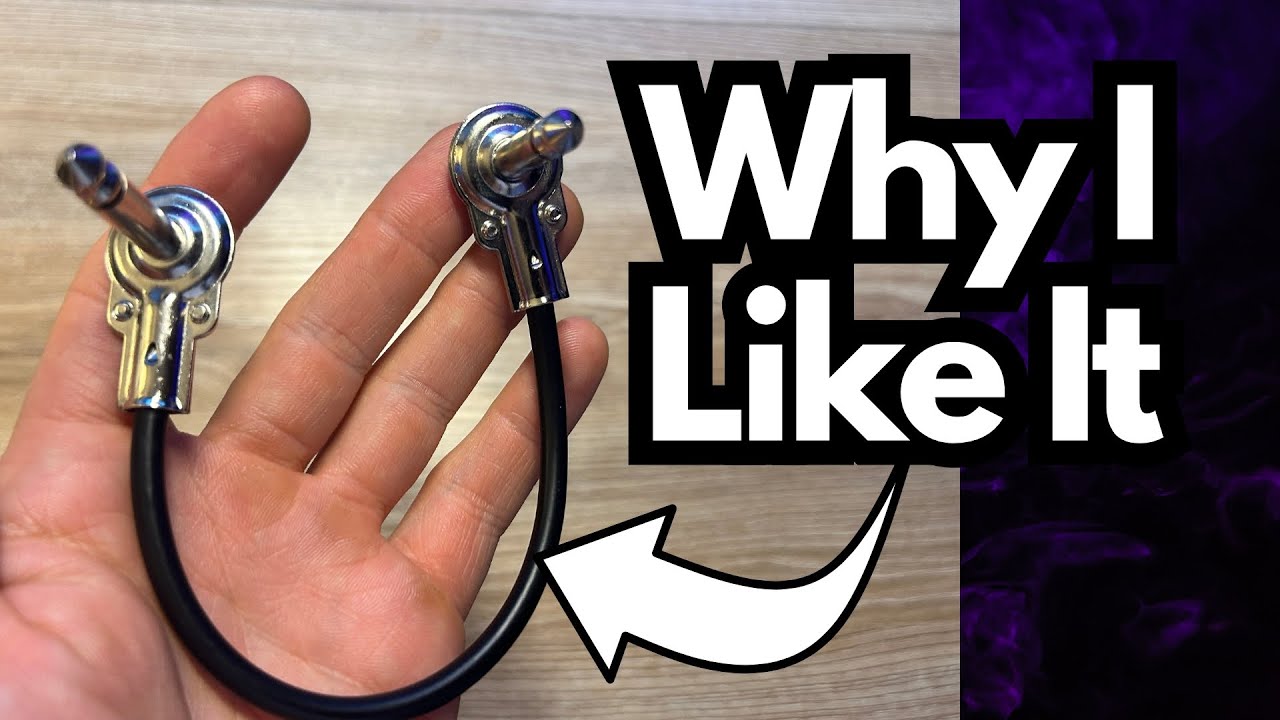
If you’ve ever tried to squeeze one more pedal onto an already crowded board, you know how much patch cables can make or break your layout. Bulky plugs and stiff cable runs waste space and force awkward routing. That’s where the Hosa patch cables really shine (grab’em here on Amazon).
These are the patch cables I keep buying for my own boards. They’re simple, affordable, and designed in a way that just makes sense for guitarists who care about both tone and pedalboard real estate.
Overview / First Impressions
Hosa patch cables are pretty unassuming at first glance: short, right‑angle patch leads with classic pancake plugs and a thin, flexible cable.
What stands out once you start using them is how little space they take up and how easy they are to route between pedals. If you’re trying to:
- Fit more pedals onto a tight board
- Keep your layout clean and low‑profile
- Avoid big plugs sticking out and getting in the way
these are exactly the kind of patch cables you want in your setup.
I currently have about six of them in rotation, and they’ve become my go‑to choice whenever I’m wiring or re‑wiring a board.
Build Quality & Design
Low‑Profile Pancake Plugs
The biggest win here is the pancake‑style plug design. Unlike chunkier right‑angle connectors, these sit very flat against the pedal jacks.
- They barely protrude from the pedal, which is perfect for cramped layouts.
- You can place pedals closer together without worrying about plugs colliding.
- They’re especially useful with side‑mounted jacks, where every millimeter counts.
On a compact pedal (like a small drive or tuner), the Hosa plug hugs the side of the pedal instead of jutting out. This gives you more freedom in how you arrange everything on your board.
Flexible Cable Jacket
The cable itself uses a very soft, flexible rubber jacket:
- It bends easily without feeling like it’s fighting you.
- It molds to whatever path you need between pedals.
- You don’t get that annoying springy effect that tries to pull pedals out of place.
This flexibility is a big deal when you’re routing around power supplies, under risers, or between pedals with awkward jack placements.
Features & Functions
Here’s what you’re getting with these Hosa patch cables:
- Right‑angle pancake plugs – Ultra low‑profile, ideal for tight spaces.
- Flexible rubber cable – Easy to route in any direction.
- Short length (typical patch size) – Keeps your signal path clean and your board tidy.
- Plug‑and‑play reliability – They just work the way patch cables should.
They’re not trying to be boutique, ultra‑premium cables with exotic materials. They’re designed to be practical, space‑saving workhorses for real‑world pedalboards.
How They Work on a Pedalboard
From a guitarist’s perspective, these cables really start to shine when you’re actually building or rearranging a board.
Space Saving
Because the plugs are so flat and low‑profile:
- You can push pedals closer together horizontally.
- You can line up pedals with side jacks much more efficiently.
- You avoid cables sticking out and catching on things when you move the board.
If you’re using a tight board or a small case, that extra space can be the difference between leaving a pedal at home and bringing your full rig.
Easy Routing
The flexible rubber makes it simple to:
- Run cables in tight U‑shapes between adjacent pedals.
- Tuck cables under other cables or around power leads.
- Keep everything neat without having to fight stiff cable runs.
For players who tweak their boards a lot, this flexibility makes the whole process less frustrating.
Limitations / Things to Know
No piece of gear is perfect, and it’s worth knowing what these are and aren’t:
- Not boutique cables – If you’re chasing ultra‑high‑end, audiophile‑grade patch cables with exotic shielding and conductors, these aren’t positioned in that category. They’re solid, practical, and affordable.
- Pancake plug clearance – While pancake plugs save space, they can be a bit wide sideways. On some pedals with very closely spaced jacks, you’ll want to check that two pancakes fit side by side without crowding.
- Standard lengths – They’re great for typical pedal‑to‑pedal connections. If you need custom or very specific lengths, you might eventually look into solder‑your‑own solutions. For most players, though, the standard Hosa options are more than enough.
Despite these minor considerations, they do exactly what you expect them to do—and they do it reliably.
Final Thoughts
Hosa patch cables have become my default choice for wiring pedalboards because they solve two of the biggest headaches guitarists face: wasted space and unruly cables.
- The pancake plugs keep everything low‑profile and out of the way.
- The flexible rubber cable makes routing painless.
- They’re reliable and affordable, so you can stock up without overthinking it.
If you’re building a new board or cleaning up an existing one, these are absolutely worth using as your main patch solution. I’ll keep buying them as I expand or reconfigure my own setups—they just work.
Resources & Further Study
If you’re looking for something musical to work on once your board is dialed in, there are a couple of useful resources worth checking out:
- Fretboard Memorization Cheat Sheet – Available at
travelingguitarist.com/fretboard-cheat-sheet
This focuses on major and minor triads in every key, using octave mapping and other techniques to help you:- Memorize the notes on the fretboard
- Understand the triadic foundation of harmony
- Improvise more confidently across multiple keys
- Guitar & Music Forum – At
forum.travelingguitarist.com
A place to talk guitar, music, and related topics with other players, ask questions, and share ideas as you refine both your tone and your technique.