

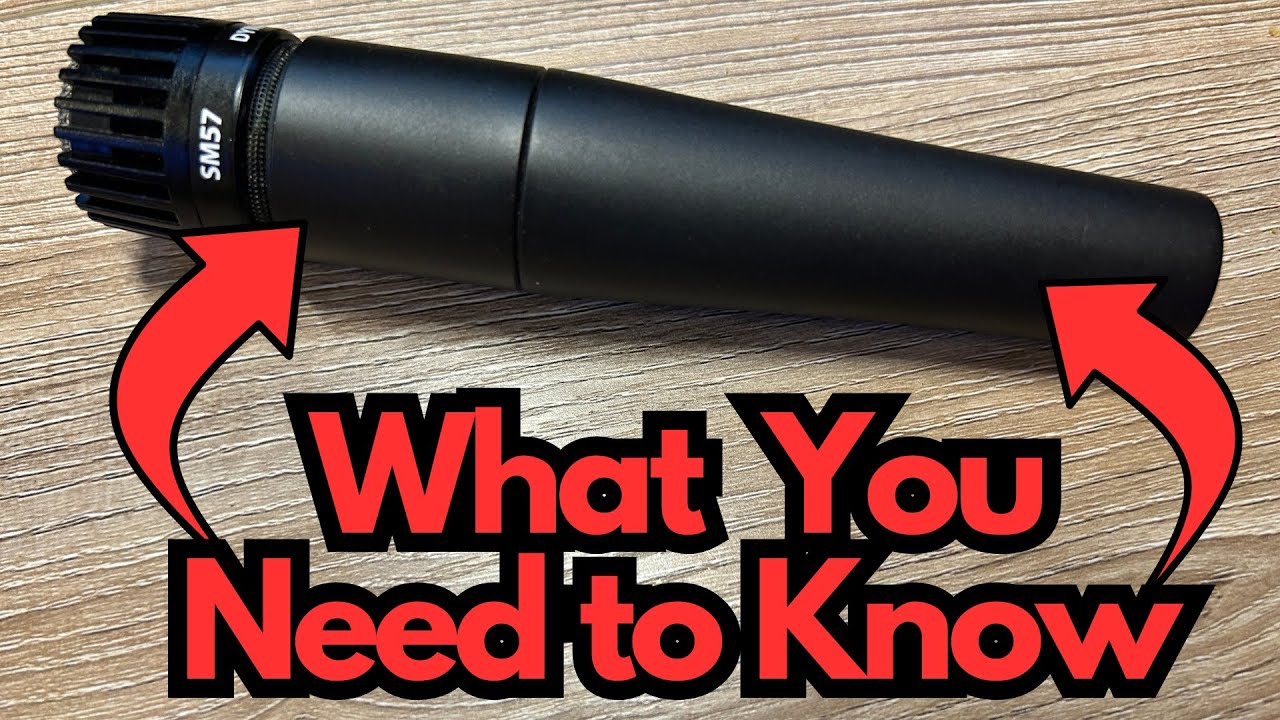
If you’ve spent any time around guitar players, studios, or live stages, you’ve heard of the Shure SM57. It’s one of those mics that just shows up everywhere—on guitar cabs, snares, toms, even vocals in a pinch.
This isn’t an in-depth lab test; it’s a guitarist’s perspective on why the SM57 is such a go-to for miking amps, what makes it work so well, and a few things to keep in mind if you’re thinking about grabbing one.
You can grab one here on Amazon if you’re interested.
Overview / First Impressions
The Shure SM57 is a dynamic microphone that’s become a standard for recording and live sound, especially for electric guitar amps.
Two big reasons it’s so popular with guitarists:
- It’s designed to sit right on the grill of an amp.
- Its frequency response works naturally with guitar tones.
It’s not flashy and it’s not “boutique,” but that’s kind of the point. It’s a reliable, workhorse mic that gives you a solid, usable sound almost every time you put it in front of a speaker.
Build Quality & Design
One of the standout design features of the SM57 is the flat grill on the front. This isn’t just cosmetic—it’s very practical for guitar:
- You can push it right up against the amp’s grill cloth, which is how a lot of engineers like to mic guitar cabinets.
- The shape and size make it easy to position in tight spaces, especially when you’ve got a crowded pedalboard, stands, and cables everywhere.
The body itself is rugged and simple. Like most Shure dynamics, it’s built to take abuse—drops, bumps, and being thrown into a gig bag without a case. For guitarists who are constantly moving between rehearsals, gigs, and home setups, that durability matters.
Features & Functions
From a guitarist’s point of view, the most important “features” of the SM57 are less about bells and whistles and more about how it behaves:
- Type: Dynamic microphone
- Frequency response: Around 55 Hz to 15 kHz
- Polar pattern: Cardioid (focused pickup in front, rejects sound from the rear)
There are no switches, pads, or filters on the mic itself. You just plug it in and go. That simplicity is a feature in itself—less to fiddle with, and fewer ways to mess up your signal at the source.
How It Sounds / Use Cases
Guitar Amps
The SM57 is especially good at capturing guitar tones because of how its frequency response is voiced:
- It covers the essential guitar range easily (most electric guitar content sits roughly between 80 Hz and 5 kHz).
- It’s designed to be fairly neutral in the mids and upper mids, which is exactly where guitar lives in a mix.
That neutrality in the midrange is a big deal. It helps the mic:
- Represent your amp’s actual character without overly hyping or scooping certain frequencies.
- Sit well in a band mix, where guitars need to cut through without being harsh.
Typical use cases for guitar include:
- Close-miking a combo amp or cabinet, right on the grill.
- Recording rhythm and lead parts in home studios.
- Live sound on stage, where feedback rejection and durability are crucial.
Other Instruments
While it shines on guitar amps, the SM57 isn’t a one-trick pony. It’s also often used on:
- Snare drums
- Toms
- Brass instruments
If you’re a guitarist who occasionally records drums or other instruments, having an SM57 around is very handy.
Limitations / Things to Know
No piece of gear is perfect, and the SM57 has its quirks:
- Not a “hi-fi” mic: It doesn’t extend super high into the top end like some condensers. That’s usually fine (or even desirable) for guitar, but if you want ultra-airy detail, you may pair it with another mic.
- Source-dependent: Because it’s relatively neutral in the mids, it will honestly reflect what your amp actually sounds like. If your amp tone is harsh or muddy, the SM57 won’t magically fix it.
- Placement matters: Small changes in angle and distance from the speaker can make a noticeable difference. On-axis vs. slightly off-axis, center of the cone vs. edge—these all change the tone.
Still, for most guitarists, these “limitations” are just part of learning how to mic an amp properly.
Final Thoughts
The Shure SM57 is popular with guitar players for very straightforward reasons:
- The flat grill makes it easy to jam right up against an amp’s grill cloth.
- The 55 Hz–15 kHz frequency response and neutral midrange make it a natural fit for electric guitar tones.
- It’s rugged, simple, and versatile, equally at home in a bedroom studio or on a loud stage.
If you’re looking for a first “real” mic to record your guitar amp—or a reliable workhorse to throw in your gig bag—the SM57 is still one of the safest and smartest choices you can make.
Resources & Further Study
If you want to go deeper into guitar tone and fretboard knowledge, check out:
Fretboard Memorization Cheat Sheet
A practical resource that lays out the triads you need to build major and minor chords in every key. It uses octave mapping and other techniques to help you:
- Memorize the notes on the fretboard
- Understand triads (the foundation of harmony and chords)
- Start improvising more confidently in multiple keys
You can grab it here:
https://travelingguitarist.com/fretboard-cheatsheet
Community Forum
For discussion about guitar, music theory, gear like the SM57, and more, you can join the forum at:
forum.travelingguitarist.com