

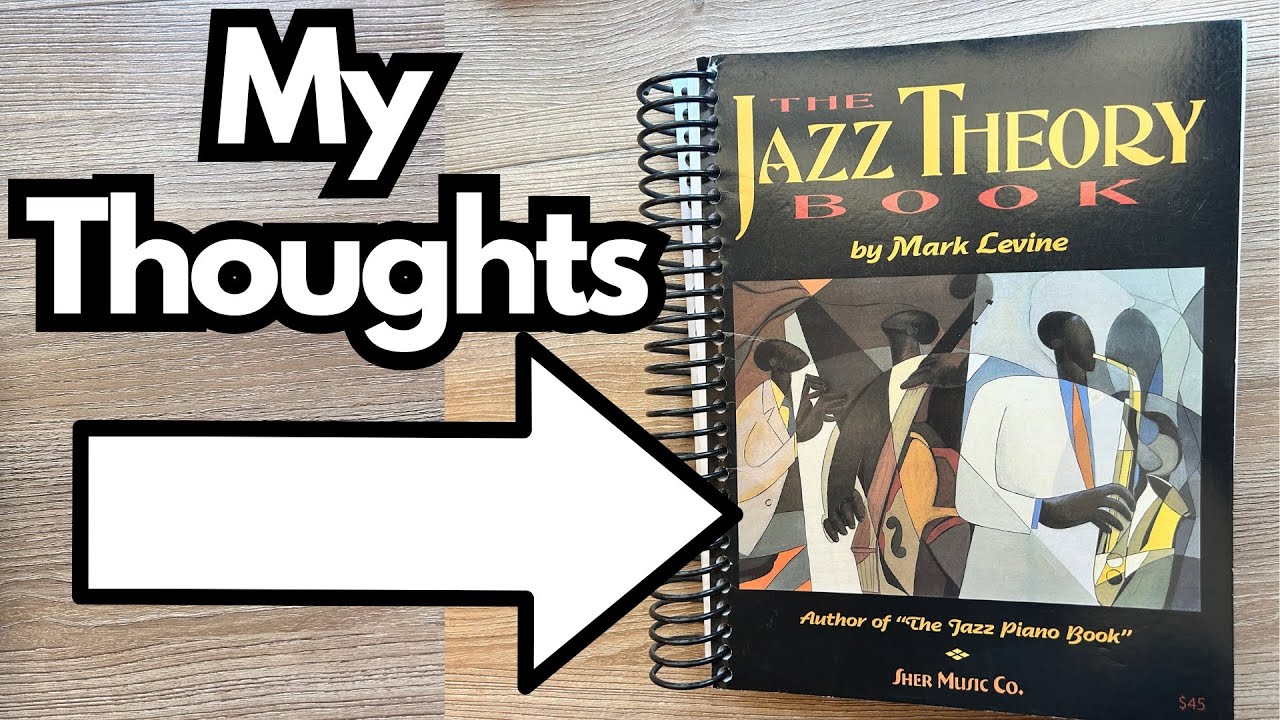
If you’re serious about understanding music theory—not just memorizing shapes on the fretboard—The Jazz Theory Book by Mark Levine is one of those resources that keeps coming up again and again. There’s a reason people call it “the jazz bible.”
This isn’t a casual read. It’s a deep, practical guide to how harmony, melody, and improvisation really work, especially in jazz—but the concepts apply to any style where you care about chords, scales, and playing over changes. You can grab it here on Amazon if you’re interested.
If you’re a guitarist who already knows basic theory and you’re ready to level up, this book is absolutely worth your time.
Overview / First Impressions
A professional guitar player I respect recommended this book to me with one specific instruction:
“Make sure you get the spiral-bound version.”
That might sound trivial, but it makes a huge difference. This is a big, reference-style book you’ll be flipping through constantly—having it lay flat on a music stand or desk is a game changer for practice sessions.
Content-wise, this book is packed. It covers:
- Scale harmony and chord–scale relationships
- Intervals and chord construction
- Chord voicings and how to actually use them
- How to practice theory concepts in a real, musical way
- Analysis and examples from jazz standards and solos (Coltrane, George Coleman, etc.)
It’s written for serious musicians, not casual dabblers. If you’re just starting out, it will be overwhelming. But if you’re at a basic to intermediate theory level and want to truly understand what’s going on under the hood, this is where it shines.
Build Quality & Design
From a practical, day-to-day user standpoint, the physical design matters:
- Spiral-bound format
- Lays flat on your stand or desk
- Easy to keep open on a specific page while you practice
- Much more usable than a standard glued spine for a thick reference book
- Standard notation only
- There’s no guitar tablature in this book
- That’s intentional: it’s written for all instruments, not just guitar
- You’ll need to be comfortable reading notation, or at least willing to learn
If you’re a guitarist who’s used to tab-only resources, this might feel like a hurdle at first. But it’s also a great push toward musicianship rather than just finger placement.
Features & Functions
Here’s what you actually get inside The Jazz Theory Book:
Core Theory Topics
- Intervals & scale construction – the building blocks of melody and harmony
- Chord building – how chords are formed from scales (triads, 7ths, extensions, alterations)
- Scale harmony – how scales generate chord progressions and harmonic movement
Harmony & Voicings
- Chord voicings – different ways to arrange chord tones on your instrument
- How to use voicings – not just what they are, but how to apply them in real music
- Functional harmony – understanding how chords relate to each other in progressions
Jazz Standards & Real-World Examples
- Analysis and examples drawn from well-known jazz players and standards
- Names you’ll see: John Coltrane, George Coleman, and many others
- Helps bridge the gap between abstract theory and what you actually hear on records
Practice-Oriented Approach
This isn’t just a list of definitions. It shows you:
- How to practice scales and harmony
- How to connect theory to improvisation
- How to think in terms of chord tones, extensions, and voice leading rather than just “this scale over that chord”
For a guitarist, that means you can move beyond box patterns and start understanding why certain lines and chord choices sound so strong.
Why It’s Good For A Guitarist (Use Cases)
While the book isn’t guitar-specific, it’s incredibly useful for guitar players who want to:
- Improvise over jazz standards without just guessing
- Understand what’s happening in more advanced chord progressions
- Build richer chord voicings than basic open and barre chords
- Move from “lick collector” to someone who actually understands harmony
Some practical ways a guitarist might use this book:
- Chord–scale practice
- Take a ii–V–I in different keys
- Use the book’s chord–scale concepts to map out what to play over each chord
- Apply that directly on the fretboard with your own fingerings
- Voicing work
- Learn a new voicing concept (e.g., drop-2 or shell voicings)
- Translate those into guitar-friendly shapes
- Use them in comping over standards or backing tracks
- Solo analysis
- Look at the jazz examples in the book
- Try to find similar ideas on the guitar
- Hear how theory concepts show up in real music
Because it’s not tied to a specific instrument, it pushes you to think like a musician first and a guitarist second—which is exactly what you want if you’re aiming to play at a higher level.
Limitations / Things to Know
Before you grab a copy, it’s worth being honest about a few things:
- Not for total beginners
- If you don’t know basic intervals, major/minor scales, and simple chords yet, this will be too dense
- It’s best suited for players at basic to intermediate theory level and up
- No tablature
- You’ll need at least a working relationship with standard notation
- Guitarists who rely solely on tab will need to step out of their comfort zone
- Jazz-focused
- While the concepts apply to many styles, the language and examples are rooted in jazz
- If you have zero interest in jazz harmony, this might not be the best first deep-dive
- It’s a reference, not a quick-fix method
- You’ll get the most out of it by returning to it repeatedly over months and years
- It rewards slow, consistent study paired with real playing
Final Thoughts
If you’re a guitarist who wants to move beyond shapes and patterns and actually understand what you’re doing harmonically, The Jazz Theory Book is one of the best investments you can make.
It’s serious, in-depth, and practical. It’s ideal if you already know basic theory and want to go deeper, and it’s especially powerful if you’re drawn to jazz or sophisticated harmony in general.
Just do yourself a favor: get the spiral-bound version. For a big, heavily used reference book, the ability to lay it flat while you practice makes a huge difference in how often—and how effectively—you’ll use it.
Resources & Further Study
If you’re working through this kind of theory and want something guitar-specific to practice, these can help:
- Fretboard Memorization Cheat Sheet – available at travelingguitarist.com
- Covers major and minor triads in every key
- Uses the “mapping” approach to help you:
- Memorize the notes on the fretboard
- Understand triads as the foundation of harmony and chords
- Start improvising in multiple keys using solid harmonic building blocks
- Traveling Guitarist Forum – forum.travelingguitarist.com
- A place to talk with other players about guitar, music theory, practice approaches, and more
- Useful if you want to discuss concepts from books like The Jazz Theory Book and see how other guitarists are applying them
Pairing a deep theory resource like The Jazz Theory Book with focused fretboard work and a community to bounce ideas off can massively accelerate your growth as a musician.