

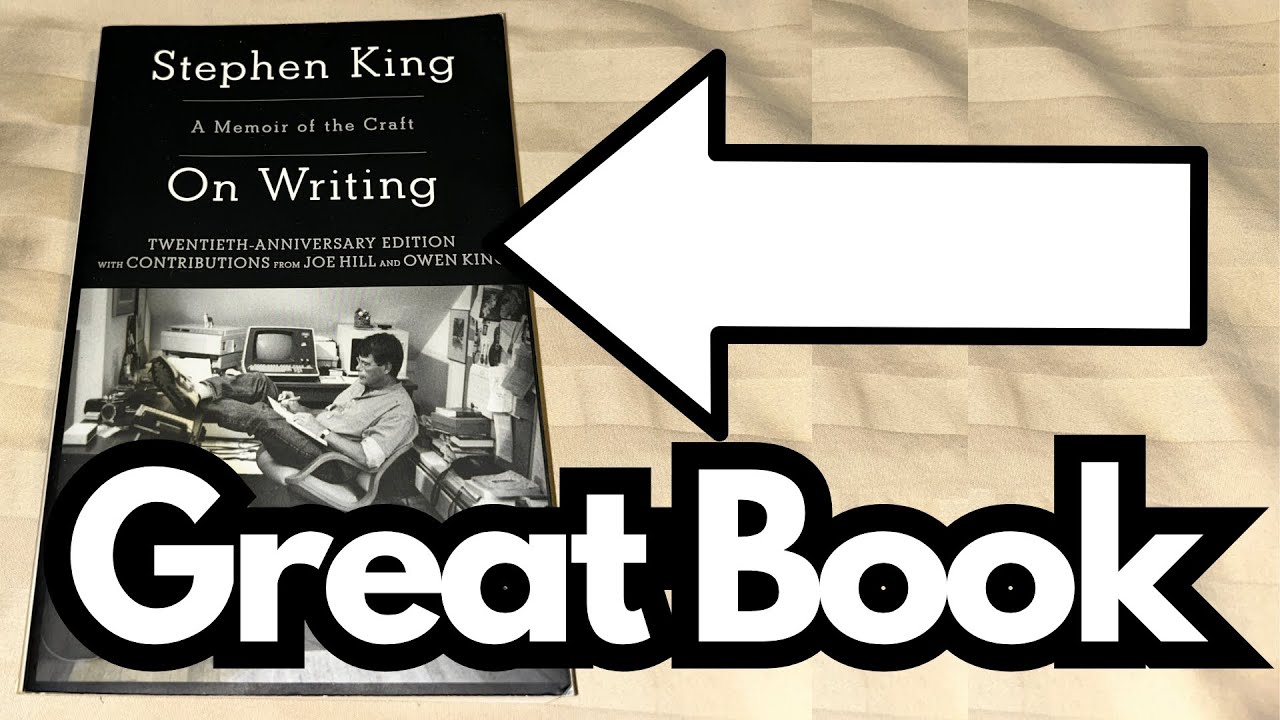
If you’re a guitarist or songwriter, you probably think of Stephen King as the horror guy, not as someone who can help your music.
But there’s a slim, powerful little book of his that has nothing to do with monsters and everything to do with craft—and it translates beautifully to how we write songs. You can grab it here on Amazon.
The book is about how to write well, but the principles inside it map almost perfectly onto making better, more impactful music. If you’ve ever felt like your songs are cluttered, overcomplicated, or just not connecting, there’s a lot you can borrow from King’s approach.
Overview / First Impressions
Stephen King’s book On Writing is his guide to writing, and it’s surprisingly:
- Pragmatic – very down-to-earth, no fluff.
- Entertaining – it reads more like a story than a textbook.
- Direct – he doesn’t romanticize the process; he just tells you what works.
Even if you’ve never read a Stephen King novel (I hadn’t), this book stands on its own as a craft manual. What makes it especially useful for musicians is how easily its core ideas line up with good songwriting.
Build Quality & Design (of the Book, Not a Pedal)
Think of this like reviewing a piece of gear: this book is built for utility.
- Straightforward structure – King walks through his own journey, then breaks down his approach to writing.
- No academic jargon – it’s written in plain, conversational language.
- Focused on practice – it’s less “philosophy of art” and more “here’s what to do and what to avoid.”
It feels like sitting down with a seasoned pro who’s been doing this for decades and is willing to tell you the truth without sugarcoating it.
Core Concept: Use Fewer Words (or Fewer Notes)
One of King’s main points is simple: good writing often comes from using fewer words.
Cut the clutter. Trim the fat. Say what you mean as clearly and directly as possible.
From a guitarist’s perspective, that’s exactly what separates a messy solo from a memorable one, or a forgettable progression from a timeless song.
The Songwriting Parallel
- Writing: Fewer, stronger words create more impact.
- Music: Fewer, stronger notes and chords create more impact.
When you want a song to connect with a wide audience:
- You don’t need more chords—you often need fewer.
- You don’t need a 32-bar solo—you might need a simple, singable hook.
- You don’t need every extension and substitution—you might need a clean, clear progression.
Think about some of the biggest songs ever written: they’re usually built on simple progressions and memorable, uncluttered melodies.
King’s approach to writing confirms that simplicity isn’t laziness; it’s discipline.
Features & Functions (Key Takeaways You Can Apply to Music)
Here are a few practical ideas from the book, translated into a guitarist’s world:
1. Cut What’s Not Essential
- Writing: Remove unnecessary adjectives, filler, and repetition.
- Music: Remove unnecessary fills, extra chords, and constant movement.
Ask yourself: “Does this note, chord, or lick serve the song, or am I just playing it because I can?”
2. Clarity Over Cleverness
- Writing: Being clear is more important than sounding “fancy.”
- Music: A clear, strong melody beats a dense, technically impressive one for most listeners.
If your riff is fun to play but no one can remember it, it might be clever—but not necessarily effective.
3. Think About the Audience
King talks about writing in a way that’s engaging and accessible. You can aim for the same in music:
- Simple progressions and melodies tend to connect with a broader audience.
- Complexity can be great—but it should be intentional, not automatic.
How It Sounds: Use Cases for Guitarists
You can treat this book almost like a creative reset button.
Here’s how it can shape your playing and writing:
- Writing better solos: Focus on phrasing and space instead of nonstop notes. Let bends, vibrato, and melody do the heavy lifting.
- Simplifying chord progressions: Instead of stacking chord after chord, try writing a song with just two or three chords and see how expressive you can make it.
- Arranging parts in a band: Guitar doesn’t have to fill every frequency. Leave room for vocals, bass, and drums—just like a writer leaves room for the reader’s imagination.
- Hook writing: Treat your main riff or vocal line like a great sentence: clean, memorable, and easy to “quote” later.
Limitations / Things to Know
A few points to keep in mind:
- This is a book about writing, not music theory. You’ll be doing the translation into your own musical context.
- It’s one philosophy of craft, not a rulebook. If you’re into super-dense prog or experimental music, you might choose to break these “simplicity” ideas on purpose—and that’s fine.
- It won’t tell you what chords to play or what scales to use. It will, however, sharpen how you think about structure, editing, and audience.
Final Thoughts
This book is absolutely worth reading, even if you’ve never picked up a Stephen King novel and don’t plan to. It’s:
- Practical
- Entertaining
- Directly applicable to songwriting and guitar playing
If you want your music to hit harder with fewer moving parts—to say more with less—this is a surprisingly powerful resource.
Resources
- Stephen King – On Writing (the book discussed here): a pragmatic, engaging guide to the craft of writing that doubles as a great mindset manual for simplifying and strengthening your music.