
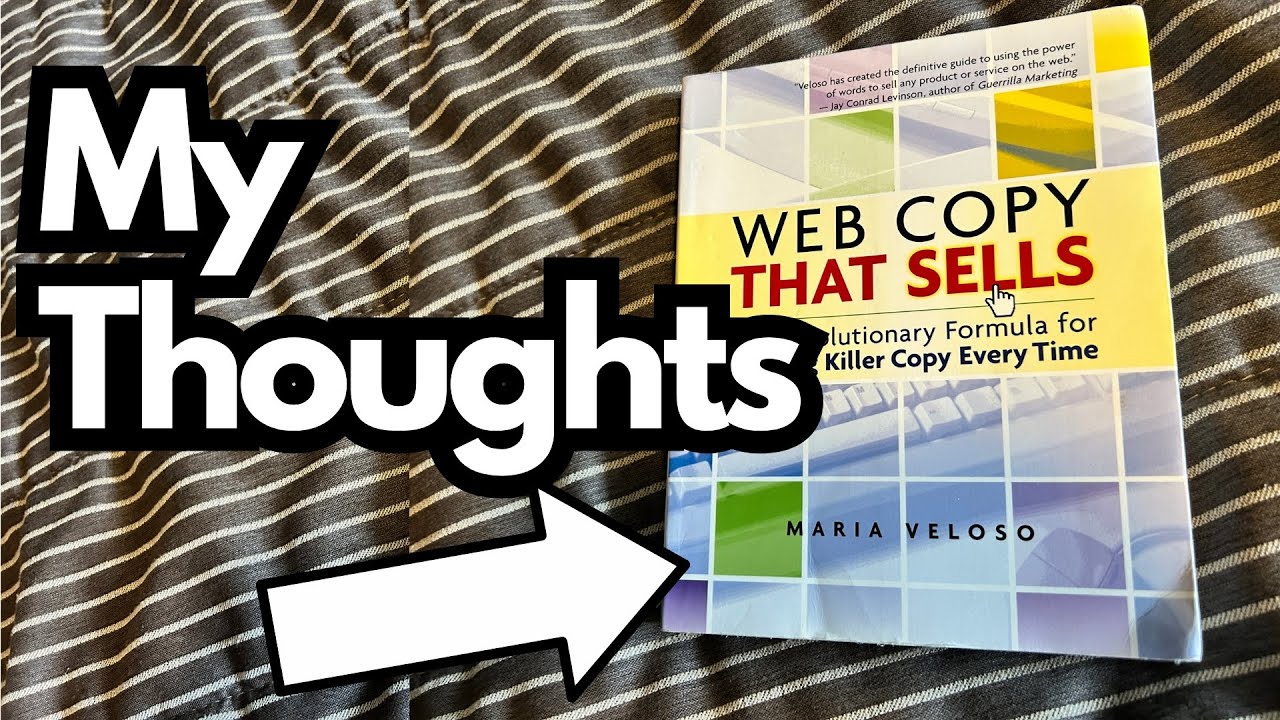
If you’re starting to dip your toes into copywriting—especially writing for the web—books can be a great way to get your head around the fundamentals. One classic that often pops up on recommended reading lists is Web Copy That Sells (or similar introductory web copywriting guides).
This kind of book is aimed at people who want to learn how to write words that actually get people to buy things, sign up, or take action online. Whether you’re a freelancer, small business owner, or content creator, a solid intro to web copy can save you a lot of trial and error.
Below is a quick breakdown of what to expect and whether it’s still worth your time. You can grab it here on Amazon if you’re interested.
Overview / First Impressions
This book is essentially an introduction to web copywriting—how to write persuasive text for websites, landing pages, and online sales materials.
If you’re:
- New to copywriting
- Curious about how words can drive sales
- Trying to understand the basics of online persuasion
…then it’s a decent starting point. It walks you through core concepts like headlines, calls to action, and framing benefits instead of just listing features.
However, it’s been around for a while, so some of the specifics may feel dated compared to today’s online landscape.
Build Quality & Design
As a physical book, it’s a straightforward, no-frills read:
- Standard paperback format
- Easy to skim through chapters
- Organized into sections that build from basic principles to more applied techniques
The design isn’t the selling point here—it’s more about the ideas and frameworks than visuals or layout.
Features & Functions (What the Book Covers)
The value of this kind of book is in the concepts it introduces. Expect topics along the lines of:
- Foundations of Web Copy
How online copy differs from print, and why attention spans matter. - Headlines & Hooks
How to grab attention quickly so people don’t click away. - Benefit-Driven Writing
Shifting from “here’s what this is” to “here’s what this does for you.” - Calls to Action
Getting readers to actually do something—buy, sign up, click, etc. - Structuring Pages for Conversion
Laying out copy so it’s easy to scan and leads people toward a decision.
It’s not a deep-dive, advanced manual—it’s more of a guided introduction for beginners.
How It Helps in Practice
If you’re just getting into web copy, this kind of book can help you:
- Understand why some pages convert and others don’t
- Start thinking like a marketer instead of just a writer
- Learn basic psychological triggers that influence buying decisions
- Avoid common beginner mistakes (like focusing only on features or writing long, unfocused paragraphs)
It’s especially useful if you’ve never studied marketing or sales before and need a structured way to think about persuasive writing online.
Limitations / Things to Know
There are a few caveats:
- Dated Examples
Since it’s been around for a while, some references, tools, or tactics may feel old compared to today’s social media– and funnel-driven world. - Not a Complete Modern Playbook
You won’t get up-to-date strategies on things like:- Social media ads
- Email automation
- Modern landing page builders
- A/B testing tools
- Intro-Level Focus
If you already know basic copywriting principles, you may not find much that’s new.
Because of this, it’s worth checking if there’s a newer edition or an updated book by the same or similar authors to make sure you’re getting advice that fits the current digital landscape.
Final Thoughts
As an intro to web copywriting, this kind of book is still worth a look, especially if you’re completely new to the idea of writing to sell online. The core principles—clear benefits, strong headlines, focused calls to action—haven’t gone out of style.
That said, given its age, you’ll get the most value by:
- Using it to understand the fundamentals
- Supplementing it with newer resources (blogs, courses, and modern examples)
- Looking for an updated edition if available
If you’re serious about learning copy that converts, think of this as a foundation rather than a one-stop solution.