

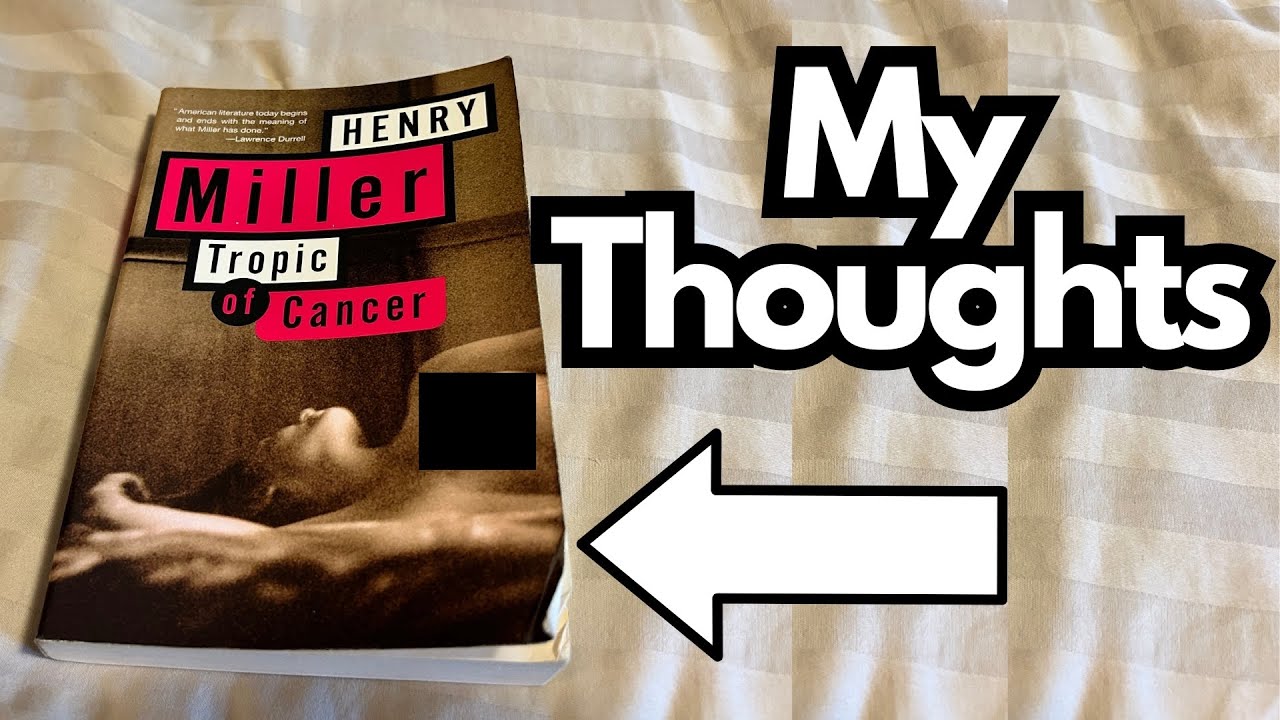
If you’ve ever picked up a “classic” because you felt you should read it, you already know the feeling behind this one. Tropic of Cancer by Henry Miller is one of those books that shows up on lists, gets referenced by other writers, and carries a certain mystique.
But does it actually hold up—especially if you’re coming back to it as an adult, or tackling it for the first time with modern expectations? You can grab it here on Amazon if you’re interested.
This post breaks down what it’s like to read Tropic of Cancer today: why it might matter, who it’s really for, and whether it’s worth your time.
Overview / First Impressions
When I first read Tropic of Cancer as a kid, I really liked it. It felt daring, edgy, and different—like I was getting away with something I wasn’t supposed to be reading. It had that “forbidden classic” energy.
Revisiting it later in life, though, the experience was very different. The impact just wasn’t the same. The writing felt more like work than pleasure, and a lot of what once seemed exciting now comes across as dense and distant.
In the end, I’d call it an okay book—probably worth reading once, especially if you’re curious about its place in literary history—but not necessarily the timeless, universally gripping masterpiece it’s often made out to be.
What The Writing Is Like
Think of Miller’s writing style as the literary equivalent of a boutique pedal with no labels, odd controls, and a wild signal path: impressive in its own way, but not exactly plug-and-play.
- Highly stylized prose: Miller leans into long, winding sentences and extended descriptions of ideas, places, and experiences.
- Dense vocabulary: He uses a lot of uncommon words—terms you might not recognize even if you’ve gone through post-secondary education.
- Layered references: There are many nods to the culture, people, and events of his time. If you’re not familiar with that era, you’ll miss a lot of the context.
On a technical level, the writing is clearly skilled. But style-wise, it can feel needlessly challenging—like it’s trying to be difficult in order to be impressive.
What the Book Actually Does
Tropic of Cancer is known for a few key things:
- Stream-of-consciousness feel: The narrative often flows in a loose, almost improvisational way, jumping between ideas, scenes, and reflections.
- Heavy on description: Miller spends a lot of time describing locations, moods, and abstract ideas in great detail.
- Cultural snapshot: It captures a specific time and place, filled with references to people, art, and culture of that era.
If this were a piece of gear, it’d be less like a straightforward overdrive and more like an experimental multi-FX unit—powerful, but not exactly intuitive.
Who The Book Is For
From a reader’s perspective, Tropic of Cancer will appeal most to people who:
- Enjoy dense, challenging prose and don’t mind looking things up.
- Are interested in literary history and want to understand why the book was controversial and influential.
- Like immersive, atmospheric writing more than tight, plot-driven stories.
If you’re the kind of person who loves digging into obscure records, niche gear, and deep cuts—happy to chase down references and context—this book might resonate with you.
If you prefer something more direct, emotionally clear, and easy to follow, this might feel more like homework than a rewarding read.
Limitations / Things to Know
Before you dive in, it’s worth being aware of a few limitations:
- Difficulty level: The vocabulary and sentence structure can be exhausting. It’s not a casual, before-bed kind of read.
- Aging references: Many cultural and historical references just don’t land anymore unless you’re willing to research as you go.
- Style over accessibility: The book often feels like it’s prioritizing stylistic flair over clear communication.
None of this means it’s a bad book—it just means it’s not universally approachable. The barrier to entry is high, and the payoff depends heavily on your taste.
Final Thoughts
Tropic of Cancer is one of those works that’s easier to admire than to love.
It’s clearly well written in a technical sense, and it’s important in the history of modern literature. But as an actual reading experience—especially coming back to it later in life—it can feel overly dense, dated, and more difficult than it needs to be.
Is it worth reading? Yes—once. If you’re curious about why it’s considered a classic, or you enjoy pushing yourself with challenging prose, it’s a worthwhile experience. Just don’t be surprised if it doesn’t hit you the way it might have when you were younger, or the way its reputation suggests it should.