

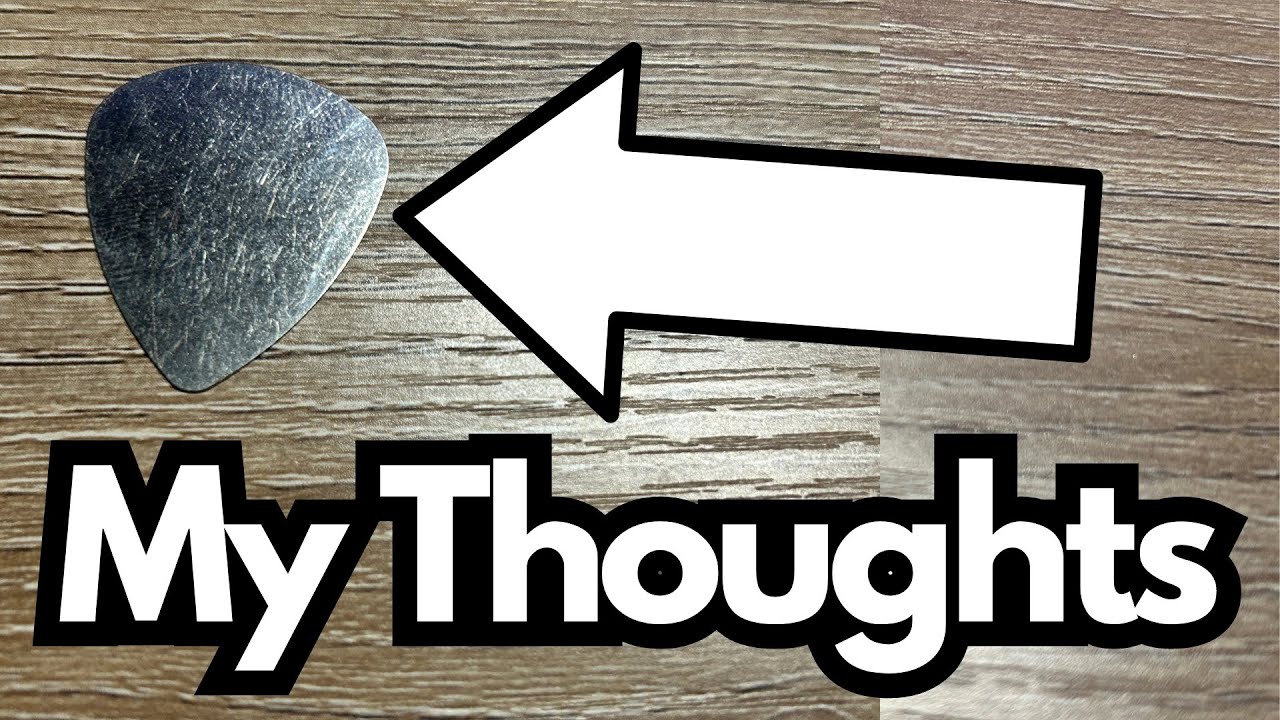
Most picks make subtle differences. You might notice a bit more attack here, a little warmth there—but nothing earth‑shattering. A steel guitar pick, though? That’s a whole different story. You can grab some here on Amazon if you’re interested.
If you play acoustic steel‑string guitar, this is one of the few pieces of gear that can dramatically change your tone in an instant. It’s not for everyone, and it’s not for every situation, but it’s absolutely worth knowing what it does and when to use it.
Overview / First Impressions
A steel pick doesn’t behave like your typical plastic, nylon, or even wooden pick. The moment you hit the strings, you’ll hear:
- A much brighter, more cutting tone
- A noticeably scratchier attack
- Way more high‑end presence than a standard pick
If you’re used to something like an Ernie Ball Prodigy, a Kirk Hammett Jazz III, or any other Jazz III‑style plectrum, the steel pick will feel familiar in shape (depending on the model you buy) but not in sound.
This isn’t a “tiny nuance” difference. On an acoustic, it’s obvious.
Build Quality & Design
Steel picks vary by brand, but they share some common traits:
- Material: Made from metal (usually stainless or a similar steel alloy)
- Edge: Hard, unforgiving edge that doesn’t flex like plastic
- Durability: Extremely long‑lasting; they don’t wear down like softer materials
- Consistency: Because they don’t deform, the attack feels very consistent from note to note
They’ll also sound different from:
- Wood picks – which tend to sound warmer and softer
- Acrylic picks – which are bright but still have a plastic “give”
- Coconut or other exotic materials – which often sit somewhere between warm and bright
Steel is its own thing: rigid, sharp, and bright.
Features & Functions
From a guitarist’s perspective, here’s what a steel pick really offers:
- Extreme brightness: It pulls out the top end of your strings, especially noticeable on acoustic steel strings.
- Enhanced attack: Notes have a sharp, defined front edge—great if you want every pick stroke to be heard.
- Cutting through the mix: In a dense arrangement or recording, the extra bite can help your acoustic sit on top of the track.
- Different texture: The pick‑string interaction feels more metallic and percussive.
Because the pick is so rigid, your picking technique is exposed. Any little scrape or angle change is audible, which can be both a feature and a drawback depending on your playing.
How It Sounds / Use Cases
Tonal Character
Using a steel pick on a steel‑string acoustic gives you:
- Brighter, more present highs
- A scratchier, more percussive sound on strums
- Clear, articulate single notes with a sharp attack
If you’re strumming chords, you’ll hear more string noise and top‑end shimmer. If you’re picking lines, each note pops out clearly, almost like you’ve boosted the treble on your guitar or preamp.
Best Situations to Use It
- Recording acoustic guitar when you want it to cut through a mix
- Live gigs where the acoustic needs more presence without cranking EQ
- Textural parts where you want a more percussive or metallic character
- Experimental tones—if you’re bored with your usual pick sound, this is a fast way to get something radically different
While you can use it on electric, the difference is most dramatic on acoustic steel‑strings. That’s where it really shines.
Limitations / Things to Know
A steel pick isn’t a universal upgrade. There are trade‑offs:
- Harshness: The extra brightness can easily become too sharp or brittle, especially on already bright guitars or fresh strings.
- String noise: The scratchy attack means more pick noise, which might be undesirable for soft, fingerstyle‑style passages.
- Feel: The rigid, metallic contact can feel strange if you’re used to flexible plastic picks.
- Not always musical: For warm ballads or mellow fingerpicking, it can be overkill.
Think of it as a specialty tool, not your default, always‑on pick.
Final Thoughts
If you’re an acoustic guitarist looking for a dramatic tonal shift without buying a new guitar, pickup, or preamp, a steel pick is absolutely worth trying.
- It’s one of the biggest tone changes you can get from something as small and cheap as a pick.
- It excels on steel‑string acoustic, especially for bright, cutting, or percussive parts.
- It won’t suit every style or song, but as a secondary pick for specific tones, it’s a powerful option to have in your case.
Try it on a few songs you already know well. You’ll immediately hear how much the pick itself can shape your sound.
Resources & Further Study
If you’re working on your playing and want something deeper than just changing gear, there are a couple of useful tools mentioned:
Fretboard Memorization Cheat Sheet – Available at travelingguitarist.com.
It covers:
- Major and minor triads in every key
- The “octave mapping” approach to the fretboard
- How to use triads as the foundation for improvisation and harmony
Community Forum – You can join the discussion at forum.travelingguitarist.com to talk about guitar, music, and related topics with other players.
Combine smarter practice (like triad work and fretboard mapping) with tone experiments (like trying a steel pick), and you’ll get both better technique and more expressive sound out of your guitar.