

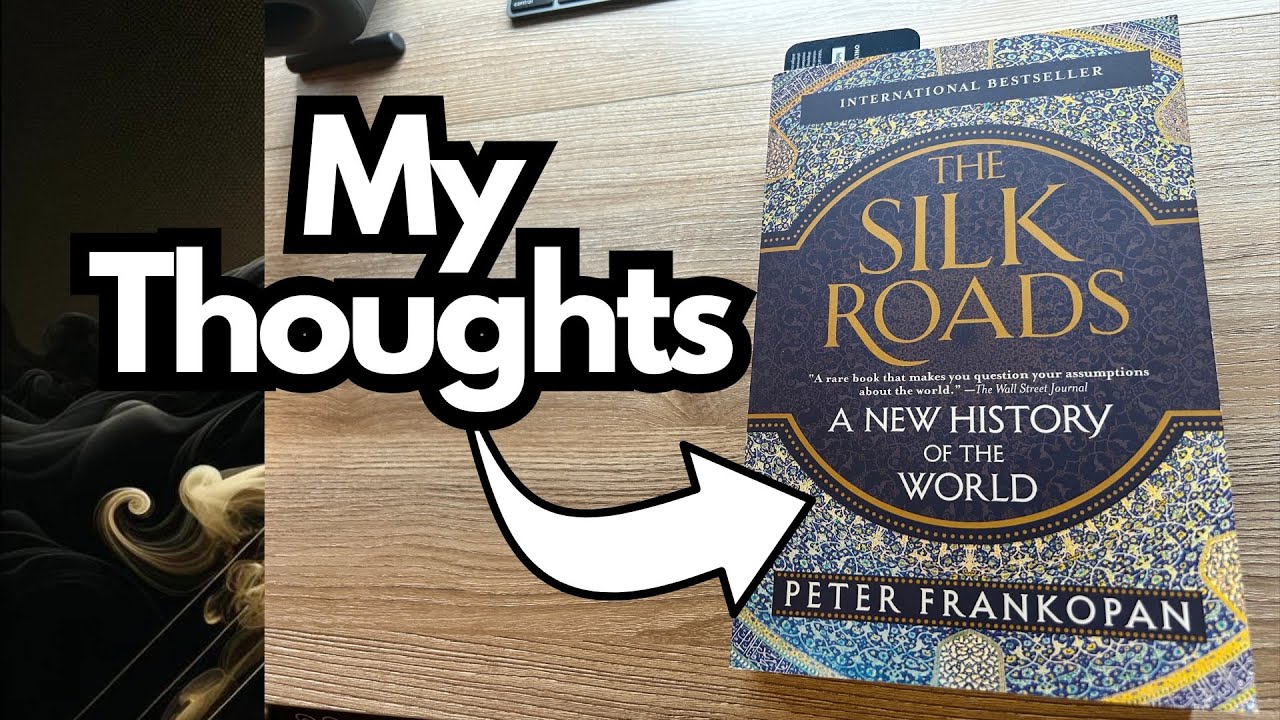
The Silk Roads is one of those books that quietly rewires how you see the world—and, by extension, the how you live in it.
If you love looking at things in terms of big-picture thinking, world cultures, or just wants a deeper sense of where “East meets West” (musically and historically), this is a book worth knowing about.
Overview / First Impressions
The Silk Roads is essentially a history of the world told through the lens of the East—particularly the regions connected by the ancient trade routes we now call the Silk Road. Instead of centering Europe and the usual “Western Civilization” narrative, it shifts the spotlight toward:
- Persia and the Persian Empire
- Central Asia
- China and its dynasties
- The broader East and its influence on global history
The result is a history that feels both familiar and refreshingly different. You still get Romans, early Western history, and the usual landmarks, but they’re not the only stars of the show.
So far, the book comes across as:
- Very well researched – you can feel the depth of scholarship behind it.
- Dense but readable – it’s rich with information without feeling like a dry textbook.
- Perspective-shifting – it challenges the default “West-first” way of telling world history.
Features & Focus
What sets The Silk Roads apart is its focus on the East as a driver of world history. Instead of treating places like Persia and China as side characters, it puts them closer to the center of the story.
Key thematic “features” include:
- Emphasis on the Persians – not just as a foil to the Greeks, but as a major civilizational force.
- Attention to Chinese dynasties – exploring how Chinese power, trade, and culture shaped the world.
- Broader view of global connections – trade, ideas, religions, and technologies moving along the Silk Road routes.
One point I’d like to add is that is that if you’re a guitarist, this can be a great mental backdrop if you’re into:
- Exploring non-Western scales and modes
- Understanding where certain instruments, tunings, or musical ideas historically came from
- Writing music inspired by different cultures and eras
Limitations / Things to Know
A few practical notes before you dive in:
- It’s not light fluff. This is well-researched, detailed history. If you’re looking for a quick, casual skim, it might feel heavy at times.
- East-focused, not East-only. You’ll still get plenty of Western history—Romans, early Europe, and more—but the narrative leans intentionally toward the East.
- May lead to deep dives. If you’re the type who falls into research rabbit holes, you’ll probably come away wanting more on topics like the Persian Empire or specific Chinese dynasties.
For many readers, that last “limitation” is actually a plus.
Final Thoughts
So far, The Silk Roads delivers a rich, well-researched, and genuinely engaging take on world history with a much-needed focus on the East. It doesn’t throw out Western history—it just widens the frame.
It’s the kind of read that can quietly influence how you think about music, influence, and where your own ideas fit into a much longer story.
I’m enjoying it enough that I’d happily look up more work by the same author, especially anything that digs deeper into the Chinese dynasties or the Persian Empire.
Resources / Further Study
If The Silk Roads grabs you, you might want to explore:
- Other books by the same author, especially those focusing more narrowly on Persia or China
- Historical documentaries on the Silk Road and related empires