

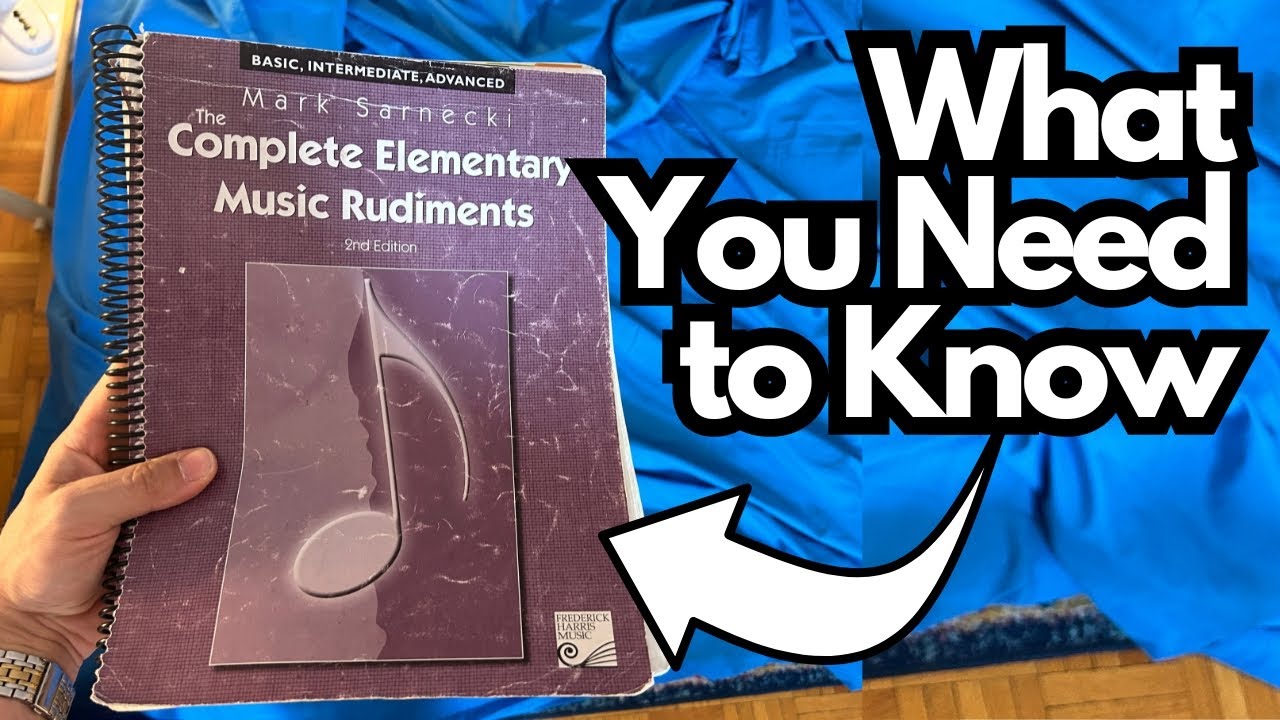
If you’re serious about understanding music—not just memorizing shapes on the fretboard—there’s one book I recommend to pretty much everyone: a straightforward, well-structured music theory workbook that actually teaches you, not just talks at you.
This isn’t just for classical musicians or conservatory students. If you’re a guitarist who wants to:
- Understand what you’re playing
- Write better songs and solos
- Communicate with other musicians
- Finally “get” keys, chords, and harmony
…this book will take you there, starting from the basics and going a bit beyond. You can grab it on Amazon here.
Overview / First Impressions
This theory book is designed as a progressive workbook: you read a concept, then immediately apply it with written exercises. That’s the real strength here—it’s not passive reading. You do theory, and that’s how it sticks.
A few key points:
- It covers all the rudiments: notation, scales, intervals, key signatures, chords, rhythm, and more.
- It goes beyond just the basics, giving you a solid working knowledge of theory.
- It’s laid out clearly and logically, so you can move step by step without feeling lost.
- It works great for self-study, especially if you’re a guitarist who never had formal training.
If you’re wondering “Where do I start with theory?”—this is a very solid answer.
Build Quality & Design
One detail that matters more than you’d think: get the spiral-bound version.
Why?
- It lies flat on a desk, music stand, or table.
- You don’t have to fight with the binding while you’re writing.
- It’s just much less annoying to use over time.
If you’re going to be working through a lot of exercises (and you should), this makes a real difference. This is the kind of book you’ll want to keep open while you’ve got your guitar in your hands or while you’re scribbling notes.
Even if you already own an older edition, it might be worth upgrading to a newer one—the core content is strong enough that going through it again is actually valuable.
Features & Functions
1. Comprehensive Rudiments
It walks you through:
- Basic notation and rhythm
- Scales and intervals
- Key signatures
- Chords and harmony fundamentals
You start from the ground up, but by the time you’re done, you’ll be more than just “introduced” to theory—you’ll be comfortable with it.
2. The Answer Book (Essential)
Make sure you also get the answer book.
That’s crucial because:
- You can check your work as you go.
- You get immediate feedback instead of reinforcing mistakes.
- It makes self-study realistic—you don’t need a teacher hovering over you.
Without the answer key, you’re guessing. With it, you’re actually learning.
3. Great for Self-Paced Learning
You can:
- Work through it slowly, a few pages at a time.
- Revisit sections later to refresh concepts.
- Use it as a reference once you’ve completed it.
This is the kind of book you can go through more than once and still get value—especially if you take a long break from theory and want to sharpen up again.
How It Helps Guitarists Specifically
While the book itself isn’t guitar-specific, it’s incredibly powerful when combined with the fretboard.
As a guitarist, here’s how it helps:
- When you learn intervals and scales, you can map them onto the neck instead of just memorizing shapes.
- When you learn triads and chords, you start seeing how your chord grips are built, not just where to put your fingers.
- When you understand keys and harmony, improvising stops being random and starts being intentional.
You’ll start recognizing that the foundation of harmony—triads—is exactly what you’re playing all over the neck, whether you realize it or not. This book gives you the language and structure behind what your fingers are already doing.
Limitations / Things to Know
A few honest notes before you dive in:
- It’s not guitar-specific. You’ll need to do the extra step of applying each concept to the fretboard yourself.
- It’s a workbook, not a quick-reference cheat sheet. You’ll be writing, thinking, and actively studying.
- If you skip the answer book, you’re losing half the value. Get both.
That said, if you’re willing to put in the time, it will reward you with a much deeper understanding of music.
Final Thoughts
If you want to actually understand music theory—not just memorize patterns—this is one of the best starting points you can get.
- It’s clear.
- It’s structured.
- It’s practical.
- It takes you from the basics into genuinely useful territory.
For guitarists who feel like there’s a gap between what they can play and what they understand, working through this book (especially with the spiral-bound edition and the answer key) is absolutely worth it. It’s the kind of resource you can return to over the years whenever you want to tighten up your foundations.
Further Study & Resources
If you want to connect what you learn in the book directly to the guitar neck, here are two helpful resources:
Fretboard Memorization Cheat Sheet (at travelingguitarist.com)
This focuses on major and minor triads in every key, using the “op of mapping” approach and a few other techniques. It helps you:
- Memorize the notes on the fretboard
- See triads all over the neck
- Start improvising in different keys by leaning on triads as the foundation of harmony
Traveling Guitarist Forum (forum.travelingguitarist.com)
A place to:
- Talk guitar, music, and theory with other players
- Ask questions as you work through theory concepts
- Share progress and get feedback
Pairing a solid theory workbook with fretboard-focused practice is one of the fastest ways to become not just a better guitarist, but a better musician overall.