

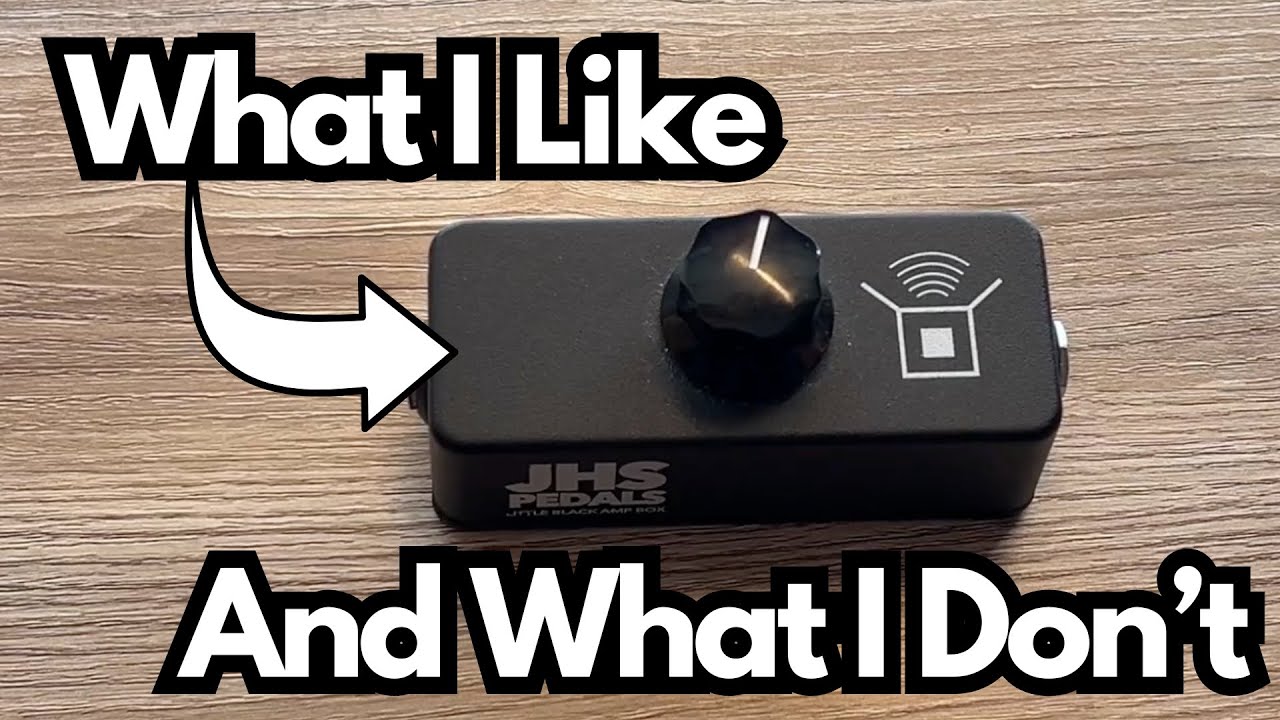
If you play through a real amp at home—especially anything with decent wattage—you’ve probably run into the same problem: the “good” tone is way too loud for your space.
That’s exactly why this little black box (on Amazon) has become an essential part of my home studio. It sits in the effects loop of my Orange RT 35-watt amp and acts as a second volume control, letting me hit the amp’s sweet spot without blowing the doors off my apartment.
This post walks through what it does, how it works, and why you might want one in your own rig.
Overview / First Impressions
The unit itself is simple: a compact black box with a single knob and jacks for your effects loop. No screen, no menus, no power supply. You just drop it in your signal chain and go.
What it does is equally straightforward:
- It acts as a passive volume control in your amp’s effects loop.
- It gives you fine-grained control over your overall level after the preamp.
- It lets you run your amp hotter (for tone) while keeping the actual volume manageable.
For home players, apartment dwellers, and anyone dealing with a loud amp in a small space, this is a game-changer.
Build Quality & Design
This thing is as minimal as it gets:
- Small, sturdy enclosure – Easy to place on top of the amp or down on the floor with your pedals.
- Single control knob – One big volume knob that’s easy to grab and adjust.
- Send/Return jacks – Designed specifically to sit in the effects loop of your amp (between preamp and power amp).
Because it’s passive, there’s no power input, no batteries, and no extra noise introduced into the signal. It just quietly does its job.
Features & Functions
1. Secondary Master Volume
Most amps—especially higher-wattage ones—don’t give you much usable range at the lowest settings. You know the deal:
- At 1 on the volume: too quiet, thin, not inspiring.
- At 2: suddenly way too loud for bedroom or apartment use.
There’s often a “sweet spot” in between those numbers where the amp starts to sound alive, but the volume jump is too drastic to be usable.
This little box effectively adds another volume stage after your preamp, so you can:
- Set your amp’s volume where it sounds best (for me, that’s around 4).
- Use the box’s knob to dial the overall loudness back down to a comfortable level.
2. Effects Loop Integration
It connects like this:
- Amp Send → Box Input
- Box Output → Amp Return
Because it’s in the loop, you’re controlling the level after the preamp section. That’s key for maintaining your amp’s tone and feel while just shaving off volume.
3. Works with Tube and Solid-State Amps
This kind of box is often marketed for tube amps, and it’s especially useful there because:
- You can push the preamp harder.
- You get more of that natural tube drive and compression.
- You don’t have to deal with full gig-level volume.
My Orange RT isn’t a tube amp, and it still works perfectly. The concept is the same: get the amp into its tonal sweet spot, then tame the loudness.
How It Sounds / Use Cases
Dialing in the Sweet Spot
Here’s how I typically use it:
- Set the amp’s main volume to around 4 (instead of trying to live between 1 and 2).
- Strum the guitar and adjust the volume box until the level is comfortable for the room.
- Fine-tune from there depending on whether I’m:
- Practicing quietly at night
- Recording in my home studio
- Playing a bit louder during the day
The result: the amp behaves and feels like it’s set louder, but the actual sound level is apartment-friendly.
Home Studio & Apartment Playing
In a home or apartment setting, this solves a big problem:
- You keep your tone intact.
- You avoid angry neighbors or family members.
- You don’t have to rely on tiny practice amps or headphones all the time.
If your main amp is just “too much” for your room, a simple volume box in the loop can effectively turn it into a more controllable, studio-friendly rig.
Limitations / Things to Know
A few important points to keep in mind:
- Not a load box or attenuator
This is not a speaker load or power attenuator. It must go in the effects loop, not between the amp and the speaker. It doesn’t replace a reactive load or full-featured attenuator. - Requires an effects loop
If your amp doesn’t have a send/return loop, you can’t use this in the same way. It’s specifically designed to sit in that part of the signal path. - Won’t magically fix a bad tone
It helps you access the amp’s best-sounding range at lower volumes, but it doesn’t change the core character of the amp. If you don’t like the amp’s sound to begin with, this won’t transform it. - Best for volume “fine-tuning”
Think of it as a precision volume control that makes the lower end of your amp’s range more usable, rather than a drastic tone shaper.
Final Thoughts
For my setup, this little volume box is absolutely essential. My 35-watt Orange RT sounds great when it’s opened up a bit, but that level is completely unreasonable in an apartment.
By dropping a passive volume control into the effects loop, I get:
- The amp operating where it sounds and feels right
- The overall level dialed back to a neighbor-friendly range
- A simple, reliable solution with no power requirements and no added complexity
If you love the sound of your amp but hate how touchy the volume is at the bottom of the dial, a simple volume box in the effects loop is one of the most practical, affordable upgrades you can make to a home studio rig.
Resources & Further Study
If you’re also working on your playing while dialing in your rig, here are a couple of useful resources mentioned:
Fretboard Memorization Cheat Sheet
A handy reference for major and minor triads in every key, using “octave mapping” and other approaches to:
- Memorize the fretboard
- Understand triads as the foundation of harmony and chords
- Start improvising more confidently in multiple keys
Guitar Forum
A place to chat about guitar, music, and related topics with other players:
forum.travelingguitarist.com
Both are great complements to getting your amp and volume under control—better tone plus better fretboard knowledge is a powerful combo.