

If you work with paper a lot—whether you’re organizing charts, printing lessons, or just keeping your office tidy—a good stapler is essential.
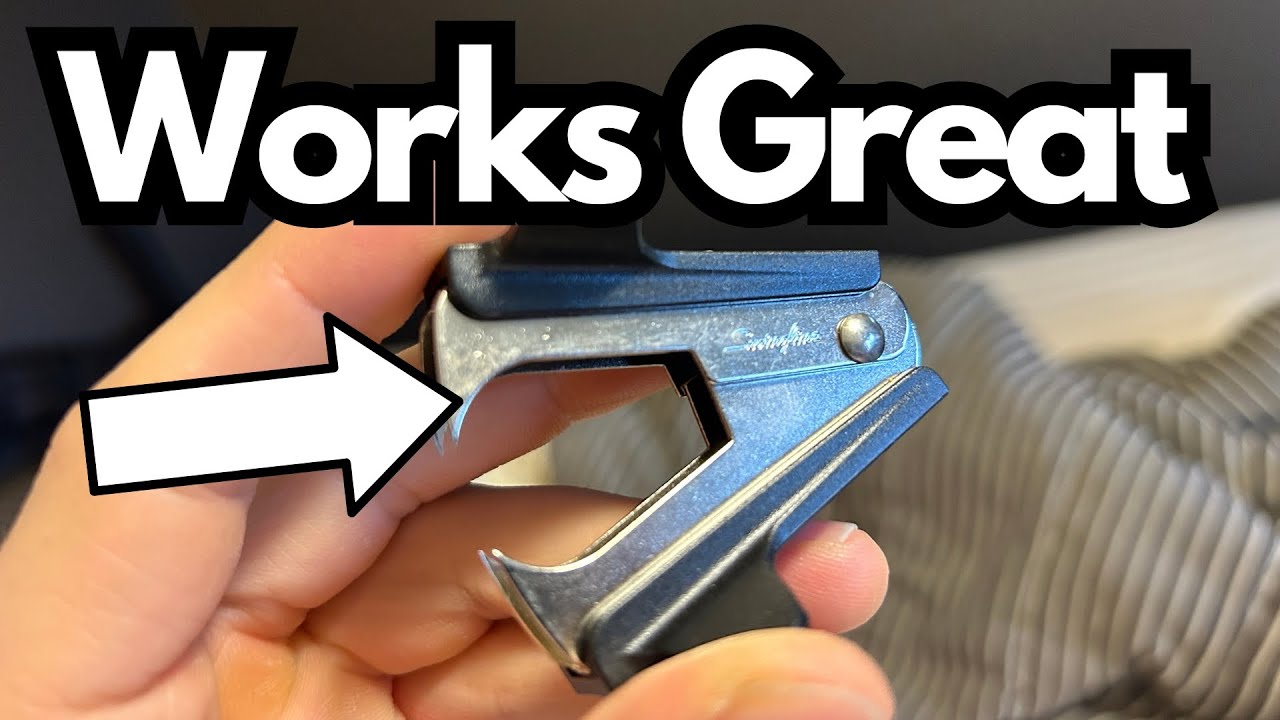
Just as important, though often forgotten, is a reliable staple remover. The Swingline staple remover (often bundled with a Swingline stapler) is a small, no-frills tool that quietly does its job extremely well.
This post takes a quick look at what it is, how it works, and why it’s worth having on your desk. You can grab it on Amazon if you’re interested.
Overview / First Impressions
The Swingline staple remover is a classic, straightforward tool designed to pull staples out of paper cleanly and quickly. It pairs naturally with a quality Swingline stapler, and if you’ve ever fought with bent paper or half-removed staples, this little device is a big upgrade over trying to pry staples out with your fingernails.
You place the remover under the staple, squeeze, and it pulls the staple out in one smooth motion. That’s really all it needs to do—and it does it well.
Build Quality & Design
The design is simple and functional:
- Compact size – Easy to keep on your desk or toss in a drawer.
- Metal teeth – Strong enough to get under the staple without bending or slipping.
- Spring-loaded mechanism – Opens and closes smoothly, giving you good control over the removal.
There’s nothing flashy about it, but that’s the point. It’s built to be a durable, everyday tool you don’t have to think about.
Features & Functions
The Swingline staple remover focuses on one core function and does it cleanly:
- Easy staple removal – Slide the tip under the staple, squeeze, and it pulls the staple out in one piece.
- Works with standard office staples – Ideal for the same size staples you’d typically use with a Swingline stapler.
- Paper-friendly operation – When used correctly, it removes staples without tearing or gouging the paper.
Because it’s purpose-built, there’s almost no learning curve. If you can use a stapler, you can use this remover.
How It Works & Use Cases
Using the Swingline staple remover is straightforward:
- Place the tip under the center of the staple on the back side of the page (where the legs are folded).
- Gently squeeze the remover so the teeth lift and pull the staple’s legs out.
- The staple pops free, and you can remove it completely.
Where it’s useful:
- Reorganizing printed documents
- Correcting stapled handouts or packets
- Removing staples from old files before scanning or shredding
If you’re someone who frequently staples and re-staples documents—teachers, office workers, students—this tool speeds up the process and helps keep your pages intact.
Limitations & Things to Know
A few practical notes:
- Best with standard staples – It’s designed for typical office staples. Heavy-duty industrial staples may require a different tool.
- Technique matters – For the cleanest results, always start from the back side of the staple (where the legs are folded under).
- No extra features – This is not a multi-tool or a fancy gadget. It’s a single-purpose remover.
As long as your expectations are realistic—simple, dependable staple removal—you’ll be satisfied.
Final Thoughts
The Swingline staple remover is one of those basic tools that quietly makes life easier. Paired with a quality Swingline stapler, it gives you a complete solution for managing paper: staple when you need to, and remove cleanly when you don’t.
If you handle a lot of documents and are tired of mangled corners or half-removed staples, this little device is absolutely worth keeping within reach on your desk.