

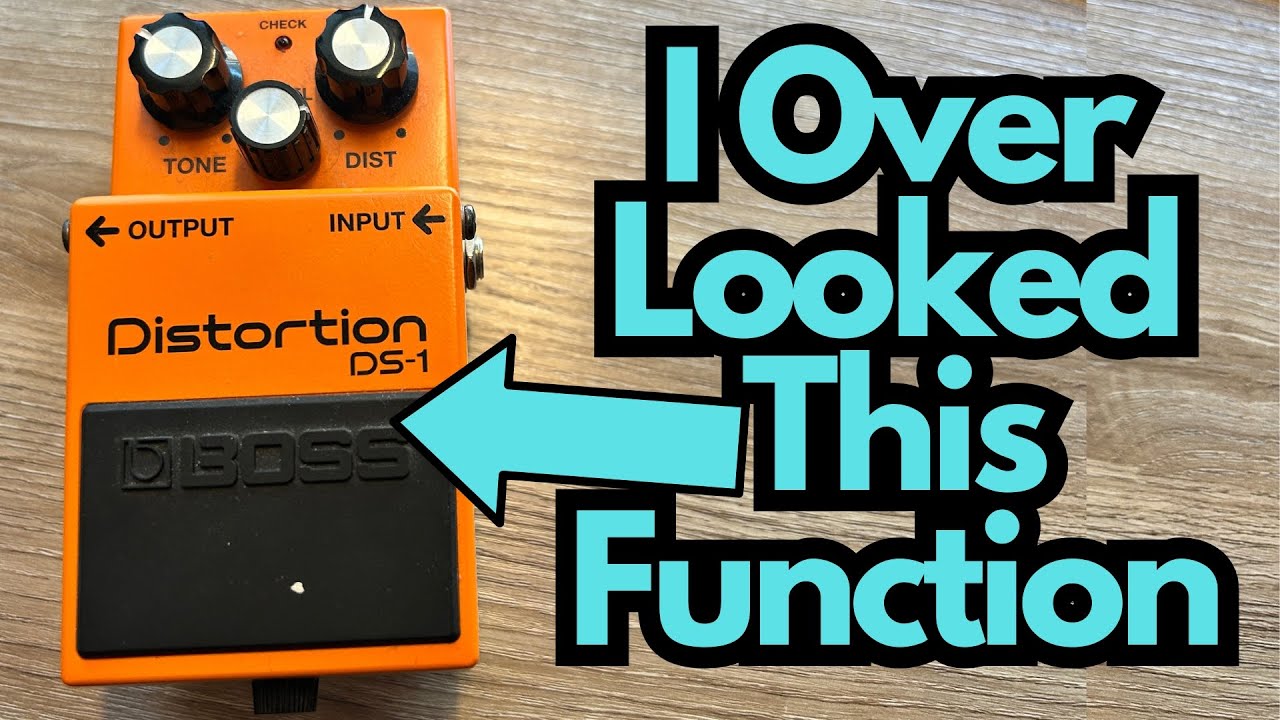
The Boss DS-1 is one of those pedals almost every guitarist bumps into at some point. It’s cheap, it’s everywhere, and for a lot of players it’s “just an okay distortion.” But with the right pedal stack, the DS-1 can go from basic to seriously inspiring.
If you’ve ever felt underwhelmed by your DS-1, this approach is for you—especially if you’re into high-gain tones, tight rhythm sounds, or just want more control and clarity from your distortion.
You can grab it here on Amazon if you’re interested.
Overview / First Impressions
On its own, the Boss DS-1 has a distinctive, crunchy character. There’s a rumbly, gritty quality to its distortion that many other pedals don’t quite capture. However, by itself it can feel a bit flat or harsh depending on your rig and settings.
The real magic starts when you stop treating the DS-1 as a standalone distortion and instead make it one part of a gain system. By stacking it with:
- A compressor (like an MXR Dyna Comp or similar),
- Another distortion (or overdrive) pedal,
- A noise gate (in this case, the Electro-Harmonix Silencer),
you can dramatically improve its feel, tightness, and overall sound.
Build Quality & Design (Quick Take)
The DS-1 is classic Boss:
- Tank-like enclosure
- Simple 3-knob layout (Tone, Level, Distortion)
- Standard Boss-style footswitch and buffered bypass
There’s nothing fancy or boutique about it, but that’s part of the appeal. It’s rugged, predictable, and easy to dial in—perfect for using as a building block in a more complex pedal chain.
Features & Functions
While the DS-1 itself is simple, the way you use it in a stack is where things get interesting. Here’s the basic chain that brought the DS-1 to life:
1. Compressor first (e.g., Dyna Comp-style pedal)
- Adds a bit of compression and sustain
- Evens out your picking dynamics before they hit the distortion
2. Boss DS-1 next
- Set with light to moderate distortion
- Used more as a “texture” and tone-shaping stage than a full-on gain monster
3. High-gain distortion after the DS-1
- A second distortion (referred to as “classic Distortion” in the setup)
- Set with much higher gain—almost cranked
- Provides the main saturation and aggression
4. Noise gate (EHX Silencer) with an effects loop
- The two distortion pedals (DS-1 + high-gain distortion) are placed in the Silencer’s effects loop
- The Silencer gates the combined noise from both pedals
- Result: a much tighter, less chaotic high-gain sound
This setup turns the DS-1 from a “meh” pedal into a key part of a multi-stage gain structure.
How It Sounds / Use Cases
With this stack, the DS-1 contributes:
- Crunchy mid-gain character that feeds beautifully into the higher-gain pedal
- Extra texture and harmonic content before the main distortion
- A more defined, controlled distortion when combined with compression and gating
What You Get Sonically
- Tighter attack thanks to the compressor and noise gate
- More saturated yet controlled gain from stacking two distortions
- Less fizz and chaos because the Silencer is clamping down on the noise from both pedals
- A tone that feels bigger and more “produced,” rather than raw and unruly
Ideal Use Cases
- Modern rock and metal rhythm tones
- Lead tones that need sustain without uncontrollable noise
- Players who like to ride their volume knob and pick dynamics but still want tightness and clarity
Limitations / Things to Know
This approach isn’t plug-and-play perfection; there are a few things to keep in mind:
- Stacking gain = more noise
That’s why the Silencer (or any good noise gate) is crucial, especially when you’re cranking the second distortion. - The DS-1 isn’t the main star here
It’s more of a supporting actor in this setup—adding flavor and grit before the main high-gain pedal. - Dialing it in takes patience
Small changes on the DS-1’s Tone and Distortion knobs can have a big impact once everything is stacked. A good starting point: - Your amp matters
This kind of stack usually works best into a relatively clean or slightly breaking-up amp. If your amp is already very dirty, things can get muddy fast.
Final Thoughts
The Boss DS-1 doesn’t have to be “just an okay distortion pedal.” When you:
- Put a compressor in front,
- Use it as a lower-gain stage,
- Feed it into a more saturated distortion,
- Tame everything with a noise gate like the EHX Silencer,
it becomes part of a powerful, flexible high-gain rig.
If you’ve written off your DS-1 in the past, try this kind of stacking approach before you let it collect dust or flip it. With the right companions on your pedalboard, it can sound far better than its price tag suggests.
Resources
If you’re working on dialing in better tones and understanding how your fretboard choices interact with gain and effects, you may find this fretboard cheat sheet helpful:
- Fretboard & triads resource: https://travelingguitarist.com/fretboard-cheatsheet