

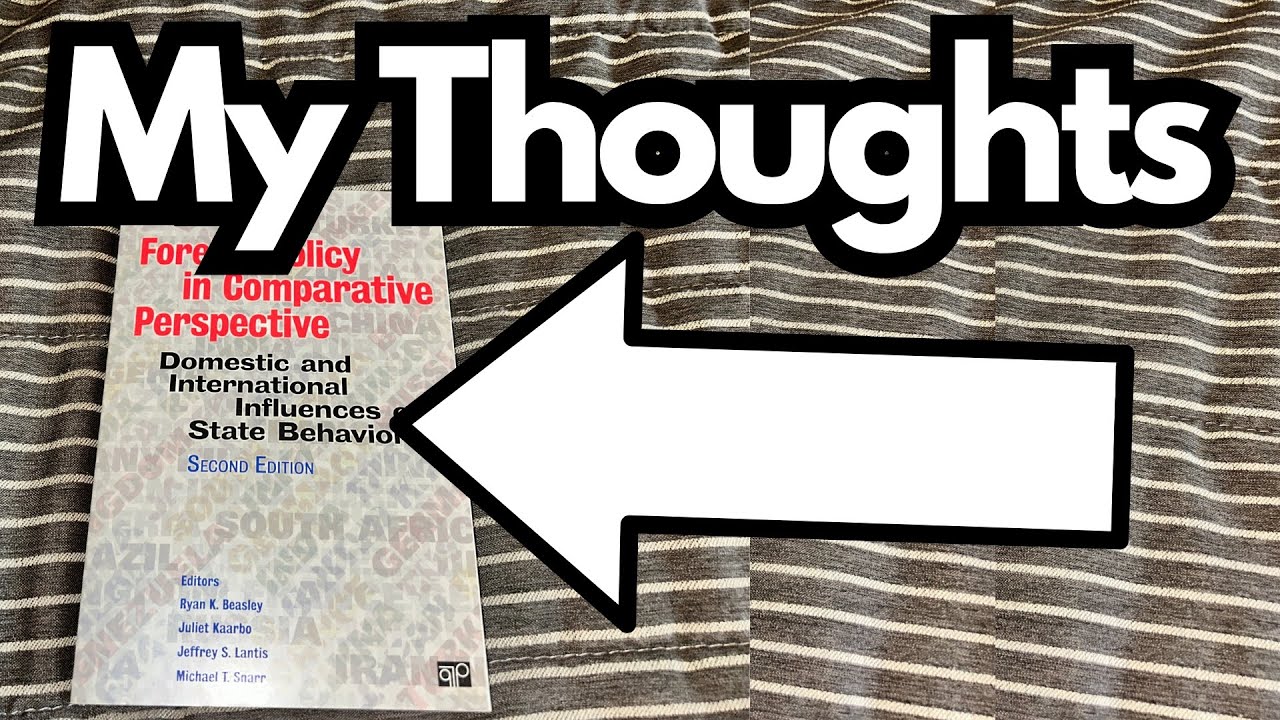
If you’ve ever picked up a dense international relations (IR) textbook and felt your eyes glaze over, you’re not alone. Theoretical and policy-heavy material can be tough to wade through, especially when it’s delivered in 400-page monoliths.
That’s where this particular book stands out: instead of one long, meandering argument, it offers a collection of shorter essays that get straight to the point.
This makes it especially useful for students, busy readers, or anyone who wants to understand complex IR ideas in more digestible chunks.
Overview / First Impressions
This book was originally picked up for an international relations course. It’s not light reading—some of the material is challenging—but its structure makes it more approachable than a traditional textbook.
Instead of a single continuous narrative, it’s organized as a collection of essays. Each essay tackles a specific issue or angle within international relations, which means you can:
- Read in shorter sessions
- Focus on one concept or debate at a time
- Skip around to the topics most relevant to your interests or coursework
Even if you don’t remember every detail later on, the format helps you engage with complex ideas in manageable portions.
General Vibe of the Book
From a physical and structural standpoint, this is a straightforward academic book:
- Standard academic layout – Essays are clearly separated, making it easy to see where one ends and the next begins.
- Modular reading experience – You’re not locked into reading it cover to cover. You can dip in and out as needed.
There’s nothing flashy about the design, but that’s typical for this kind of text. Its strength is in how it’s organized rather than in any visual flair.
Features & Functions
The main “feature” of this book is its essay-based structure:
- Collection of essays – Each piece is relatively short and focused.
- Direct and to the point – The essays aim to deliver arguments or analyses without a lot of narrative padding.
- Topic variety – While the exact subjects aren’t detailed here, IR readers like this often cover:
- Major theories (realism, liberalism, constructivism, etc.)
- Case studies (wars, alliances, institutions)
- Policy debates and contemporary issues
This format is particularly useful for:
- Students who need to engage with multiple perspectives quickly
- Readers new to IR who want to sample different ideas without committing to a single-author tome
- Researchers or essay-writers who need concise, citable arguments
How It Reads / Use Cases
Even though the content itself can be challenging, the shorter essay format makes the reading process more manageable. You’re dealing with dense ideas, but in smaller doses.
Good for:
- Coursework and seminars – Assigning individual essays instead of entire chapters of a textbook keeps reading loads realistic while still substantive.
- Targeted learning – If you’re trying to understand a specific concept, you can jump straight to the relevant essay instead of digging through a whole book.
- Busy schedules – You can read one essay in a sitting and still feel like you’ve made real progress.
Think of it as a series of focused “modules” rather than one long, continuous lecture.
Limitations / Things to Know
A few caveats to keep in mind:
- Not “easy” reading – The material itself is still fairly dense and intellectually demanding. The shorter format doesn’t simplify the ideas; it just packages them more compactly.
- Less narrative continuity – Because it’s a collection of essays, you don’t get the same overarching, step-by-step argument you might find in a single-author textbook.
- Varied style and depth – Different essays may have different tones, assumptions, and levels of difficulty, depending on the authors and topics.
If you’re looking for a gentle, hand-holding introduction to international relations, this might still feel like a steep climb. But if you’re up for a challenge and appreciate concise arguments, it’s a strong format.
Final Thoughts
This book is a solid example of how complex academic material can be made more approachable without dumbing it down. By presenting international relations through a collection of short, focused essays, it:
- Respects your time
- Lets you tackle difficult topics in manageable segments
- Works well for both structured coursework and self-directed study
If you’re studying IR—or just curious about how the world of states, power, and policy is analyzed at a higher level—this kind of essay collection is a smart addition to your shelf.
Resources / Further Study
If you’re interested in going deeper into international relations, look for:
- Introductory IR textbooks that lay out the main theories in a more linear, narrative style
- Essay collections and readers like this one that bring together multiple authors and perspectives
- Academic journals (e.g., International Organization, International Security) for current debates and case studies once you’re comfortable with the basics
Using a mix of a foundational textbook plus a focused essay collection often gives the best balance of clarity and depth.