

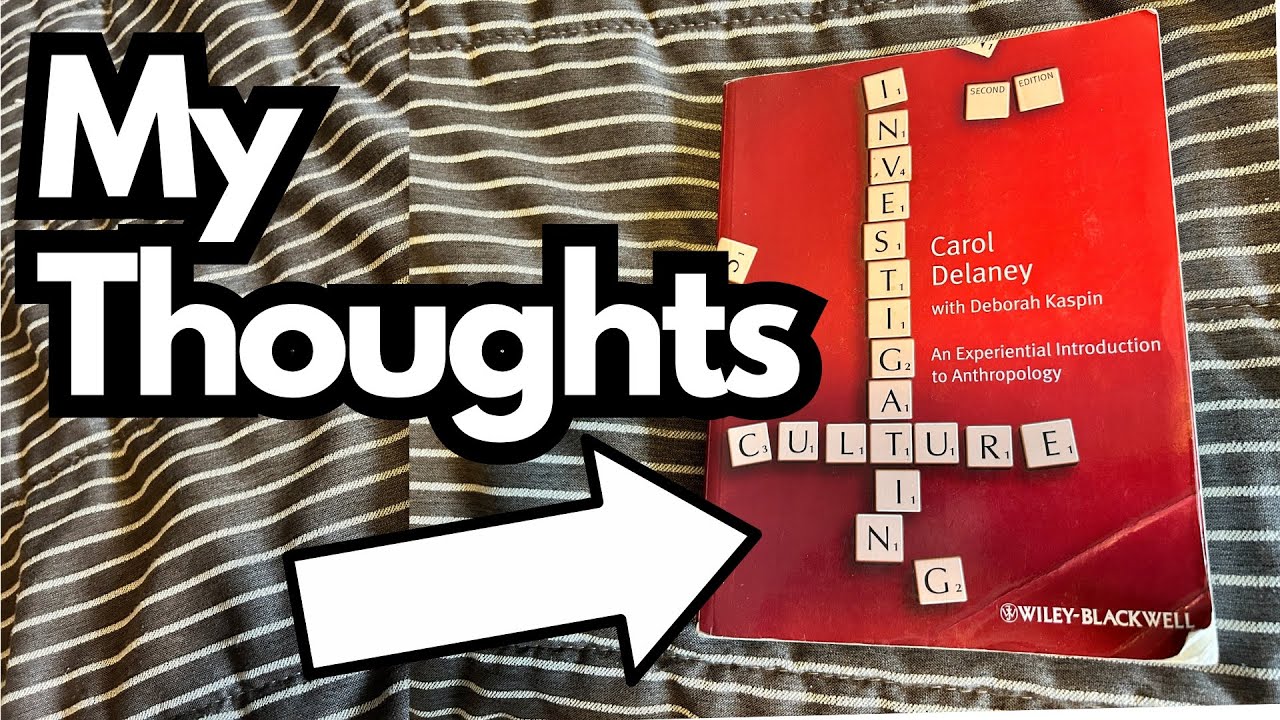
Cultural anthropology textbooks don’t usually show up on “must-read” lists for musicians or creatives, but they do shape how a lot of people think about culture, identity, and behavior. If you’ve ever wondered why people do what they do—or how much of what you do is “you” versus your surroundings—these books are often where those ideas get their clearest early expression.
This post looks at the experience of revisiting a cultural anthropology textbook years later: what still holds up, what doesn’t, and whether it’s worth your time if you’re curious about culture but also a bit skeptical of academic writing. You can grab it here on Amazon if you’re interested.
Overview / First Impressions
On a first read, this particular cultural anthropology textbook comes across as:
- Accessible – It’s written in plain language and is easy to follow.
- Engaging enough – As an introduction to the field, it does a solid job of explaining key ideas.
- Strongly social constructionist – It leans heavily on the notion that culture shapes almost everything we do.
As an introductory text, it works. If you’re new to cultural anthropology, it lays out the core concepts without overwhelming you.
On a second read, though—especially as an adult with more life experience—the book feels less compelling. The arguments don’t always seem as deep or airtight, and it’s easier to spot places where the author overstates their case.
Build Quality & Design (As a Textbook)
From a purely practical standpoint, this is a user-friendly textbook:
- Clear structure – Concepts are broken into manageable sections.
- Straightforward language – No dense academic jargon dominating every page.
- Good for beginners – You don’t need prior knowledge to understand what’s going on.
If your main concern is “Can I actually get through this without falling asleep?” the answer is yes. It’s not a challenging read, which can be a major plus if you’re just trying to get a handle on the basics of cultural anthropology.
Core Ideas & Theoretical Lean
The main theoretical backbone of the book is social constructionism—the idea that:
- Culture shapes how we think, act, and interpret the world.
- Much of what we take as “natural” or “given” is actually learned and culturally specific.
To be fair, this is a central insight of cultural anthropology, and the book does a good job making that point clear. It shows how different societies:
- Organize family and relationships
- Define gender roles
- Structure power and authority
- Create meaning through rituals, symbols, and language
Where it starts to feel thinner on a reread is in the degree of its claims. The book often implies (or outright states) that culture defines almost everything we do. That’s a powerful lens, but it can feel overstated if you’re inclined to question big, sweeping claims.
Reading It with a Skeptical Eye
Coming back to the book later in life, with a more skeptical mindset, a few things stand out:
- You start forming counterarguments – As you read, it’s easy to think, “Okay, but what about biology? What about individual personality? What about universal human tendencies?”
- Academics aren’t infallible – The second time through, it’s harder to accept every claim at face value, especially if you’re generally wary of academic overreach.
- Nuance feels missing – The book does a great job showing how culture shapes us but spends less time acknowledging the limits of that explanation.
None of this makes it a bad book. It just means it reads very differently depending on how much you’ve thought about these issues already—and how much you’re willing to push back mentally as you go.
Who This Book Is For
This kind of cultural anthropology textbook is a good fit if you:
- Are new to anthropology and want a clear, simple introduction.
- Like the idea that culture shapes behavior and want examples of how that works.
- Prefer easy-to-read texts over dense academic writing.
- Don’t mind (or actively enjoy) engaging critically and forming your own counterarguments as you read.
It’s less ideal if you:
- Are looking for a deep, heavily nuanced exploration of culture that balances biology, psychology, and universal human traits.
- Are already well-read in social sciences and want something more advanced or critical.
- Get frustrated when authors overstate their case without fully exploring alternative explanations.
Limitations / Things to Know
A few key limitations to keep in mind:
- Strong theoretical bias – The book leans heavily into social constructionism and doesn’t spend much time on competing frameworks.
- Not as deep on reread – Once you’re familiar with the basic ideas, the arguments can feel a bit one-dimensional.
- Assumes a lot of cultural determinism – It often implies culture explains nearly everything, which can feel unbalanced if you’re sensitive to oversimplification.
That said, these issues can actually be useful if you treat the book as a starting point for thinking, not a final authority.
Final Thoughts
As an introduction to cultural anthropology, this textbook does its job:
- It’s easy to read.
- It clearly explains how culture shapes human behavior.
- It gives you a solid foundation in a social constructionist view of the world.
On a second, more critical read, it doesn’t feel as deep or convincing. But that’s not necessarily a flaw—it might just mean you’ve grown past it, which is exactly what a good introductory book should help you do.
If you approach it with a healthy dose of skepticism and a willingness to mentally argue back, it can still be worth your time. Just don’t treat it as the final word on how humans work—treat it as one influential perspective among many.