

If you’re running a modern pedalboard, looping rig, or home recording setup, a good stereo patch cable can quietly make or break your workflow.
The MXR Stereo Patch Cable (on Amazon) is one of those unglamorous pieces of gear that you don’t think about—until the wrong cable stops your rig from behaving properly.
This quick review looks at what the MXR Stereo Patch Cable actually does, why the “stereo” part matters, and a few practical ways guitarists can use it.
Overview / First Impressions
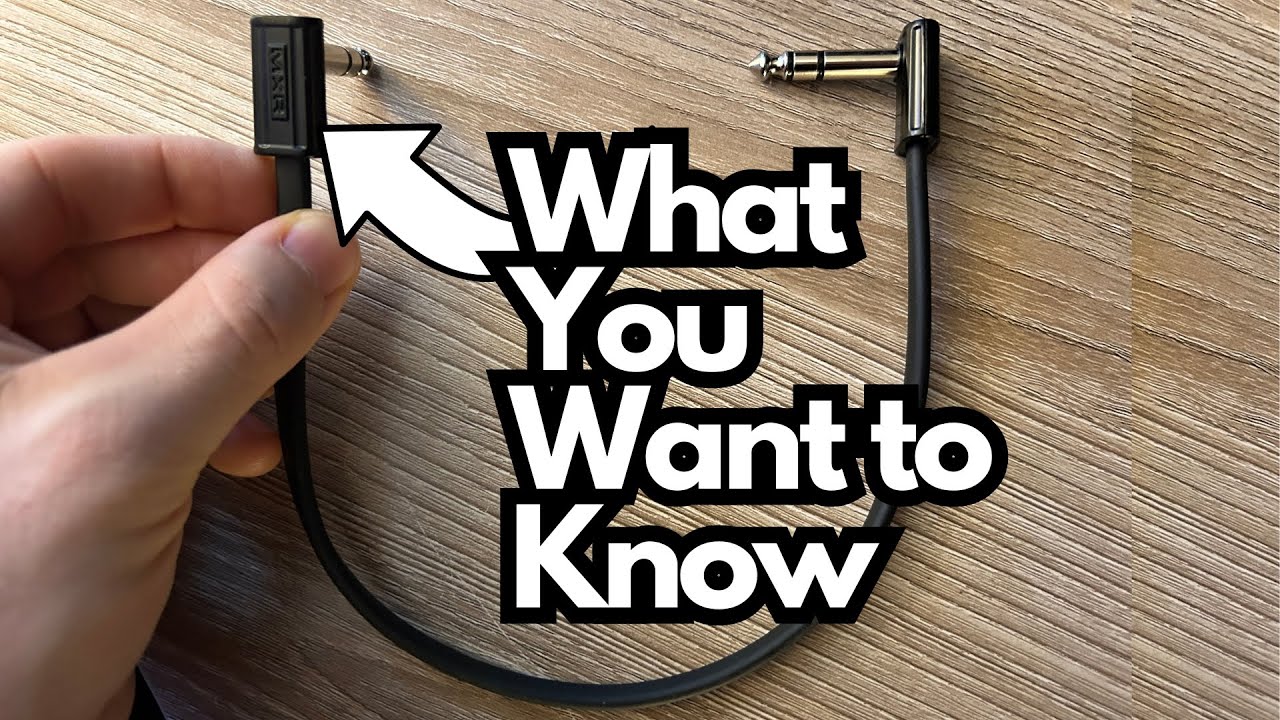
The MXR Stereo Patch Cable is exactly what it sounds like: a short, stereo (TRS) patch cable designed to connect gear that needs more than a simple mono connection.
What stands out most is that it just works. No weird behavior, no intermittent connections, no mystery noise. Plug it in, and the devices on either end talk to each other the way they’re supposed to.
For guitar players, this is especially important when dealing with:
- Loopers and footswitch control
- Expression and control jacks
- Stereo signal paths
- Studio or practice setups involving interfaces and headphone splitters
Build Quality & Design
MXR has a solid reputation for rugged, gig-ready gear, and this cable fits the same mold:
- Sturdy plugs – The connectors feel solid and well-made, not flimsy or loose.
- Compact form factor – It’s a patch cable, so it’s short and tidy—great for pedalboards or tight spaces.
- TRS (stereo) design – This is not a regular mono patch cable. It’s tip-ring-sleeve, designed to carry stereo or dual control signals.
It’s not a flashy cable, but it feels like something you can plug in and forget about.
Features & Functions
The key “feature” here is simply that it’s a true stereo (TRS) patch cable. That means:
- It can carry stereo audio (left and right channels) in one cable.
- It can carry control signals that require TRS wiring (like some footswitches, tap tempo, or expression/control ports).
- It’s compatible with gear that specifically calls for a stereo/TRS cable, not just any patch cable.
This is important: a lot of jacks on pedals and loopers look like regular 1/4″ inputs, but they’re actually TRS and won’t work correctly with a mono (TS) cable.
How It Performs & Practical Use Cases
A patch cable like this isn’t about “tone” in the way a guitar cable might be. It’s about function and reliability. Here are two practical use cases where it performs exactly as needed.
1. Controlling a Boss RC-5 Looper
The Boss RC-5 has a control jack that can be used for:
- Stop
- Memory shift
- Other assignable functions
If you try to connect that control jack using a mono cable, it won’t work properly. Some functions may not trigger, or the pedal won’t respond as expected.
With the MXR Stereo Patch Cable (TRS), all the RC-5’s external control functions work exactly as they should. That’s the clearest proof that:
- The cable is correctly wired for TRS
- It’s fully compatible with stereo/control applications
If you’re using any Boss looper or pedal that requires a TRS cable for external switching, this MXR cable is a safe, plug-and-play choice.
2. Connecting a Headphone Splitter to an Audio Interface
Another great use is in a home studio or practice setup:
- Audio interface headphone out → stereo patch cable → headphone splitter
Using the MXR Stereo Patch Cable in this context:
- Preserves the stereo image from the interface
- Ensures both left and right channels are correctly carried to the splitter
- Works without any noticeable issues or signal problems
If you practice with another player, teach, or just want to split headphones cleanly from your interface, this cable handles that job easily.
Limitations & Things to Know
A few points to keep in mind:
- It’s not a guitar instrument cable. This is for patching gear, not plugging your guitar into an amp.
- TRS is essential for certain devices. Don’t substitute a mono cable where a stereo/TRS cable is required—your pedal or looper may not respond correctly.
- Length is limited. As a patch cable, it’s meant for short runs (pedalboard or close connections), not for running across a room.
As long as you understand that this is a TRS utility cable, not a general-purpose guitar lead, you’ll be using it as intended.
Final Thoughts
The MXR Stereo Patch Cable is a simple, reliable solution for any guitarist dealing with:
- Loopers and external footswitch/control jacks
- Stereo connections on a pedalboard
- Headphone or interface routing in a small studio setup
It doesn’t try to be fancy—it just delivers proper TRS functionality with the build quality you’d expect from MXR. If you’ve ever had a pedal or looper “mysteriously” not respond to an external switch, there’s a good chance a proper stereo patch cable like this is exactly what you need.
Resources & Further Study
If you’re looking to go beyond wiring and really level up your playing, here are a couple of helpful resources mentioned:
Fretboard Memorization Cheat Sheet – Available here.
This guide covers major and minor triads in every key using an “octave mapping” approach, helping you:
- Memorize the notes on the fretboard
- Understand the harmonic foundation of chords and triads
- Start improvising more confidently across different keys
Traveling Guitarist Forum – Join the community at
forum.travelingguitarist.com
A place to talk guitar, music, practice strategies, and related topics with other players.
For wiring and utility tasks like this MXR Stereo Patch Cable, having the right small tools in place lets you focus on what actually matters: playing guitar and making music.