

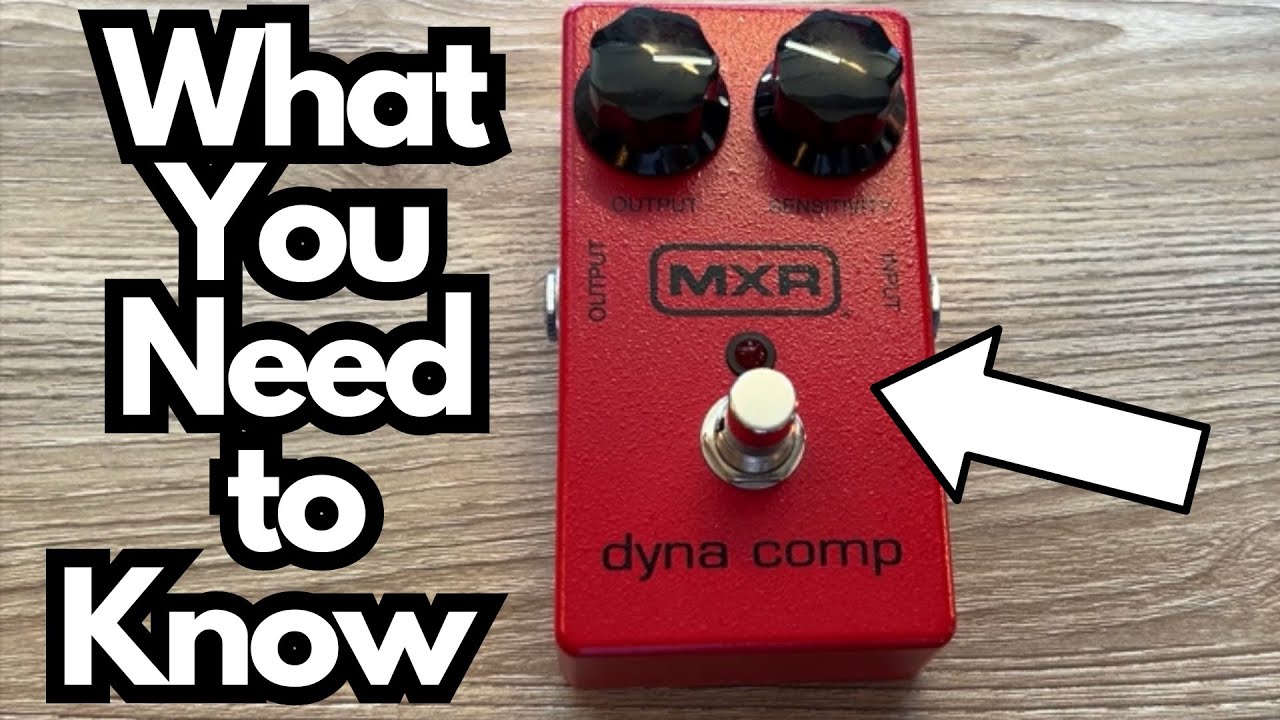
If you’ve spent any time around pedalboards, you’ve seen this little red box. The MXR Dyna Comp is one of the most iconic compressor pedals ever made, and it’s famous for that unmistakable attack—adding grit, color, and sustain rather than staying squeaky clean and transparent.
This is not a hi-fi studio compressor. It’s a character pedal, and that’s exactly why guitarists keep coming back to it. If you want your clean tones to pop, your country licks to snap, or your leads to sing with extra sustain, the Dyna Comp is still a go-to option.
Overview / First Impressions
The MXR Dyna Comp is a simple, two-knob compressor designed to give you:
- Extra sustain
- A more “plucky,” punchy attack
- Slight grit and color that thickens your tone
It works well with pretty much any rig—single-coils, humbuckers, clean amps, or slightly driven ones. In the demo setup here, it was run with an ESP Eclipse into an Orange amp with a touch of reverb, and the pedal delivered exactly what you’d expect: a compressed, snappy, sustaining tone that’s easy to play and very responsive to even light picking.
If you’re after transparent, barely-there compression, this is probably not your first choice. If you want that classic, squishy country/rock/pop compression sound, the Dyna Comp is right in the sweet spot.
Build Quality & Design
Like most MXR pedals, the Dyna Comp is built like a brick, but this particular unit feels especially solid—arguably one of the most tank-like pedals in MXR’s lineup.
Key build notes:
- Enclosure: Heavy-duty metal, no flex, no rattle, very confidence-inspiring.
- Footswitch & jacks: Standard mono input and output on the sides, no stereo options. Everything feels sturdy and roadworthy.
- Battery access: Requires removing the back plate with screws to insert a 9V battery. Inside, you’ll find a neat internal layout with a red board. It’s clean, but not tool-free.
- Power jack location: The 9V DC jack is on the side of the pedal, not the top. Functionally it’s fine, but it can be a bit awkward on crowded boards where top-mounted jacks are preferable.
Overall, it’s a no-nonsense, old-school stompbox that feels like it could survive a fall off the stage—or the stage truck.
Features & Functions
Part of the charm of the Dyna Comp is how simple it is. You get two knobs and one footswitch:
- Output – Controls the overall volume of the pedal. You can use this to match your bypassed level or push the front of your amp a bit harder.
- Sensitivity – This is often misunderstood. On the Dyna Comp, this control effectively adjusts the compression ratio, not the threshold. Turning it up increases the amount of compression and the squishiness of your signal.
Other basics:
- Power:
- 9V battery (via back plate screws)
- 9V DC input on the side (standard center-negative)
- I/O:
- Mono input
- Mono output
That’s it—no blend knob, no attack/release controls, no sidechain filters. It’s very much “set it by ear and play.”
How It Sounds / Use Cases
The Core Sound
The Dyna Comp is known for:
- A pronounced attack that makes notes feel more “plucky”
- Long, even sustain
- A bit of grit and color—your tone gets thicker and more forward in the mix
With the Output cranked and Sensitivity set fairly high, you get a very squishy, sustaining tone. Even lightly brushing the strings will trigger the compressor, which is great for:
- Country-style chicken picking
- Funk rhythm parts
- Clean leads that need to sing
- Tight, consistent clean arpeggios
In the demo, once a loop was recorded and the Sensitivity was high, the pedal picked up very light picking with ease. You barely need to dig in—the compressor does the work of evening everything out and making it feel easier to play.
More Subtle Settings
When you roll the Sensitivity back, you move into a more classic, usable everyday compression:
- The manual refers to a moderate Sensitivity setting as “Nashville compression”—that familiar, polished clean tone you hear on countless country and pop records.
- With lower Sensitivity and a balanced Output, you get:
- Smoother dynamics
- A bit of sustain
- Some tonal thickening
- But less of the extreme squish
This is where many players will live: enough compression to enhance your tone, but not so much that everything feels heavily clamped down.
Limitations / Things to Know
No pedal is perfect, and the Dyna Comp is very much an old-school design. A few things to be aware of:
- Power jack placement: Side-mounted power can make pedalboard layouts trickier compared to top-mounted jacks.
- Limited controls:
- No blend/mix knob to add in dry signal.
- No attack/release adjustment.
- No tone control.
- If you want studio-style flexibility, you’ll need a more advanced compressor.
- Always-on color: This is not a transparent compressor. It adds its own flavor—great if you want it, less ideal if you’re chasing ultra-clean, invisible compression.
- Battery access requires tools: Changing the battery means unscrewing the back plate. Not a big deal for many, but less convenient if you swap batteries often.
None of these are deal-breakers if you’re after that classic Dyna Comp sound, but they’re worth knowing before you buy.
Final Thoughts
The MXR Dyna Comp remains a classic for a reason. It’s simple, tough, and full of character. If you:
- Want snappy, “Nashville-style” cleans
- Like a bit of grit and color in your compression
- Prefer a plug-in-and-play pedal without a million controls
…then this little red box absolutely delivers.
It’s not the most flexible or modern compressor out there, but if you’re chasing that iconic, squishy, sustaining guitar tone that just feels easier to play, the Dyna Comp still earns its place on the board.
Resources & Further Study
If you’re working on your clean tone and want something musical to practice with your compressor on, focusing on triads across the neck is a great move.
A helpful resource mentioned in the demo is the Triads document at:
TravelingGuitarist.com/fretboard-cheatsheet
It’s designed to help with:
- Learning triads all over the fretboard
- Memorizing the neck using octave mapping
- Understanding root note locations for each triad shape
Pairing a good compressor like the Dyna Comp with focused fretboard work is a powerful way to tighten up your rhythm and lead playing.