

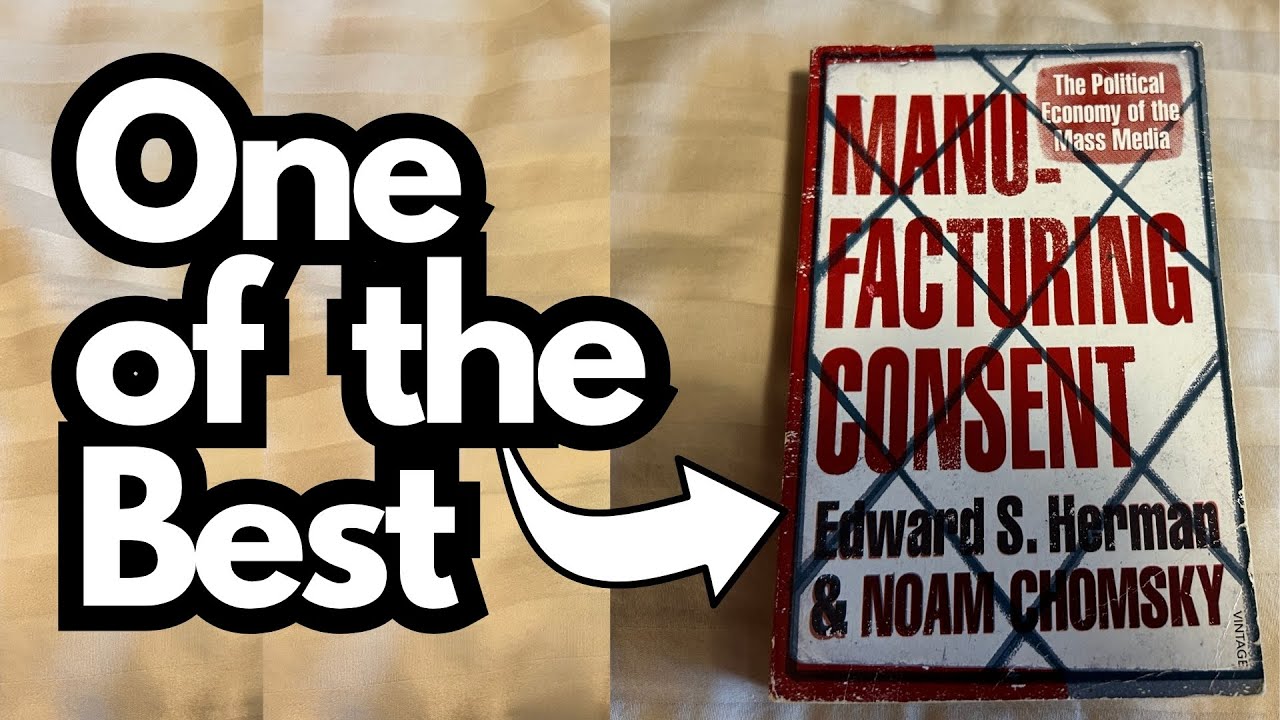
If you’re interested in how narratives get shaped—whether in politics, culture, or even the way music and art are covered—Noam Chomsky’s Manufacturing Consent is still one of the big, unavoidable books.
It’s not light reading, and it’s not something you casually flip through between emails, but it can change the way you see news, media, and public opinion. You can grab it here on Amazon.
This is a book for people who want to understand how mass media works beneath the surface: how stories get framed, why some topics dominate the headlines while others disappear, and how all of that ends up guiding what we collectively accept as “normal” or “necessary.”
Overview / First Impressions
Manufacturing Consent is Chomsky’s deep dive into what he calls “the political economy of the mass media.” In plain English, it’s an analysis of how media systems operate within larger economic and political structures, and how that shapes what we see, hear, and ultimately believe.
Reading it, you’ll find:
- Dense, theory-heavy sections that demand real concentration
- Case studies and examples that suddenly make abstract ideas click
- “Nuggets of wisdom” throughout—short passages that are surprisingly sharp and memorable
It’s not a breezy page-turner, but it is the kind of book that sticks with you and subtly rewires how you interpret news and public discourse.
Vibe of the Book
This isn’t a design-focused or visual book; it’s all about the content. Structurally, though:
- The chapters are long and concept-heavy
- Arguments are built slowly and methodically
- The writing leans academic rather than conversational
You won’t find quick summaries or infographic-style breakdowns. Instead, Chomsky and co-author Edward S. Herman walk you through their ideas step by step, assuming you’re willing to put in the mental work.
What the Book Actually Does
At its core, Manufacturing Consent tries to explain how mass media doesn’t just “report” reality—it helps create consensus about what’s acceptable, necessary, or inevitable.
Key ideas include:
- Media as a system of filters
Rather than imagining a big conspiracy, Chomsky describes structural “filters” (like ownership, advertising, sourcing, and ideological pressures) that shape what gets reported and how. - Creating agreement (“manufacturing consent”)
The media doesn’t just inform; it helps generate public support—or at least passive acceptance—for government policies and actions. - Justifying state and corporate power
Coverage often works to legitimize the actions of governments and large institutions, framing them as reasonable, necessary, or unavoidable.
The book is less about individual bad actors and more about how the system itself tends to produce certain kinds of stories and silence others.
Use Cases / Who It’s For
Think of this book like a challenging but important reference track for how you consume information:
- For news junkies
It gives you a framework to question why certain stories are front-page material and others never get mentioned. - For creatives and musicians
It sharpens your understanding of how cultural narratives are built—who gets platformed, who doesn’t, and why some voices are consistently amplified over others. - For anyone interested in politics or social issues
It helps you see how public opinion is nudged and shaped, not just by speeches and campaigns, but by everyday media coverage.
You don’t have to agree with everything Chomsky says to find value here. Even sections you push back against can clarify your own thinking about media and power.
Limitations / Things to Know
Before you dive in, it’s worth being honest about a few things:
- It’s not an easy read
The writing is dense, and the arguments unfold slowly. This is a book you need to concentrate on—distraction-free reading helps a lot. - It can feel uneven
Some sections are incredibly impactful and memorable; others can feel dry or overly detailed. The “nuggets of wisdom” are scattered throughout, but you may have to push through some heavy passages to get to them. - Not a quick, one-sitting book
It’s the kind of work you might read once carefully—and maybe revisit key sections a second time—rather than something you constantly dip in and out of.
If you go in expecting a punchy, pop-journalism-style overview, you’ll probably be frustrated. If you approach it like a serious study, it’s much more rewarding.
Final Thoughts
Even if you’re not a huge Chomsky fan, Manufacturing Consent is still worth reading at least once. It’s demanding, but it gives you a powerful lens for understanding how mass media doesn’t just reflect reality—it actively shapes the boundaries of what we talk about and what we accept.
If you’re willing to slow down, focus, and let the arguments unfold, you’ll come away with a deeper, more critical way of looking at headlines, news coverage, and the stories we’re told every day.
Resources / Further Study
If this book grabs you, a few natural next steps are:
- Watching interviews and lectures where Chomsky summarizes or updates these ideas—helpful for reinforcing the core concepts in more conversational language.
- Reading more recent critiques or extensions of the “manufacturing consent” model to see how it holds up in the age of social media and digital platforms.
Used thoughtfully, Manufacturing Consent becomes less of a one-time read and more of a reference point you’ll keep returning to whenever you ask: Why is this the story I’m being told—and who does it serve?