

If you’ve been eyeing an affordable acoustic that can handle years of real-world use, the Fender CD-60 is probably on your radar. It’s one of those guitars you see everywhere: in starter packs, on beginner lists, hanging in the corner of a friend’s living room. Grab it here on Amazon.
But how does it hold up after years of playing, gigging, and even a bit of accidental abuse? Let’s dig into what this guitar is really like to live with from a guitarist’s perspective.
Overview / First Impressions
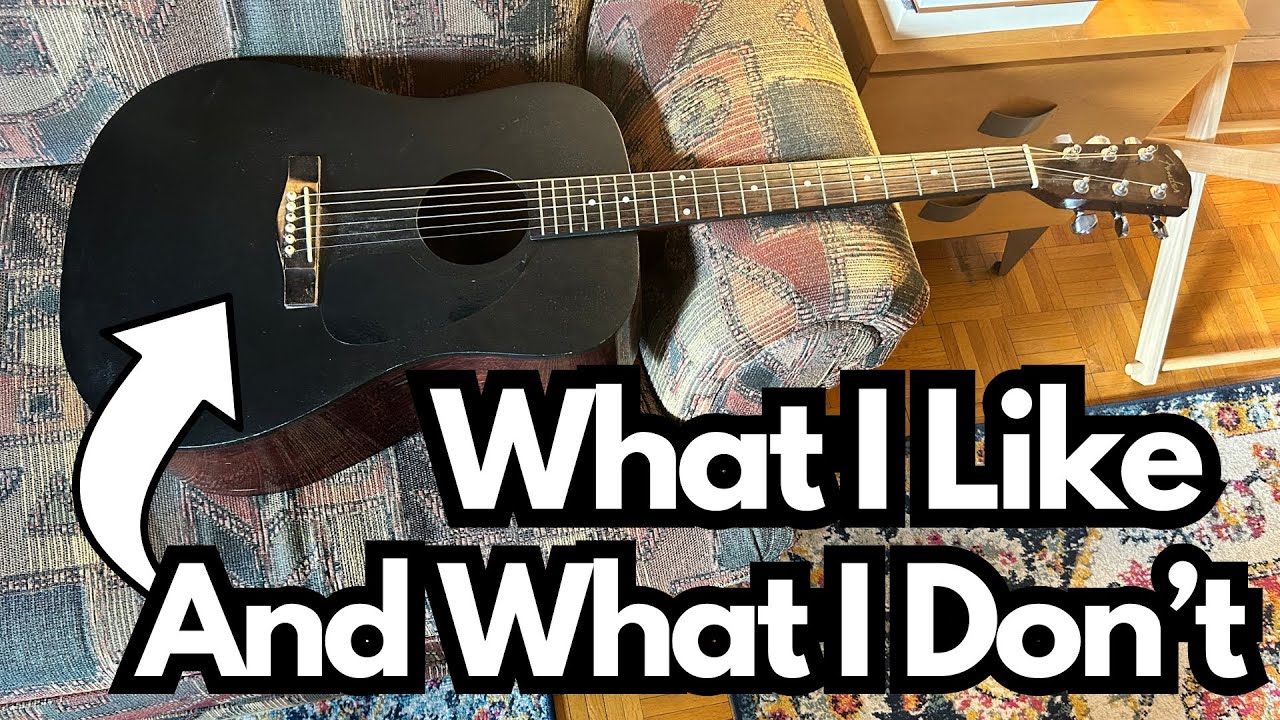
I’ve had my Fender CD-60 for years now. Originally, it was the tan (natural) version, but after a particularly bad step in the wrong place, the body took a serious hit. A friend of mine repaired the wood and repainted it black—front and back. He did such a solid job that you’d barely know anything happened.
Cosmetic drama aside, the CD-60 has been a reliable workhorse. It’s not a boutique acoustic, and it doesn’t pretend to be. It’s a solid, budget-friendly guitar that does exactly what you need it to do: stay in tune, sound decent, and handle regular playing without falling apart.
For the price point, it’s a perfectly respectable instrument for:
- Beginners looking for a first “real” acoustic
- Electric players who just need a solid acoustic around the house
- Anyone who wants a beater guitar they don’t have to baby
I still use mine regularly and don’t feel a strong need to replace it.
Build Quality & Design
Even after years of use—and one major repair—the CD-60 has held up well structurally.
Body & Finish
- Originally a natural/tan finish, now repainted black after repair
- The wood repair and repaint job on mine show that the guitar’s construction can take a hit and still be brought back to life
- The back and sides still feel solid and stable over time
This isn’t a fragile, hyper-resonant, all-solid-wood instrument that you’re afraid to take out of the house. It’s more of a “throw it in the car and go” kind of acoustic, which is exactly what many players need.
Neck & Playability
Right now, I’m running some pretty heavy gauge strings on it, and that does make it harder to play—especially for long sessions or more intricate parts. That’s not the guitar’s fault; it’s just the nature of heavier strings.
If you want an easier-playing experience, I’d recommend:
- Dropping down to a lighter gauge (e.g., .011s or .012s instead of heavier sets)
- Getting a basic setup done (truss rod adjustment, action check, etc.)
With a sensible setup and lighter strings, the CD-60 can feel much more forgiving, especially for newer players or those coming from electric.
Features & Functions
The CD-60 is a straightforward acoustic. Depending on the exact version, you might see slight variations, but generally you’re getting:
- A full-size dreadnought body
- Standard acoustic bridge and tuners
- No onboard electronics (on the basic models)
There’s nothing fancy here—no built-in tuner, no EQ, no cutaway. That can be a plus if you just want a simple, traditional acoustic that you mic up or play unplugged.
If you need a plug-and-play stage acoustic, you might want to look at the CD-60CE (the cutaway/electro version) or plan on using a soundhole pickup or external mic.
How It Sounds / Use Cases
Sonically, the CD-60 sits in that “good enough for most situations” zone:
- It sounds pretty good for what you pay
- It’s perfectly fine for practice, songwriting, and casual jams
- With decent strings and a proper setup, it can record surprisingly well in a home studio, especially if you’re not chasing ultra-high-end acoustic tones
You’re not getting the depth, complexity, or dynamic nuance of a high-end Taylor or Martin, but you are getting:
- A usable, balanced tone
- Enough projection for strumming and light fingerpicking
- A sound that works fine in mixes if you EQ it thoughtfully
For most players who just need an acoustic to learn on, write with, or keep nearby, the CD-60 absolutely does the job.
Limitations / Things to Know
A few practical points to keep in mind:
- Playability depends heavily on string choice
- Heavy strings (like I’m using now) make it feel stiffer and harder to play
- Lighter gauges will make a huge difference, especially for beginners
- Not a high-end tone machine
- It’s solid for the price, but if you’re extremely particular about acoustic tone, this won’t replace a premium instrument
- Basic feature set
- No electronics on many models
- No cutaway on the standard CD-60
- Great for simplicity, but not ideal if you need built-in stage-ready features
That said, none of these are deal-breakers in the context of what this guitar is meant to be: an affordable, reliable acoustic that you can actually live with.
Final Thoughts
The Fender CD-60 is one of those guitars that just quietly does its job. It’s not glamorous, but it’s dependable, playable (especially with the right strings), and sounds perfectly respectable for the money.
If you’re:
- Starting out on guitar
- An electric player who wants a no-fuss acoustic
- Someone who needs a durable “everyday” acoustic
…the CD-60 is a very reasonable choice. I’ve had mine for years, and despite some abuse and a full cosmetic overhaul, I still don’t feel any urgency to replace it. It just works.
Resources & Further Study
If you’re using a guitar like the CD-60 to practice and want to get more out of your fretboard time, here are a couple of useful resources:
Fretboard Memorization Cheat Sheet – Available at travelingguitarist.com, this cheat sheet lays out all the major and minor triads in every key. It uses octave mapping and other techniques to help you:
- Memorize the notes on the fretboard
- Understand triads as the foundation of harmony and chords
- Start improvising more confidently in multiple keys
Guitar & Music Forum – You can also join the community at forum.travelingguitarist.com to talk gear, theory, practice strategies, and more with other players.
A solid, affordable acoustic plus a focused practice approach can take you a long way—no fancy guitar required.