

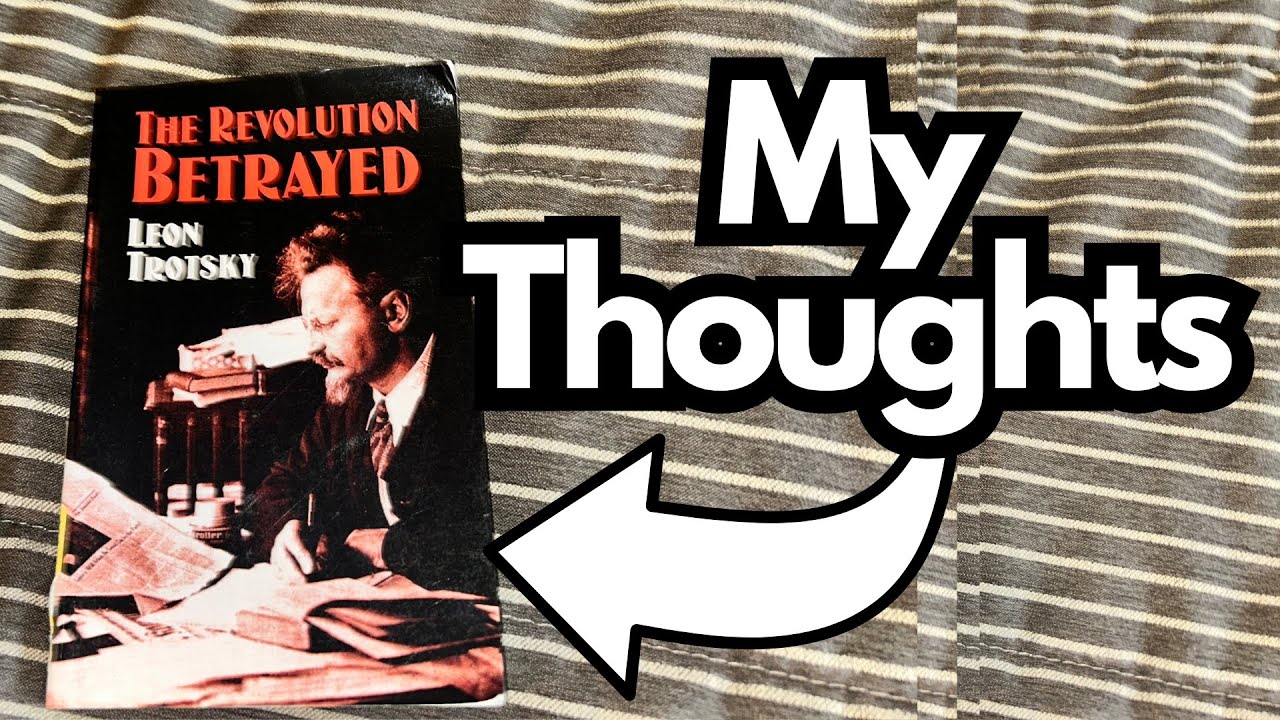
Sometimes the most interesting books on your shelf are the ones you barely remember reading. That seems to be the case here with this Leon Trotsky volume—something picked up, maybe studied at university, and now living more as an artifact than an active reference.
Even if the details have faded, there’s still value in reflecting on what a book like this represents: a snapshot of a certain time in your life, a particular intellectual phase, and a set of ideas that might have shaped your thinking in ways you don’t fully recall.
You can grab it here on Amazon if you’re interested.
Overview / First Impressions
The book in question is a work by Leon Trotsky, a central figure in early 20th-century revolutionary politics and Marxist theory. While the exact title and contents aren’t fresh in mind, it’s the kind of book you’re likely to encounter in a university setting—especially in courses on:
- Political theory
- Modern history
- Marxism and socialism
- Revolutionary movements
It’s the sort of text you might read once with great intensity, then shelve and slowly forget in terms of specific arguments, while still carrying some of its influence subconsciously.
Build Quality & Design
Physically, the book appears to be a fairly standard academic or political paperback:
- Typical university-press or mass-market political edition
- Simple, utilitarian cover design focused more on the author and title than on flashy artwork
- Likely dense text, with few images or visual breaks
It’s the kind of book that’s built more for study and reference than for coffee-table aesthetics.
Content & Themes (Likely Focus)
Even without recalling the exact passages, a Leon Trotsky book from a university context would typically cover some combination of:
- Revolutionary strategy and tactics
- Critiques of capitalism and/or Stalinism
- Analyses of class struggle and historical materialism
- Reflections on the Russian Revolution and its aftermath
Trotsky’s writing is often:
- Intense and polemical
- Theoretically dense but passionate
- Deeply rooted in historical analysis
So while the specifics may be hazy now, it probably offered a strong, ideologically driven perspective on power, class, and political change.
Who This Kind of Book Is For
A Trotsky book like this usually appeals to:
- University students in political science, history, or philosophy
- Readers interested in Marxist or socialist thought
- People curious about revolutionary theory and 20th-century politics
It’s not light reading, and it’s not meant to be. It’s for those willing to grapple with complex, often controversial ideas.
Limitations / Things to Know
A few realities about this sort of text:
- Density: The writing can be heavy, theoretical, and demanding.
- Bias: It’s explicitly ideological—useful, but not neutral.
- Context-dependent: Much of its power comes from understanding the historical moment it was written in.
If you return to it years later, you might find:
- You remember almost nothing of the specifics.
- Your reaction to the ideas has changed with time and experience.
- It serves more as a reminder of a phase of study than a current guide.
Final Thoughts
Even if you don’t remember what Trotsky actually said in this particular book, its presence on your shelf still matters. It marks a period of serious engagement with political ideas—something that can shape how you see the world, even if the quotes and arguments have faded.
Sometimes that’s the real legacy of a book like this: not the exact words, but the fact that you wrestled with them at all.