

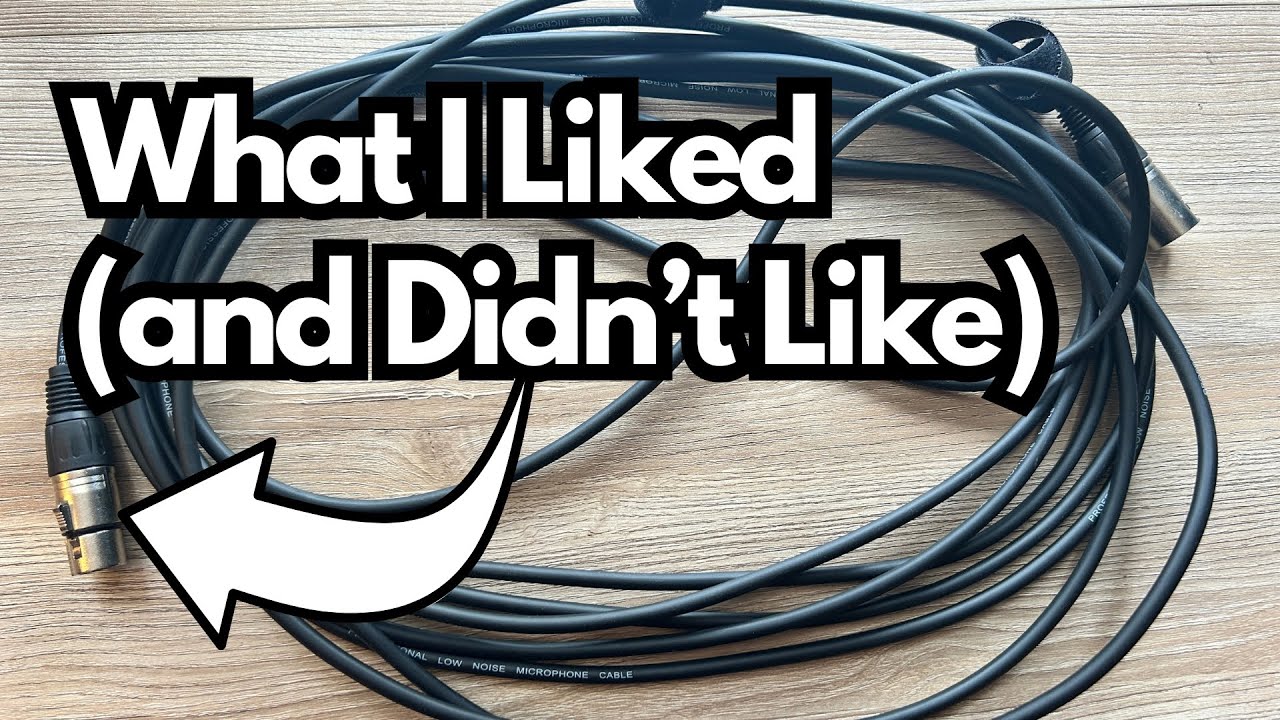
If you’re building a home studio, cables are one of those unglamorous but essential pieces of the puzzle. You don’t need boutique, hand-soldered, unicorn-hair wiring to make great music—but you do need something reliable that won’t ruin takes with crackles, noise, or sudden failures.
This review looks at a straightforward XLR cable (from Amazon) used to connect a microphone in a vocal booth to an audio interface on a desk. It’s a simple, affordable option that’s been in regular use for about eight months.
If you’re a guitarist recording vocals, acoustic instruments, or running mics for your amp, this will give you a realistic idea of what to expect from this kind of budget cable.
Overview / First Impressions
This XLR cable is very much a “does the job” piece of gear.
- It connects an audio interface on a desk to a mic inside a vocal booth.
- It’s been in use for around eight months without any functional issues.
- It’s clearly designed more for stationary studio setups than serious touring.
From a guitarist’s perspective: if you’re mostly recording at home—vocals, mic’d amps, acoustic guitars—this kind of cable is perfectly serviceable. It’s not a tone upgrade; it’s simply a functional, affordable tool.
Build Quality & Design
The build quality is acceptable for the price, but not bulletproof.
What’s good:
- Works reliably: No noticeable problems with signal loss or intermittent noise so far.
- Velcro straps included: The cable comes with Velcro ties, which makes it easy to coil and store neatly. That’s especially handy if you’re routing it in and out of a vocal booth or around a home studio.
What’s not so great:
- Connectors feel a bit fragile: The XLR connectors and the connection between the cable and the plug don’t feel as rugged as higher-end options.
- Not built for abuse: You can tell from the overall construction that this isn’t meant for constant plugging and unplugging, stepping on, or dragging around stages.
In short, it’s fine for a fixed studio cable run, but not something you’d want to rely on as your main live rig cable.
Features & Functions
This is a straightforward XLR cable—no frills, no fancy features—but it has a couple of practical touches.
Standard XLR-to-XLR connection
Ideal for:
- Microphones into an audio interface or mixer
- Mic’ing a guitar amp
- Running a vocal mic into a home recording setup
Velcro cable wraps
These make it easy to:
- Keep your studio tidy
- Avoid kinks and tangles
- Store the cable neatly when not in use
There are no special shielding claims or “premium” marketing features here—just a basic, working cable.
How It Sounds / Use Cases
Cables at this level are mostly about reliability rather than “tone.” In this case:
- It works as expected. No reported issues with:
- Noise or hum introduced by the cable itself
- Dropouts or intermittent connection problems
- Perfect for a static studio run. This cable has been used:
- From an audio interface on a desk
- Into a vocal booth mic
- Over an extended period (about eight months)
For guitarists, that use case translates well to:
- Leaving it permanently connected to:
- A vocal mic in your booth or corner of the room
- A mic in front of your guitar amp
- Not worrying about tone loss or major problems, as long as the cable isn’t abused.
Limitations / Things to Know
There are a few important caveats with this cable:
1. Not road-ready
The connectors and strain relief don’t inspire confidence for:
- Touring
- Frequent setup and teardown
- Environments where the cable gets stepped on, yanked, or twisted constantly
2. Durability is “good enough,” not great
In a gentle, mostly fixed studio setup, it will probably last a long time. But if you:
- Gig regularly
- Do live sound
- Repatch your studio constantly
…you’ll likely want to invest in something more rugged.
3. Not a “forever cable”
It’s a practical, budget-conscious solution—not the last cable you’ll ever buy.
Final Thoughts
If you’re a home-recording guitarist or producer who needs a simple XLR run—from your audio interface to a vocal mic or amp mic—this kind of cable is perfectly adequate.
Pros:
- Works reliably for studio use
- Affordable and functional
- Comes with handy Velcro straps for neat cable management
Cons:
- Connectors and strain relief aren’t built for heavy abuse
- Not ideal for live or touring situations
Use it in a fixed home studio setup, treat it reasonably well, and it should serve you just fine.
Resources & Further Study
If you’re looking to improve your recordings beyond just swapping cables, there’s a free resource worth checking out:
- Free Mixing Cheat Sheet – Available here. It’ll also put you on an email list with additional recording and mixing tips that aren’t shared elsewhere.
You can also join the community at:
- forum.producersociety.com – A forum for discussing production, mixing, and related topics. It’s currently free to sign up, with plans to expand it into a more comprehensive course platform in the future.
For most guitarists and home producers, learning better tracking and mixing techniques will make a far bigger difference than upgrading from a working budget XLR cable to a premium one—and those resources are a great place to start.