

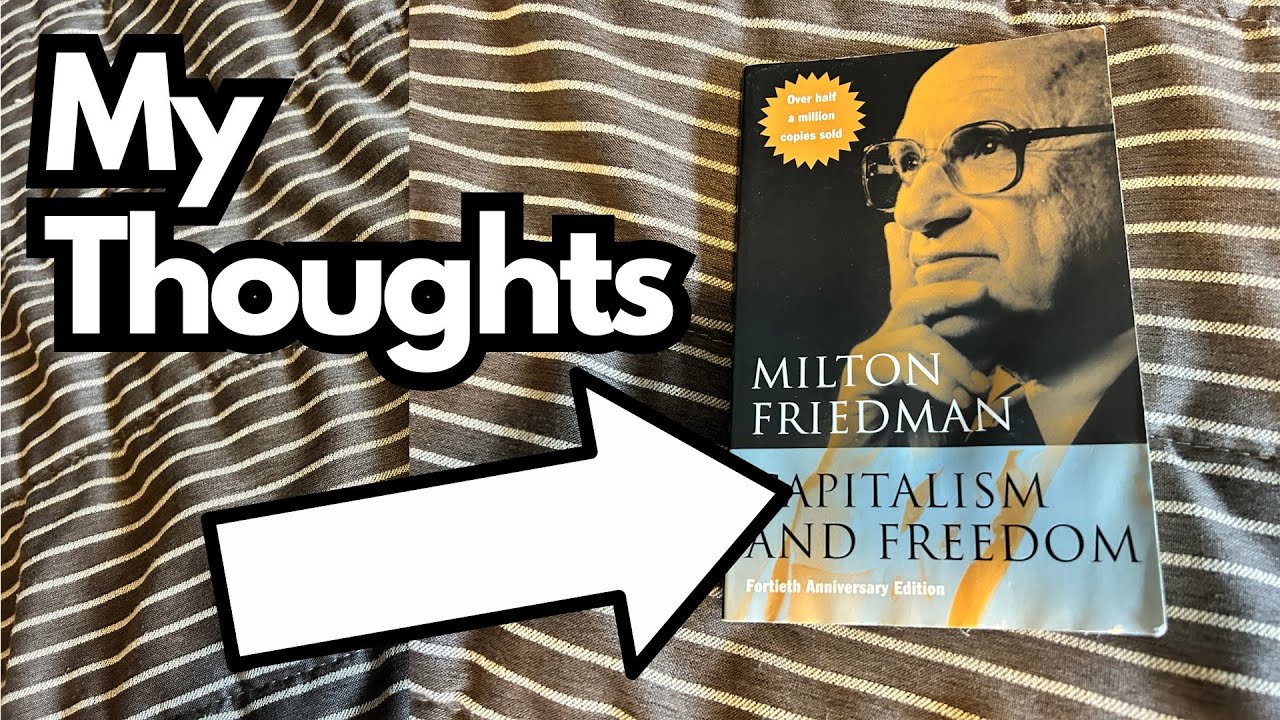
If you’re studying political science, economics, or political economy, you’ve probably had Capitalism and Freedom (or a similar “classic”) tossed onto your reading list. It’s one of those books that shows up in university syllabi over and over again—especially if you’re dealing with the relationship between markets and government.
But is it actually worth sitting down and grinding through the whole thing?
This post offers a straightforward, no-nonsense take aimed at students or curious readers who are wondering whether they should commit to reading it cover to cover, or if a solid summary will do the job.
You can grab it here on Amazon if you’re interested.
Overview / First Impressions
This is a classic text in political economy, often assigned in university courses. It deals with the intersection of:
- Economics
- Politics
- The broader idea of “political economy”
The core focus is how economic systems (especially capitalism) relate to political freedom and the role of the state. If you’re deeply interested in the theory behind markets, state intervention, and individual liberty, this is squarely in your lane.
However, from a reader-experience standpoint, it’s not exactly gripping. The tone is dry, academic, and dense. If you’re not already very invested in the subject matter, it can feel like a slog.
General Vibe of the Book
From a purely physical standpoint, it’s a standard academic paperback:
- Typical textbook-style layout
- Lots of text, relatively few visual breaks
- Designed more for study than for casual reading
You’ll likely find yourself underlining and highlighting rather than casually flipping through it for fun. It’s the kind of book where many people start strong with lots of notes and then gradually lose steam halfway through.
What the Book Actually Does
The “features” here are conceptual rather than physical. The book aims to:
- Explain how capitalist markets and political freedom are connected
- Argue for a limited role of government in economic life
- Explore big-picture questions in political economy
It’s mostly:
- Economics-focused: markets, incentives, policy, etc.
- Politics-adjacent: how those economic ideas shape institutions and freedoms
If your course or interests lean heavily into political theory, public policy, or macro-level economic systems, this text sits right at that crossroads.
Who It’s For
Think of this as a very dry, theory-heavy lecture in book form. It’s:
- Analytical
- Abstract
- Slow-paced
You’ll probably get the most out of it if:
- You’re seriously into political economy
- You don’t mind dense economic arguments
- You’re reading it as part of a structured course, with lectures and discussions to help unpack it
If you’re more casually curious about politics or economics, or you prefer narrative-driven nonfiction, this is likely to feel tedious.
Limitations / Things to Know
A few honest caveats:
- It can be extremely boring if you’re not already invested in the topic.
- The writing is highly academic, not aimed at general readers.
- Many people don’t finish it once the initial motivation (like a course requirement) fades.
- The key ideas are often summarized very well online, which may be enough for many students.
For a lot of readers, especially undergrads just trying to pass a course or get a conceptual overview, a well-written summary or secondary source may be more efficient and just as useful.
Should You Read the Whole Thing?
You might want to read it cover to cover if:
- You’re specializing in political economy or economic theory
- You enjoy dense, conceptual reading
- You want to engage directly with a foundational text in the field
You might be better off with summaries if:
- You just need the main arguments for an exam or essay
- You’re only mildly interested in the topic
- You tend to lose interest in dry, theory-heavy writing
In many cases, a solid summary plus a few key excerpts is enough to understand the arguments and engage in class discussions intelligently.
Final Thoughts
This book is a classic for a reason: it tackles big, important questions at the heart of political economy. But “important” doesn’t always mean “enjoyable.”
If you’re deeply into economics and political theory, and you don’t mind pushing through dry prose, it can be a valuable read. If not, you’re probably better served by a good summary and using your time on something more engaging that still builds your understanding of politics and economics.
Use it as a tool, not a sacred text—engage with the ideas in whatever format helps you learn best.