

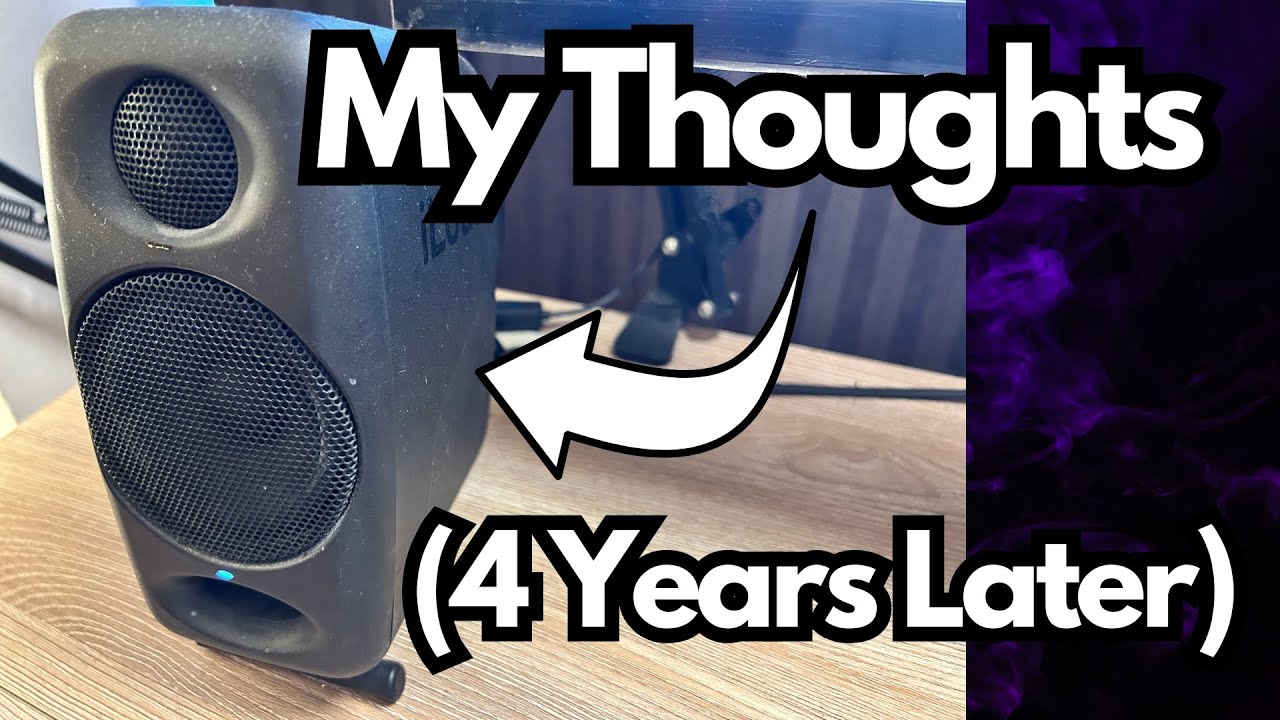
If you’re a guitarist or home producer looking for serious sound in a small space, the IK Multimedia iLoud Micro Monitors (on Amazon) are probably on your radar. They’re compact, powered studio monitors that double as Bluetooth speakers, and they’ve become a staple in a lot of bedroom studios.
I’ve been using a pair for about four years now—both for mixing and for casual listening—and they’ve held up impressively well. This isn’t a lab test, just a long-term, real-world take from someone who actually uses them every day for guitar, production, and general music listening.
Overview / First Impressions
The iLoud Micro Monitors are tiny, powered nearfield monitors designed for small studios, desktops, and portable setups. Despite their size, they’re intended to be “real” reference speakers rather than just fancy computer speakers.
In practice, they hit that middle ground nicely:
- Accurate enough for mixing home and project studio material
- Enjoyable enough for casual listening (Spotify, YouTube, etc.)
- Flexible enough to work as both wired monitors and Bluetooth speakers
Are they going to replace high‑end studio mains for professional mix engineers and hardcore audiophiles? Probably not. But for most guitarists, producers, and creators working in a small room, they’re more than capable.
Build Quality & Design
Physically, the iLoud Micros are compact and solid. After four years of regular use:
- The enclosures are still solid with no rattles or weird vibrations.
- The finish has held up well, even being moved around and repositioned many times.
- The built‑in stands are one of the standout design features.
Those adjustable stands on the bottom let you tilt the speakers up toward your ears when they’re sitting on a desk. That’s a big deal for nearfield listening—especially for guitarists who often sit a little closer to the speakers when dialing in tones or mixing.
The only wear I’ve noticed over time is on the connecting cable between the two speakers. It’s starting to get worn out, but that’s honestly normal for cables that are plugged, unplugged, and moved around a lot. The good news: you can just replace the cable rather than the whole system.
Features & Functions
Even though they’re small, the iLoud Micro Monitors are surprisingly feature‑rich.
Key features:
- Powered speakers – No external power amp required; just plug them into the wall and into your interface or device.
- Bluetooth connectivity – You can stream audio straight from your phone or tablet. Great for casual listening or quickly checking a mix from another device.
- Wired inputs – For serious work, plug them into your audio interface or computer. This is how I use them for mixing.
- Adjustable desktop stands – Built-in tilt so you can aim them properly at your ears.
From a guitarist’s perspective, this makes them ideal for:
- Monitoring your amp sims or modelers (Helix, Axe-Fx, plugins, etc.)
- Using them as your main studio monitors in a small room
- Doubling as everyday speakers for listening to music when you’re not working
You do need to plug in a power adapter (they’re not battery-powered), and the power connection is on the back, along with the other I/O. Once they’re set up, though, they’re basically “set and forget.”
How It Sounds / Use Cases
For Mixing
I use the iLoud Micro Monitors primarily as my mixing speakers. In terms of accuracy:
- Mixes done on them translate well to other systems (car, headphones, etc.).
- They’re detailed enough to make good decisions about EQ, levels, and basic balance.
- For a small monitor, they do a respectable job of representing lows, mids, and highs in a balanced way.
If you’re a top-tier mix engineer or a hardcore audiophile, you might have more demanding expectations. But for most home studio users, they’re absolutely good enough to mix on.
For Guitar
For guitarists using amp sims and modelers, these are a very practical option:
- They handle clean and high-gain tones without falling apart.
- They’re loud enough for nearfield playing at a desk.
- The clarity helps you hear how your guitar tone will sit in a mix.
If you’ve only ever played through guitar amps or cheap computer speakers, these will be a big step up in hearing the real character of your tone.
For Casual Listening
I also use them just for casual music listening, and they shine there too:
- Bluetooth makes it easy to play music from across the room.
- They sound full and clear without being hyped or fatiguing.
- They’re small enough to live on a desk without taking over the space.
They strike a nice balance: accurate enough for work, enjoyable enough for fun.
Limitations / Things to Know
A few practical notes after four years of use:
- Cable wear:
The cable that connects the two speakers can wear out over time. This isn’t unique to IK Multimedia—cables just degrade with use. Fortunately, it’s replaceable, so it’s more of a maintenance item than a deal-breaker. - Output volume:
For nearfield monitoring at a desk, they’re plenty loud. But if you want something that can fill a larger room or you crave very high SPL, you may eventually want to step up to the larger iLoud models. I’m personally considering getting the bigger ones for that reason. - Not “audiophile” monitors:
Some professional mixers and audiophiles might prefer larger, more expensive speakers. That doesn’t mean these are bad—just that they’re designed for compact, practical studio use rather than ultra-high-end listening rooms.
Final Thoughts
After four years with the IK Multimedia iLoud Micro Monitors, I have almost nothing negative to say about them.
- They’re great for mixing in a home or project studio.
- They’re great for casual listening via Bluetooth.
- They’re compact, powered, and practical, with smart design touches like the adjustable stands.
- The only real wear point has been the connecting cable, which is easily replaced.
If you’re a guitarist or producer working in a small space and you want monitors that can handle both serious work and everyday listening, the iLoud Micro Monitors are an easy recommendation. And if you ever outgrow them volume-wise, IK’s bigger models are a natural next step.
Resources & Further Study
If you’re getting into mixing and want to make the most of speakers like these, there’s a helpful free mixing cheat sheet available at:
- Producer Society – Free mixing cheat sheet and tips:
https://producersociety.com/free-mixing-cheatsheet
You can also join the community forum:
- Producer Society Forum – Free (for now) to sign up:
https://forum.producersociety.com
Both are useful if you’re learning to mix on compact monitors and want guidance on getting better-sounding results.