

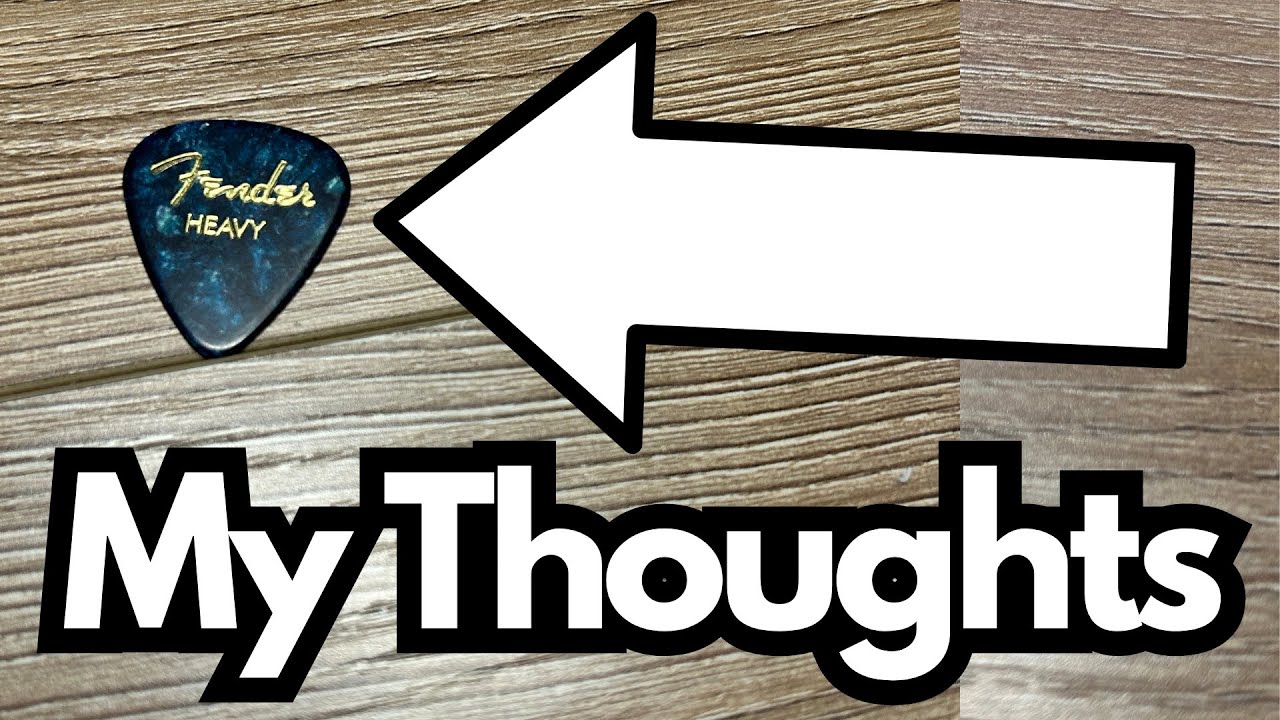
If you’re a guitarist looking for a straightforward, no-nonsense pick for rock and general playing, the Fender Heavy Celluloid is probably already on your radar. These are some of the most common picks you’ll see in players’ cases and on music store counters—and for good reason.
They look great, feel familiar, and absolutely get the job done for a wide range of styles. But they’re not perfect for everyone, especially if you lean toward faster, more precise playing. You can grab one here on Amazon if you’re interested.
Below, we’ll break down what these picks do well, where they fall short, and who they’re really for.
Overview / First Impressions
Fender Heavy Celluloid picks are classic “standard” guitar picks:
- Material: Celluloid
- Gauge: Heavy (thicker, stiffer feel)
- Shape: Traditional Fender 351-style teardrop
- Use case: General rock, rhythm playing, and everyday guitar work
They’re designed to be a reliable, go-to pick for most players—especially those playing rock, pop, blues, or similar styles where you’re doing a mix of strumming and single-note lines, but not extreme shred or ultra-fast jazz lines.
Visually, they’re hard to beat: the classic Fender marbled finishes look beautiful up close and have that vintage vibe many players love.
Build Quality & Design
Fender’s Heavy Celluloid picks are:
- Well-finished: Edges feel smooth, with no rough molding seams.
- Visually striking: The pearloid and tortoise-style patterns with a glossy surface give them a premium look.
- Comfortably sized: Standard pick size that fits most players’ hands easily.
However, from a more technical or demanding player’s perspective, there are two design choices that stand out:
1. They’re on the larger side
Compared to some more modern, compact picks favored by shredders or jazz players, these feel a bit big. That extra surface area can make them feel slightly less nimble for intricate, fast passages.
2. The tip isn’t very pointy
The rounded tip works great for strumming and general playing, but if you want laser-precise attack and articulation, you may find them too blunt. That can make super-fast alternate picking, sweep picking, or detailed jazz lines feel less controlled.
Features & Functions
From a guitarist’s perspective, here’s what these picks bring to the table:
- Heavy gauge stiffness
The thicker celluloid gives you a strong, defined attack and better control than a thin or medium pick, especially for rock rhythm and punchy riffs. - Classic celluloid feel
Celluloid has a slightly slick, smooth feel with a familiar “snap” against the string. It’s a very traditional pick material that many players grew up with. - Versatile for standard playing
They’re well-suited for:- Rock rhythm guitar
- Power chords and riffs
- General practice and jamming
- Basic lead lines that don’t push into extreme speed territory
If your playing is more about solid rhythm and melodic leads than blazing-fast technique, these will fit right in.
How It Sounds / Use Cases
Tone & Attack
With a heavy celluloid pick, you get:
- A strong, defined attack – great for rock tones where you want the pick to really “speak” through the amp.
- A slightly bright, snappy character – celluloid tends to add a bit of brightness and clarity to the note.
On electric guitar through a driven amp, they deliver that classic rock feel: firm attack, solid chunk on palm-muted riffs, and enough stiffness to really dig in.
On acoustic guitar, the heavy gauge gives a powerful, full strum—though some players might prefer a slightly thinner pick for more flexibility in strumming.
Best For
These picks really shine if you are:
- A rock guitarist playing chords, riffs, and moderate-speed leads
- A general-purpose player who wants one pick that can handle most situations
- Someone who values classic feel and looks over ultra-modern, hyper-precise designs
If you’re not aiming for shred-level speeds or ultra-detailed jazz phrasing, they’ll probably feel great.
Limitations / Things to Know
These are solid picks, but they’re not for everyone. From a more technique-focused guitarist’s point of view, there are some limitations:
1. Not ideal for shred or advanced jazz
The larger size and rounded tip can feel a bit clumsy for:
- Very fast alternate picking
- Sweep picking and economy picking at high speed
- Intricate jazz lines that demand ultra-clear articulation
2. Too big and not pointy enough for precision work
If you’re used to smaller, sharper picks (like Jazz III–style shapes or boutique options), these may feel imprecise and less controlled.
3. Better as a generalist than a specialist
They’re great “standard” picks, but if you’re deep into a specific niche—technical metal, fusion, bebop jazz—you’ll probably want something more tailored to that style.
That said, if you’re a more straightforward rock or pop player, these “limitations” may not matter at all.
Final Thoughts
Fender Heavy Celluloid picks are:
- Great for:
- Standard rock and pop playing
- Rhythm guitar, power chords, and general-purpose use
- Players who want a classic look and familiar feel
- Not so great for:
- Shredders and high-speed technical players
- Jazz or fusion players who need maximum precision and a sharper tip
For many guitarists, these could easily be a main pick or a reliable backup you always keep around. For players chasing extreme speed and surgical accuracy, they’re more of a “nice to have” than a serious tool.
If you’re a typical rock or everyday guitarist, they’re absolutely worth trying. If your playing leans heavily into advanced technique, you’ll probably outgrow them and move toward smaller, pointier options—but you might still appreciate them for casual playing or their classic aesthetic.
Resources & Further Study
If you’re working on developing your fretboard knowledge and improvisation skills, check out:
- Fretboard Memorization Cheat Sheet – TravelingGuitarist.com
A resource focused on major and minor triads in every key, using visual mapping techniques. It helps you:- Memorize the notes on the fretboard
- Understand triads as the foundation of chords and harmony
- Start improvising confidently in multiple keys
- Traveling Guitarist Forum – forum.travelingguitarist.com
A community space where you can talk guitar, music, gear (including picks like these), and connect with other players working on similar skills.