

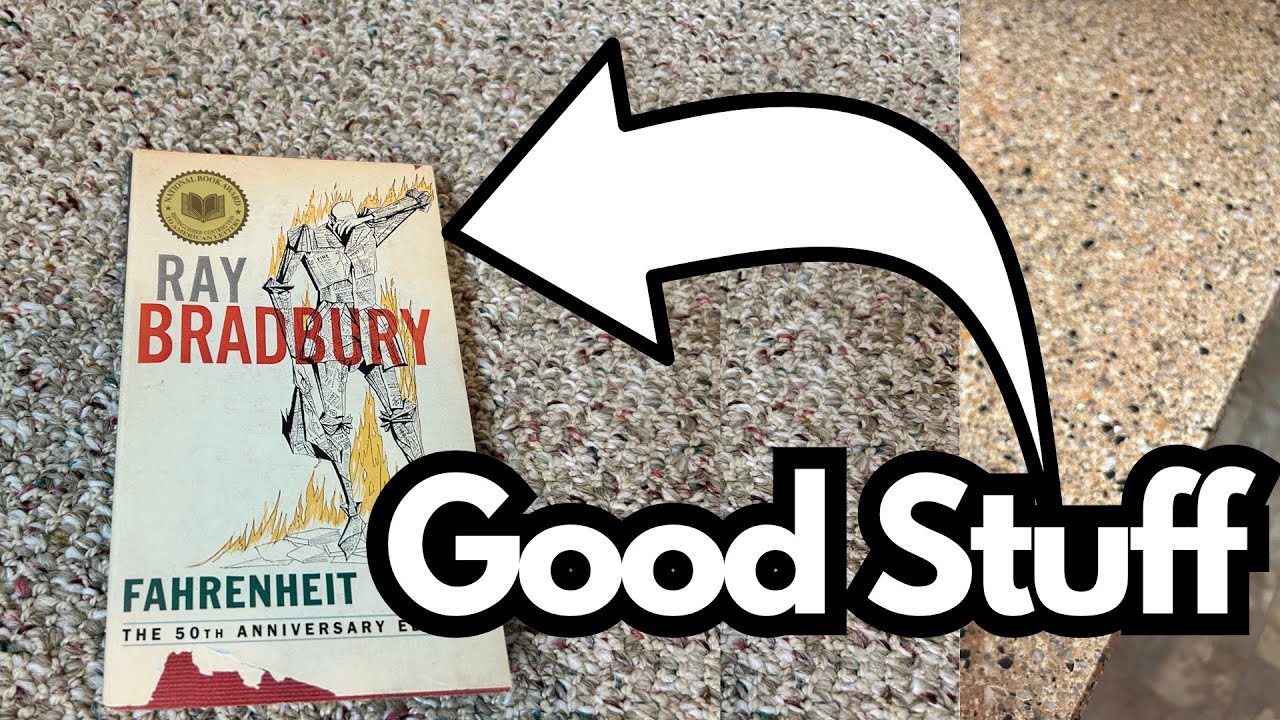
Some books hit you first with their ideas, others with their atmosphere, and occasionally one just grabs you with its cover. Fahrenheit 451 is one of those rare dystopian novels that does all three. You can grab it here on Amazon if you’re interested.
If you’re into classic dystopian fiction—think 1984, Brave New World, The Chrysalids—this one sits comfortably in that lineage, but with its own distinct style and pace. It’s not necessarily the “best” of the bunch for everyone, but it’s easily one of the most approachable and visually iconic.
Overview / First Impressions
Fahrenheit 451 is often remembered as “the book-burning book.” The core premise is simple and chilling: in a future society, books are illegal, and “firemen” don’t put out fires—they start them, burning books and the homes that hide them.
What stands out immediately:
- It’s short and fast-paced
- You can realistically read it in a day or two
- It’s engaging without feeling heavy or overly dense
Even if you haven’t read it in years, it’s the kind of story that sticks in your mind—images of burning pages, oppressive media, and a society that’s chosen comfort over critical thought.
Cover, Style & Vibe
One of the fun, almost superficial joys of Fahrenheit 451 is the cover art. Among the classic dystopian novels, this one often has the coolest, most striking covers—usually featuring flames, mechanical imagery, or stylized figures that instantly communicate danger and control.
That visual cool factor actually fits the book’s tone:
- Stark, vivid imagery
- A sense of urgency and motion
- A world that feels both futuristic and eerily familiar
It’s not a slow, philosophical trudge; it’s more like a tightly wound, cinematic sprint through a collapsing culture.
Why It Still Matters
Even though it’s been around for decades, Fahrenheit 451 still feels relevant:
- It tackles censorship and the destruction of knowledge
- It questions passive entertainment vs. active thinking
- It explores how a society can willingly give up its freedoms
It’s especially suited for:
- Readers who want a classic dystopia without a 500-page commitment
- Students or casual readers looking for something thought-provoking but accessible
- Anyone who likes stories about rebellion, individuality, and the cost of conformity
How It Reads
From a pure reading experience, this is a very approachable novel:
- Length: Short enough to finish in a weekend
- Pace: Moves quickly, with clear stakes and tension
- Style: Descriptive but not overcomplicated; easy to follow even if you’re not a heavy reader
It’s the kind of book you can pick up almost on a whim and actually finish, which is more than you can say for a lot of classics.
Limitations / Things to Know
A few realistic notes:
- If you’re comparing it to 1984 or Brave New World, it may feel a bit more straightforward and less sprawling in scope.
- Some of the technology and setting details are dated, but the themes still land.
- It’s more about big ideas and atmosphere than intricate plotting.
So while it might not be the single greatest dystopian novel ever written for everyone, it’s absolutely one of the most readable and memorable.
Final Thoughts
Fahrenheit 451 is one of those books that’s easy to recommend because it demands so little time and gives back quite a lot. It’s short, intense, visually memorable, and thematically rich without being overwhelming.
If it’s been years since you last read it, it’s worth revisiting—you’ll probably get more out of it now than you did the first time. And if you’ve never cracked it open, this is one classic dystopia you can dive into and finish in just a couple of days.