

If you play guitar long enough, you eventually realize that cables matter. Not just in terms of tone, but in reliability, durability, and day‑to‑day convenience.
If I’ve got a bit of extra cash and I need a new cable, I almost always reach for an Ernie Ball. Not because the cheaper options are unusable, but because the small quality-of-life upgrades add up over time—especially if you gig, rehearse a lot, or just hate fighting with messy cables.
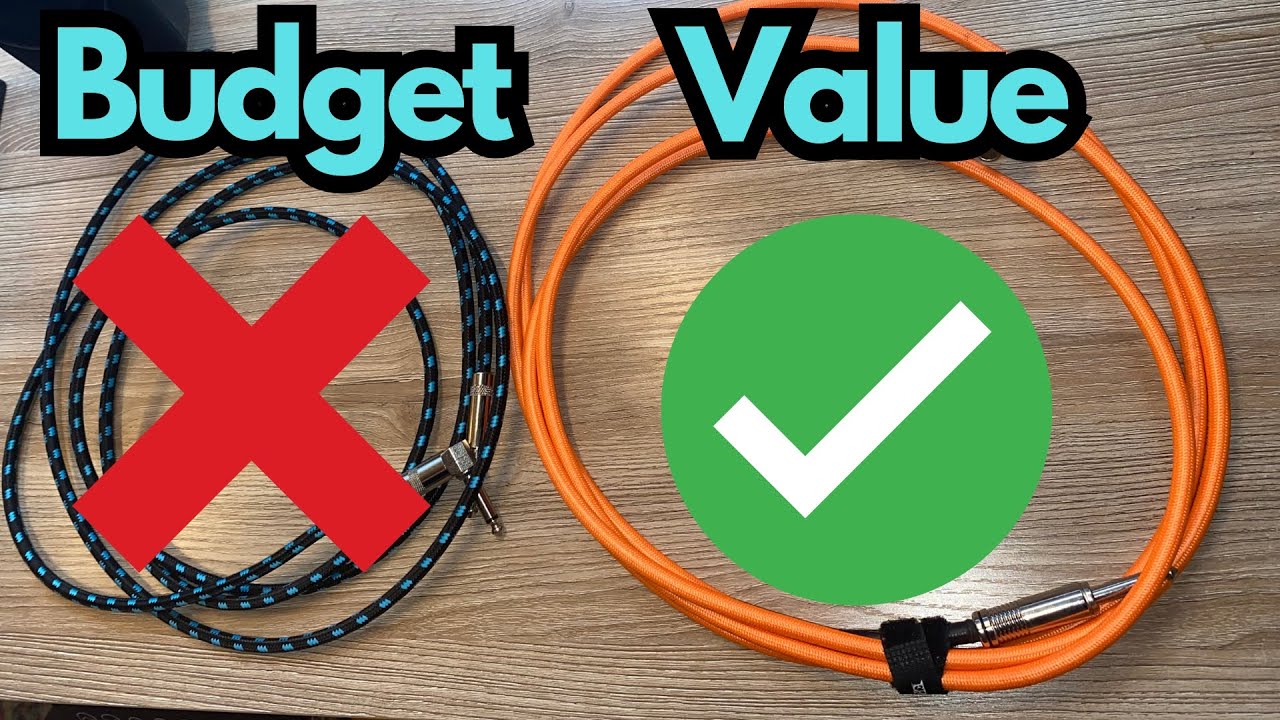
In this post, I’ll compare an Ernie Ball instrument cable with a more budget‑friendly Sonicake cable from a guitarist’s perspective: how they’re built, how they feel, and when each one makes sense.
You can grab one here on Amazon.
Overview / First Impressions
Ernie Ball Cable
- Feels more substantial and robust in the hand.
- The connectors and strain relief (the rubber section where the cable meets the plug) look and feel higher quality.
- Includes a built‑in Velcro strap for easy storage.
- The outer wrap/braiding is tighter and more densely wound.
Sonicake Cable
- More affordable and very cost‑efficient.
- Functional and perfectly usable for most players.
- Lacks some of the refinement and durability features you see on the Ernie Ball.
- No built‑in Velcro for cable management.
- Braiding/wrap is looser and less dense.
Both will get your signal from guitar to amp. The difference is in how they’ll hold up and how pleasant they are to live with.
Build Quality & Design
Connectors & Strain Relief
On the Ernie Ball cable, the connector housing and the rubber strain relief feel purpose‑built for durability. That rubber section where the cable meets the plug is especially important—it’s one of the most common failure points on cheap cables.
- Ernie Ball:
- Thick, solid strain relief.
- Connector looks and feels robust.
- Gives you the impression it’s designed for years of plugging/unplugging and being stepped on at rehearsals.
- Sonicake:
- No rubber strain relief in the same way; it’s more minimal.
- The connector doesn’t have that same “heavy-duty” vibe.
- Slightly smaller overall and looks less substantial.
If you’re gigging or constantly coiling and uncoiling your cables, that extra attention to the connector area can be the difference between a cable that lasts a year and one that lasts several.
Outer Wrap / Braiding
The outer wrap (or braiding) on a cable protects the internal conductors and affects flexibility and durability.
- Ernie Ball:
- More wraps/coils in the braiding.
- Tighter, denser weave.
- Feels more rugged and protective.
- Sonicake:
- Fewer wraps; the braiding is more spaced out.
- Still functional, but doesn’t feel as tough or premium.
Over time, a denser wrap tends to resist kinks, snags, and general abuse better, which is a plus if you’re constantly setting up and tearing down.
Features & Functions
Built‑In Velcro Strap
This is a small feature that makes a surprisingly big difference.
- Ernie Ball:
- Comes with a Velcro tie attached to the cable.
- Makes it easy to coil the cable neatly and secure it for storage or transport.
- Saves you from having to buy separate cable ties.
- Sonicake:
- No Velcro included.
- You’ll either live with loose, messy cables or buy your own ties.
If you care about a clean setup or you’re tired of untangling a rat’s nest of cables every time you play, that built‑in Velcro is a nice quality-of-life upgrade.
How It Sounds / Use Cases
From a purely tonal perspective, both cables will do the basic job: carry your guitar signal to your amp or interface. For most players in most situations, the audible difference between these two specific cables will be minimal compared to differences in pickups, pedals, amps, or even your picking technique.
Where the Ernie Ball really wins is in use case and longevity:
- Ernie Ball – Best For:
- Gigging musicians who need reliability.
- Players who constantly plug/unplug and move gear around.
- Anyone who values durability and neat cable management.
- Sonicake – Best For:
- Budget-conscious players.
- Backup cables in a gig bag or home studio.
- Secondary setups (practice amp, spare rig, etc.).
There’s nothing wrong with having a mix of both: a few higher‑end cables for your main rig, and some more affordable ones as backups or for less critical situations.
Limitations / Things to Know
Ernie Ball Cable
- Price: You’re paying extra for build quality, design, and convenience features like Velcro and better strain relief.
- Overkill for some: If you only play at home occasionally, a premium cable might be more than you strictly need.
Sonicake Cable
- Durability: While usable and good value, it doesn’t inspire the same confidence in long-term durability, especially around the connectors and outer wrap.
- No cable management: Lacks built-in Velcro, so expect more cable chaos unless you add your own ties.
- Fit & finish: The overall look and feel is more “budget,” which might not bother you, but it’s noticeable when compared side by side with an Ernie Ball.
Final Thoughts
If you’ve got the extra money and you care about durability, neat storage, and a more premium feel, the Ernie Ball cable is an obvious upgrade over a more cost‑efficient option like the Sonicake.
That said, there’s absolutely nothing wrong with owning a bunch of Sonicake cables too. They’re practical, affordable, and perfectly fine for many players and situations.
The smart move for most guitarists is a hybrid approach:
- A couple of high‑quality cables (like Ernie Ball) for your main signal chain and gigs.
- A few budget cables (like Sonicake) as backups or for secondary setups.
Your tone will be happy, your wallet won’t hate you, and your rig will be a lot more reliable.
Resources & Further Study
If you’re looking for something to practice once your cables are sorted, check out:
Fretboard Memorization Cheat Sheet – TravelingGuitarist.com
A practical resource that lays out major and minor triads in every key. It uses octave mapping and other techniques to help you:
- Memorize the notes on the fretboard.
- Understand the foundation of harmony through triads.
- Start improvising in multiple keys more confidently.
Traveling Guitarist Forum – forum.travelingguitarist.com
A place to talk guitar, music, gear, and whatever else with other players. It’s a good spot to ask questions, share rigs, and keep learning.