

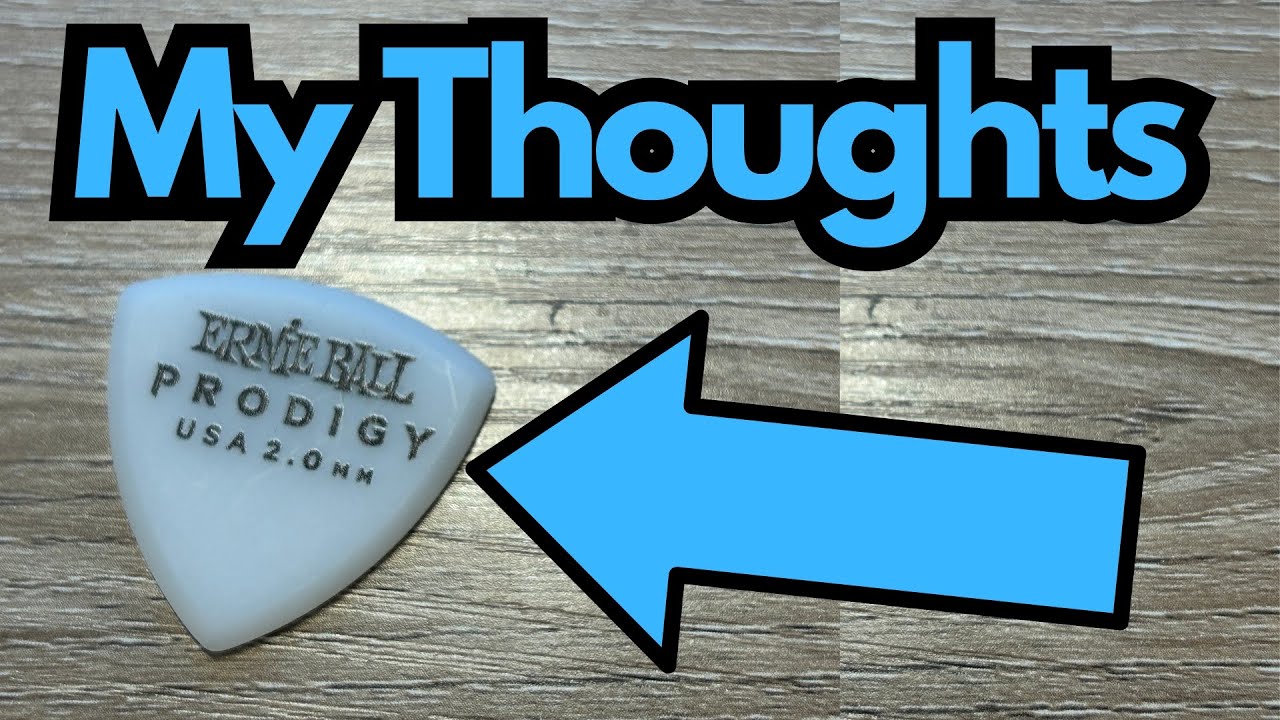
If you’re like most guitarists, you probably have a few picks lying around that you never really use. For me, one of those has always been the Ernie Ball Prodigy pick. It felt a bit overkill for electric guitar—too big, too sharp—so it just sat in my pick tin.
You can grab one here on Amazon if you want.
Recently, though, someone mentioned they use the Prodigy specifically for bass. And the more I thought about it (and actually tried it), the more it made perfect sense.
If you’re a bassist who prefers picking over fingers—or a guitarist who doubles on bass—this might be a very interesting tool for your tone and technique.
Overview / First Impressions
The Ernie Ball Prodigy is a larger, sharp-tipped pick designed for precision. In the hand, it immediately feels different from a standard guitar pick:
- Bigger overall footprint
- Sharper, more extreme point
- Noticeable stiffness, but with a bit of flex
On electric guitar, that extreme point can feel almost too focused, especially if you’re used to a regular 351-style pick. But on bass, the design starts to shine: the size and shape offer more leverage over the heavier strings, while the sharp point gives you a very defined attack.
Build Quality & Design
The Prodigy is clearly built with control in mind. From a bassist’s perspective, here’s what stands out:
- Larger Size – The extra surface area makes it easier to grip, especially when you’re digging into thick bass strings. You’re not pinching a tiny sliver of plastic; you’ve got something substantial in your fingers.
- Extreme Point – The tip is very sharp compared to a typical bass or guitar pick. This translates into:
- A more articulate attack
- Easier string-to-string accuracy
- Less “smear” in fast passages
- Stiff but Slightly Flexible – It’s not a floppy pick, but it’s also not a brick. There’s just enough flex to keep it from feeling harsh, while still giving you that solid, controlled feel.
In the hand, it feels purpose-built for players who value precision over a soft, rounded response.
Features & Functions
From a practical standpoint, here’s what the Prodigy brings to the table for bass players:
- Leverage on Thick Strings
The larger body gives you better mechanical advantage when pushing and pulling heavy bass strings, especially on the low E and B. - Precision Picking
The sharp tip and stiffness lend themselves well to:- Fast picking lines
- Tight, rhythmic playing
- Locked-in, consistent attack
- Focused Tone
Because the tip is so defined, your note attack is very clear and focused. You don’t get the slightly mushy front-end that can happen with big, rounded bass picks. - Control at Higher Speeds
If you’re playing fast rock, metal, or fusion on bass, the Prodigy gives you a lot of control over both dynamics and accuracy. You can really feel where the tip is on the string at all times.
How It Sounds / Use Cases
When you actually put the Prodigy to work on bass, a few things become obvious:
- Clear, Defined Attack
Notes have a crisp front edge. Great for:- Tight rock riffs
- Metal bass lines
- Any style where you want the bass to cut through the mix
- Excellent for Fast Playing
If you’re playing fast 16th-note lines, arpeggios, or intricate riffs, the pick’s point and stiffness help maintain precision. You don’t feel like you’re fighting the strings. - Controlled Feel
The pick gives you a sense of authority over the string. You can dig in without losing accuracy, and you can back off for lighter passages while still keeping your attack consistent.
Ideal scenarios:
- Picked rock and metal bass
- Progressive or fusion bass lines with lots of notes
- Studio situations where note definition really matters
- Guitarists switching to bass and wanting a “guitar-like” precision feel
Limitations / Things to Know
The Prodigy isn’t for everyone, and it’s not perfect for every style:
- May Be Too Sharp for Some Players
If you prefer a rounder, warmer attack (especially for genres like soul, R&B, or vintage rock), the extreme point might feel a bit aggressive. - Not Ideal for Soft or Laid-Back Styles
Fingerstyle or a more traditional, rounded bass pick will probably suit mellow, supportive bass roles better than this very defined, articulate pick. - Takes a Little Getting Used To
If you’ve only ever used standard guitar picks or big, blunt bass picks, the Prodigy’s size and sharpness will feel different at first. Give yourself a little time to adjust.
Final Thoughts
I originally wrote off the Ernie Ball Prodigy as “not for me” on guitar, but on bass it suddenly makes a lot of sense. The bigger size, sharp point, and controlled stiffness all line up with what many pick-style bass players actually need:
- More leverage on thick strings
- A precise, focused attack
- Better control at higher speeds
If you play bass with a pick and feel like your current pick is either too small, too floppy, or too vague in its attack, the Prodigy is absolutely worth trying. It’s one of those pieces of gear that can quietly but noticeably tighten up your technique and tone.
Resources & Further Study
If you’re looking to level up your fretboard knowledge and improvisation, there are a couple of useful resources:
- Fretboard Memorization Cheat Sheet – Available at travelingguitarist.com. It lays out major and minor triads in every key using octave mapping and other techniques. It’s a solid way to:
- Memorize the notes on the fretboard
- Understand triads as the foundation of chords and harmony
- Start improvising more confidently in multiple keys
- Traveling Guitarist Forum – You can join the community at forum.travelingguitarist.com to talk guitar, music, and related topics with other players.
If you’re experimenting with picks like the Prodigy, combining that with solid fretboard knowledge and harmonic understanding can really take your playing—on both guitar and bass—to a new level.