

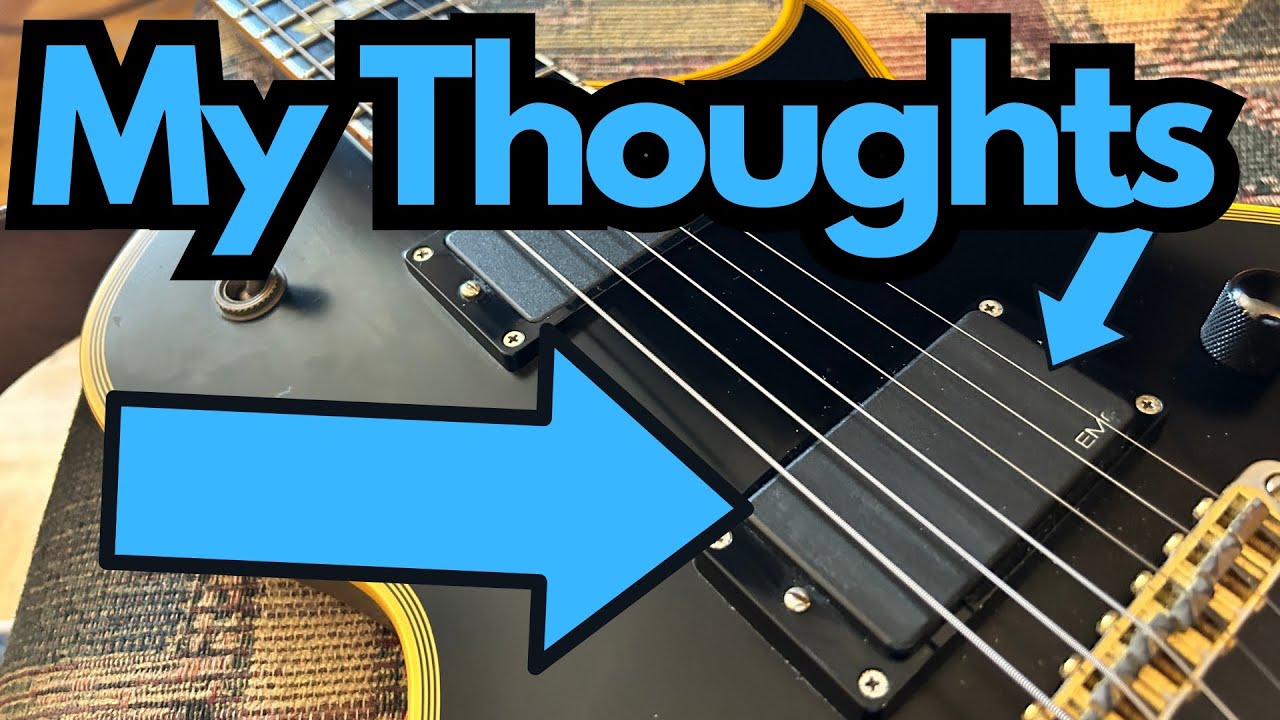
If you’ve spent any time around heavy music, you’ve heard EMG pickups—especially the classic 81/85 set. They’re on countless legendary metal records, and for good reason: they’re tight, aggressive, and insanely consistent. You can grab some here on Amazon.
But what happens when your playing starts to move beyond just metal? Are EMGs still the right choice? In this post, we’ll look at the EMG 81 and 85 from a guitarist’s perspective: how they sound, where they shine, where they fall short, and what to expect if you load them into all your guitars.
Overview / First Impressions
The EMG 81 (bridge) and EMG 85 (neck) are active humbuckers designed primarily for high-gain tones. The 81 is known for its:
- Tight low end
- Clear, cutting highs
- Compressed, focused response
In other words, it’s built to handle heavy distortion without turning into mush.
In a typical high-gain setup—like an Orange amp, a Shure SM57 on the cab, and a Line 6 M5 handling distortion—the 81 really shines. Palm mutes stay tight, riffs punch through the mix, and lead lines have that aggressive, modern edge.
If your main goal is to play metal or high-gain rock, the EMG 81 is absolutely in its element.
Build Quality & Design
From a physical standpoint, EMGs are:
- Active pickups – They require a 9V battery, which powers an onboard preamp.
- High output – They push your amp or interface hard, even compared to many hot passive pickups.
- Noise-resistant – The active design means very low noise and hum, even with lots of gain.
They’re usually installed with EMG’s solderless system, which is convenient and clean once everything is in place. The construction is solid and built for stage use—no exposed pole pieces, and a durable housing that handles years of play.
Features & Functions
EMG 81 (Bridge)
- Purpose-built for metal and high gain
- Very tight low end—great for fast riffs and chugs
- Bright and cutting top end
- Naturally compressed, which smooths out dynamics and keeps things even
- Makes fast, aggressive playing feel controlled and articulate
EMG 85 (Neck)
- Warmer and fuller than the 81
- Sits nicely for leads, sustained notes, and more melodic playing
- Can be more enjoyable for players who don’t live exclusively in extreme metal territory
- Often preferred for cleaner or slightly driven tones compared to the 81
In many real-world setups, players end up gravitating toward the 85 for more versatile tones, even if the 81 remains the go-to for pure high-gain riffing.
How It Sounds / Use Cases
High-Gain Metal & Hard Rock
This is where the 81/85 set earns its reputation.
Running into an Orange amp with a distortion pedal like the Line 6 M5, the EMG 81 in the bridge position delivers:
- Tight, defined rhythm tones
- Clear note separation under heavy distortion
- A focused midrange that helps you cut through a dense mix
For chugs, tremolo picking, and modern metal rhythm work, it’s hard to beat. The pickup is voiced to keep everything tight and controlled when things get loud and saturated.
Neck Pickup: EMG 85
Switching to the 85 in the neck:
- Leads sing with sustain and warmth
- The tone is thicker and less harsh than the 81
- Works well for more melodic lines and expressive playing
If you’re not strictly playing extreme metal anymore, you may find yourself using the 85 more often—especially for anything that isn’t all-out riffing.
Limitations / Things to Know
1. Not the Most Versatile Choice
While the EMG 81 is fantastic for metal, it’s not always the best fit if you want to cover a wide range of styles. For genres like:
- Blues
- Classic rock
- Jazz
- Roots / Americana
the 81 can feel a bit too compressed, too hot, and too modern. It doesn’t sound bad—it just doesn’t breathe and respond the way many passive pickups do in those contexts.
If you outfit all your guitars with EMGs, you may find yourself wishing you had something more dynamic and organic for non-metal styles.
2. Very Hot Output (Especially Into Interfaces)
The high output is great for slamming an amp, but it can be problematic when:
- Plugging directly into an audio interface
- Using plugins or modelers that expect more typical passive pickup levels
You may find:
- The input clips easily
- You have to turn your guitar’s volume knob down significantly to avoid overload
In a traditional amp setup, this isn’t a big deal. But for home recording or direct setups, you’ll want to manage your levels carefully.
3. Battery Dependency
Because they’re active pickups:
- You need a 9V battery in the guitar
- A dying battery means weaker, duller tone or signal issues
- You’ll want to keep spares around, especially for gigs
It’s not a dealbreaker, but it’s something to keep in mind if you’re used to passive pickups.
Final Thoughts
The EMG 81/85 combo is legendary for a reason:
- If your main focus is metal or high-gain rock, they’re absolutely fantastic.
- The 81 in the bridge delivers tight, aggressive rhythm tones.
- The 85 in the neck offers a warmer, more melodic option that many players end up preferring for anything beyond pure metal riffing.
However, if you’re aiming for versatility across many styles, loading every guitar you own with EMGs probably isn’t the best move. Their high output and compressed, modern character are amazing in the right context, but they’re not the most flexible choice for players who want everything from jazz to classic rock to ambient clean tones.
If you play mostly metal and heavy music, go for it. If you’re exploring lots of genres, consider keeping at least one guitar with more traditional passive pickups for contrast.
Resources & Further Study
If you’re working on your playing as much as your tone, a couple of useful resources:
Fretboard Memorization Cheat Sheet – A triad-based guide that lays out major and minor triads in every key using octave mapping and related techniques. It’s designed to help you:
- Memorize the notes on the fretboard
- Understand the harmonic foundation of chords
- Improvise more confidently in multiple keys
Guitar & Music Forum – A place to chat with other players about guitar, music, gear, and related topics.
Both resources are available at:
- Main site:
travelingguitarist.com - Forum:
forum.travelingguitarist.com
They’re great complements to dialing in your tone with pickups like the EMG 81 and 85—because the better you understand the fretboard and harmony, the more you can actually do with that killer metal sound.