

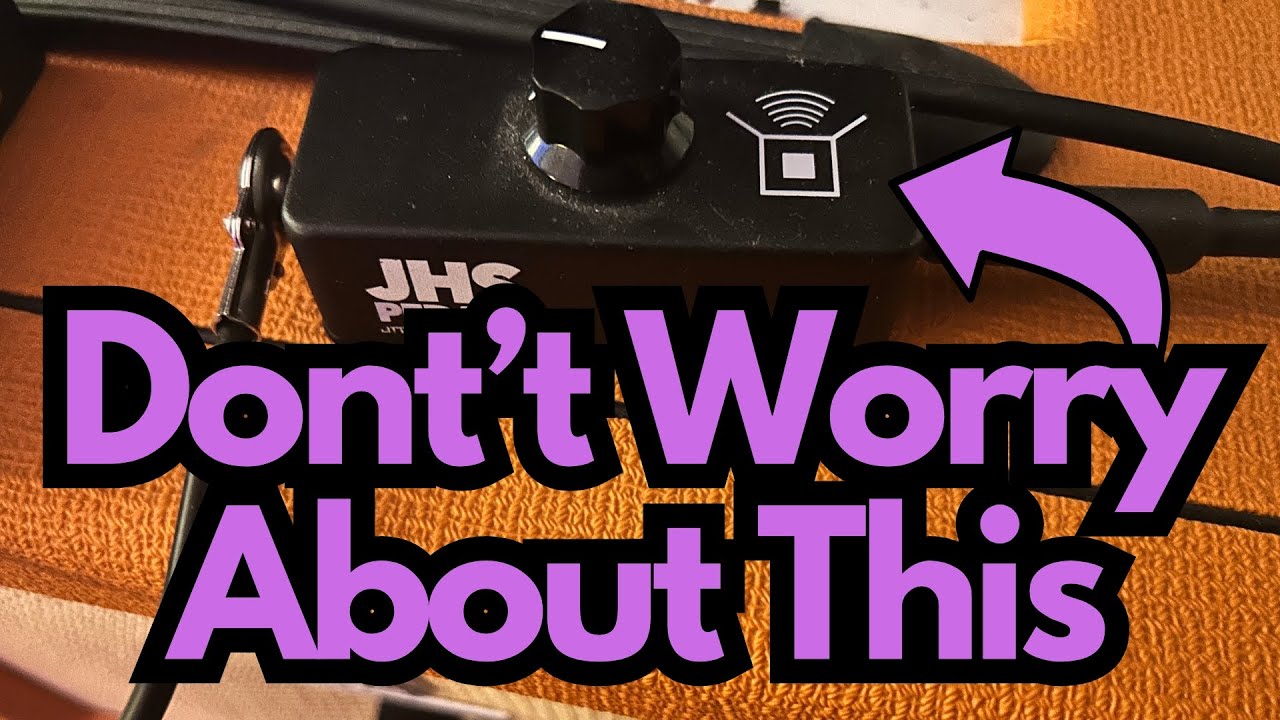
If you’ve ever cracked open the manual for the JHS Little Black Amp Box, you might have noticed a warning: using it in your amp’s effects loop alongside pedals can negatively affect your sound.
That’s a pretty big red flag for anyone who relies on their loop for delays, reverbs, or modulation. But in real‑world use, does it actually mess things up?
Here’s a quick, guitarist-focused breakdown of how the Little Black Amp Box behaves in the loop, what you can expect, and a few extra resources if you’re working on your playing at the same time.
Overview / First Impressions
The JHS Little Black Amp Box is a simple passive volume control designed to sit in your amp’s effects loop. Its main job is to:
- Let you turn your amp up to the “sweet spot” (where the power section is cooking a bit)
- Then use the box to bring the overall volume down to a more manageable level
On paper, the concern is that putting an extra device in the loop—especially with other pedals—might color your tone or cause some unpleasant interaction.
In practice, when it’s used with other loop-based pedals, it behaves surprisingly transparently.
Build Quality & Design
The Little Black Amp Box is about as minimal as it gets:
- Compact enclosure that fits easily on or under a pedalboard
- Single knob to control the level
- Passive design (no power required)
It’s not a flashy piece of gear, but it’s built to be a “set and forget” tool. Once it’s dialed in, you generally don’t need to touch it much.
Features & Functions
From a guitarist’s perspective, here’s what the Little Black Amp Box actually does for you:
- Post-preamp volume control – It sits in the effects loop, so it tames volume after your preamp gain. This is great if you like cranking the amp’s gain or master but can’t actually play that loud.
- Fine-tuning live or home levels – It lets you hit the amp harder to get better feel and saturation, while still keeping the room volume under control.
- Simple integration – It just goes in the loop like another pedal:
- Amp FX Send → Little Black Amp Box → other loop pedals (or vice versa) → Amp FX Return
The manual warns that using it in the loop with other pedals may negatively affect the sound, but that doesn’t always line up with real-world experience.
How It Sounds / Use Cases
Used in an amp’s effects loop alongside pedals, the Little Black Amp Box is effectively transparent in many rigs.
In actual use:
- No obvious tone suck
- No weird interaction with other loop-based pedals
- No noticeable degradation when used with delays, reverbs, etc.
If you’re running something like:
- Amp FX Send
- → Delay / Reverb / Modulation
- → Little Black Amp Box
- → Amp FX Return
or the reverse order in the loop, they generally play together without creating harshness, loss of clarity, or strange artifacts.
Some of the best use cases include:
- Home practice – Crank the amp to where it feels and responds great, then use the Little Black Amp Box to bring the final volume down.
- Small gigs or rehearsals – Keep stage volume under control without sacrificing your preferred amp settings.
- Pedal-heavy rigs – If you’re worried about your loop being “too hot” or your time-based effects reacting poorly at high levels, this can help tame things.
Limitations / Things to Know
Even though the manual suggests there could be a negative impact when combining the Little Black Amp Box with pedals in the loop, that’s not guaranteed in every setup. Still, a few things are worth keeping in mind:
- Every loop is different – Some amps have hotter or more sensitive effects loops than others. If anything weird happens, it’s more likely due to the amp’s loop design than the box itself.
- Signal chain order can matter – If you do hear any change, try swapping the order:
- Amp FX Send → Little Black Amp Box → Pedals → FX Return
- vs.
- Amp FX Send → Pedals → Little Black Amp Box → FX Return
- It’s not a master volume mod – It behaves like one in practice, but it’s still just a passive attenuator in the loop. It won’t magically turn a 100-watt monster into a bedroom amp at whisper levels without some trade-offs in feel at extreme attenuation.
That said, in real-world playing with pedals in the loop, many players won’t notice any negative tonal impact at all.
Final Thoughts
If you’ve been hesitant to run the JHS Little Black Amp Box in your effects loop because of the manual’s warning, it’s worth actually trying it with your rig.
In practical use with other loop-based pedals, it can:
- Keep your tone intact
- Let your amp breathe and respond better
- Give you more control over volume in realistic playing situations
For many guitarists, it’s a simple, inexpensive tool that quietly solves a big problem—loud amps in not-so-loud environments—without wrecking your sound.
Resources & Further Study
If you’re working on your playing as much as your tone, here are a couple of useful resources mentioned:
- Fretboard Memorization Cheat Sheet – Available at travelingguitarist.com, this cheat sheet lays out:
- Major and minor triads in every key
- How to map them across the fretboard (including octave mapping)
- A practical way to memorize notes and start improvising in multiple keys using triads as the harmonic foundation
- Guitar & Music Forum – You can join the community at forum.travelingguitarist.com to talk gear, guitar technique, theory, and more with other players.
Both are great complements to dialing in your rig: better tone plus a better understanding of the fretboard is a powerful combo.