

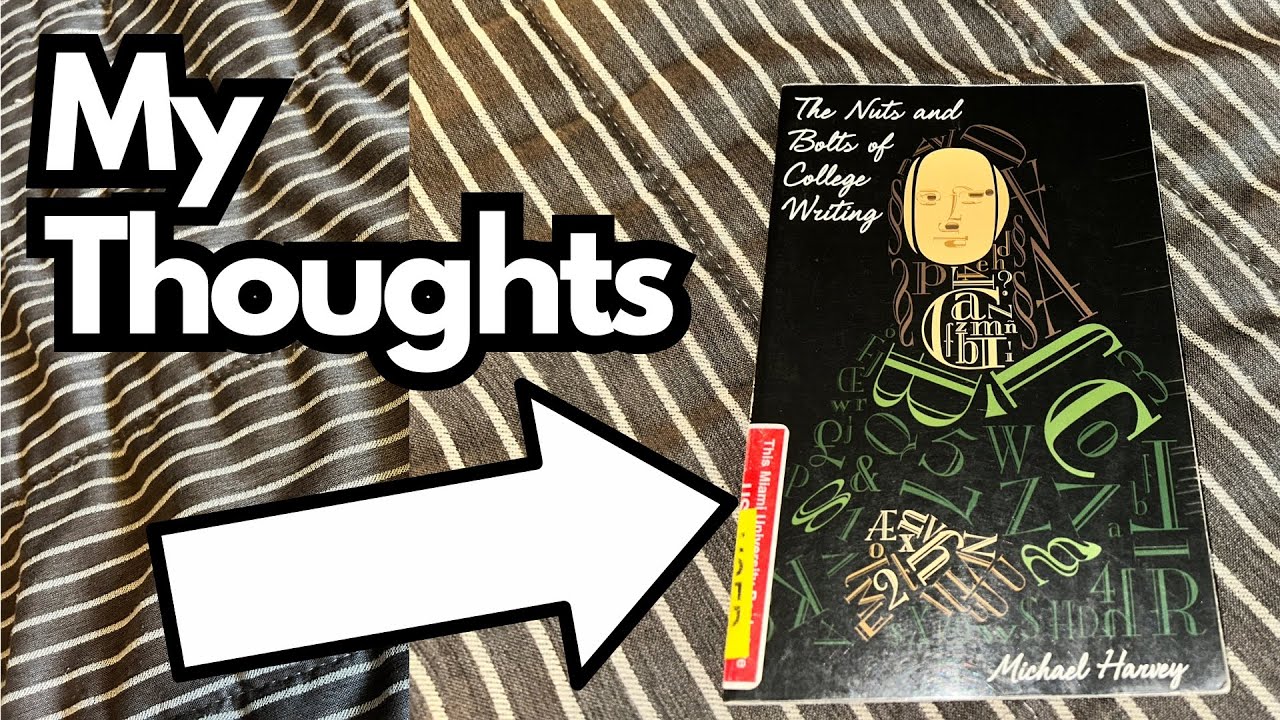
A lot of us have that one dusty music or writing book sitting on a shelf—the one we bought years ago and never really dove into. You pull it out, flip through a few pages, and wonder: does anyone even use this stuff anymore?
If you’re a guitarist learning theory or trying to improve your musical vocabulary, you might be asking the same question about traditional books, method guides, and old-school resources in general. Are they still useful in the age of YouTube, tabs, and instant online lessons?
Let’s talk about it. You can grab it on Amazon if you’re interested.
Overview / First Impressions
The book in question is one of those classic, structured guides—likely aimed at helping you learn how to write essays or organize ideas properly. It’s the kind of thing many of us picked up in school or early in our learning journey, then quietly abandoned once videos and quick online tips took over.
The reaction is relatable:
“I don’t even think I read this book when I got it… I got this like 10 years ago… do people even use this stuff anymore?”
That feeling applies just as much to guitar method books, theory texts, and other “serious” learning materials.
Build Quality & Design of Old-School Resources
Physically, these books tend to be:
- Plain, text-heavy, and not particularly flashy
- Organized in a linear, chapter-by-chapter way
- Focused on fundamentals rather than quick tricks
From a guitarist’s perspective, that’s both a strength and a weakness. They’re not as instantly gratifying as a “Top 10 Licks” video, but they often contain the kind of deep, structured information that actually sticks with you over the long term.
Features & Functions: What These Books Actually Do
Even if the specific book here is about essay writing, the concept applies directly to guitar:
- Teaches structure – Just like essays have intros, bodies, and conclusions, songs and solos have form, tension, and resolution.
- Builds foundational skills – Grammar in writing is like intervals and chord tones in music. Not glamorous, but essential.
- Encourages deeper thinking – You’re not just copying; you’re understanding why things work.
For guitarists, a solid theory or fretboard book can help you:
- Connect scales to chords
- Understand why certain progressions feel “right”
- Build your own solos instead of just memorizing someone else’s
How This Relates to Modern Guitar Learning
The comment “do people even use this stuff anymore?” captures where many players are at:
- We can learn everything from videos and short-form content.
- But that often leads to fragmented knowledge: lots of cool bits, not much cohesion.
Books and structured guides—whether physical or digital—still matter because they:
- Present information in a logical sequence
- Fill in the gaps that random videos can miss
- Encourage you to slow down and actually absorb the material
For a guitarist, that might mean finally understanding:
- How triads map across the fretboard
- How to build chords from scales
- How to move beyond “box” patterns
Limitations and Things to Know
Old-school books and traditional resources do have drawbacks:
- They can feel dry or outdated in style.
- They usually lack audio or visual demonstrations, which are crucial for music.
- Motivation can drop off quickly without the quick dopamine hit of a video or backing track.
That’s why a hybrid approach tends to work best for guitarists:
- Use books or structured PDFs for concepts and organization.
- Use videos, backing tracks, and play-alongs for application and ear training.
Final Thoughts
Whether it’s an essay-writing guide from 10 years ago or a dense music theory book, the core question is the same:
Do people still use this stuff?
They should—at least a little.
For guitarists, structured learning tools are still incredibly valuable. You don’t have to read them cover to cover like a novel, but dipping into them with purpose can give you the kind of understanding that random tips and tricks never will.
If you’ve got an old book (or PDF) sitting around, it might be worth cracking it open again—with fresh eyes and a guitar nearby.
Resources for Guitarists
If you’re looking for a more modern, focused way to get those “book-level” fundamentals without slogging through outdated material, check this out:
- Fretboard & Theory Cheat Sheet – A concise, guitar-focused resource to help you connect chords, scales, and triads across the neck:
travelingguitarist.com/fretboard-cheatsheet
It’s a good middle ground between old-school structure and modern, practical guitar learning.