

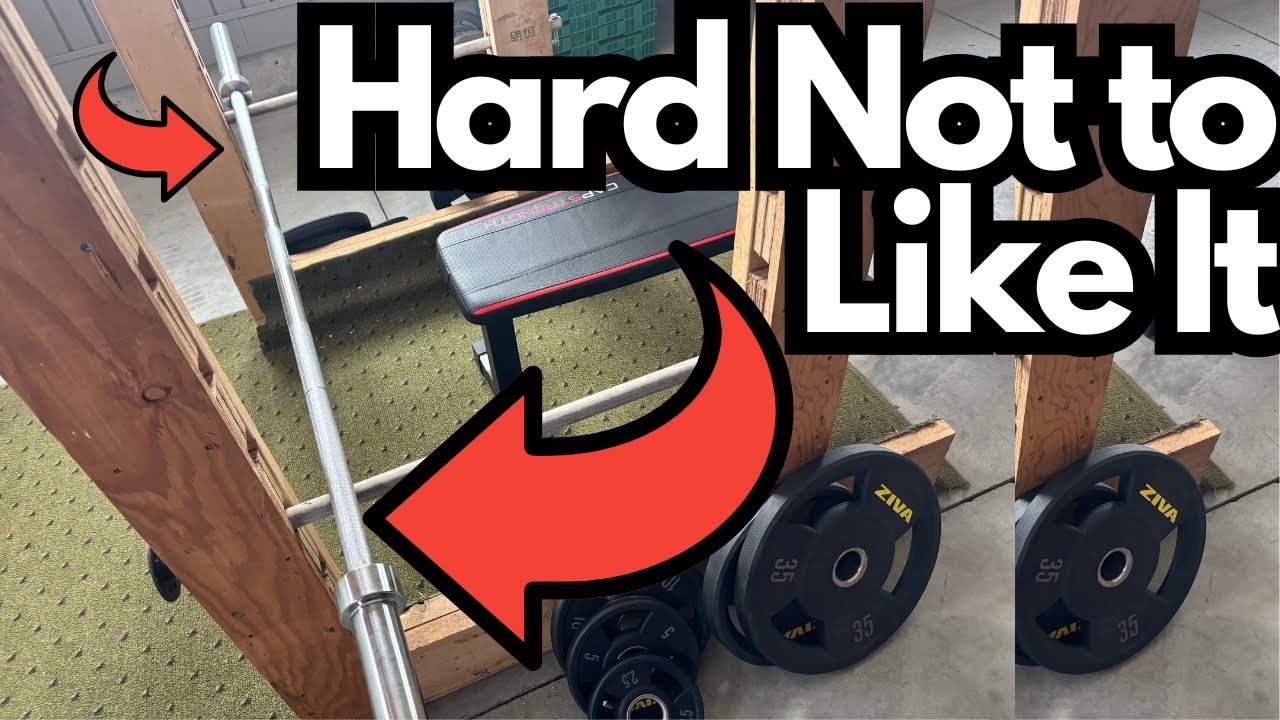
If you’re putting together a home gym, the barbell is one of the most important pieces of equipment you’ll buy. It’s literally the backbone of your squats, deadlifts, presses, and rows. But if you’re new to buying bars, the options (and price ranges) can be confusing.
This post looks at a popular option: the CAP barbell. It’s a budget-friendly bar that’s become something of a default choice for home lifters. Here’s how it holds up in real-world use after about a month of training.
You can grab it here on Amazon if you’re interested.
Overview / First Impressions
I picked up this CAP barbell without knowing much about “good” barbell specs—things like knurling, whip, tensile strength, and so on. I just needed something that would:
- Work with standard plates
- Fit into a homemade squat rack
- Hold up to regular lifting
After a month of use, the main takeaway is simple: it works exactly the way it’s supposed to.
Key first impressions:
- Compatible with standard bumper plates and non-Olympic plates
- Fits easily into a DIY squat rack
- Spins smoothly under load thanks to its bearings
- No obvious flaws or issues in normal use
For a straightforward home gym setup, it does the job without drama.
—
Build Quality & Design
While this isn’t a deep-dive spec sheet review, a few design details stand out in day-to-day use.
Sleeve & Plate Compatibility
The bar pairs well with:
- Standard bumper plates – They slide on and off without sticking.
- Non-Olympic plates – The bar in use here is loaded with non-Olympic weights and they fit just fine.
If you’re using a mix of plate types in a home gym, this is a big plus. You’re not locked into one specific style or brand of plate.
Bearings & Rotation
One of the most important aspects of a barbell—especially if you’re doing heavier lifts—is sleeve rotation.
This CAP bar includes bearings in the sleeves, which means:
- The ends of the bar rotate smoothly under load
- When you’re lifting heavier weights, the bar can roll with the movement rather than forcing your wrists or elbows to absorb all the torque
That’s exactly how a decent bar is supposed to behave. Poorly rotating sleeves can feel jarring and uncomfortable, particularly on Olympic-style lifts or any movement where the bar needs to rotate.
—
Features & Functions
Here’s what you can expect functionally from this CAP barbell in a home gym context:
- Standard length bar suitable for most racks (including DIY squat racks)
- Bearing sleeves for smoother rotation with heavy weights
- Compatibility with bumper plates and standard plates
- General-purpose use for squats, presses, deadlifts, rows, and similar lifts
It’s not marketed as a specialty powerlifting or Olympic weightlifting bar, but for general strength training at home, it ticks the main boxes.
—
How It Performs in a Home Gym
This bar has been used in a homemade squat rack with various plates and has handled everything without issues.
Practical Use Cases
You can confidently use it for:
- Back squats & front squats – Sits well on the rack and across the shoulders.
- Bench press & overhead press – No weird flex or sticking when re-racking.
- Deadlifts & rows – Holds weight securely and rotates as needed.
The bearings shine when there’s heavier weight on the bar. As the bar rolls slightly during the lift, it reduces strain on your wrists—particularly noticeable on movements where the bar path isn’t perfectly vertical.
—
Limitations / Things to Know
While the experience with this specific CAP bar has been very positive, here are a few realistic expectations and considerations:
- Not a high-end specialty bar
If you’re a competitive powerlifter or Olympic lifter looking for very specific bar characteristics (exact knurl depth, center knurl, whip profile, etc.), this isn’t trying to be that. - Assumes standard home use
For typical home gym lifting—progressive overload, compound movements, moderate to heavy weights—it performs as expected. If you’re planning on maxing out regularly with extremely heavy loads, you might eventually want to look into more premium options. - Plate fit depends on your plates
While it works great with standard bumper plates and non-Olympic plates in this setup, some off-brand plates can have slightly inconsistent hole sizes. That’s more a plate issue than a bar issue, but worth keeping in mind.
—
Final Thoughts
The CAP barbell turned out to be a pleasant surprise:
- It works with standard bumper plates and non-Olympic plates.
- The bearings allow the sleeves to roll properly under load.
- It fits right into a homemade squat rack.
- It performs exactly as a general-purpose barbell should.
If you’re building a home gym and want a reliable, budget-friendly bar that just works—without obsessing over elite specs—this CAP barbell is an easy recommendation. After a month of use, there are no complaints, and it’s a bar I’d be happy to buy again.