

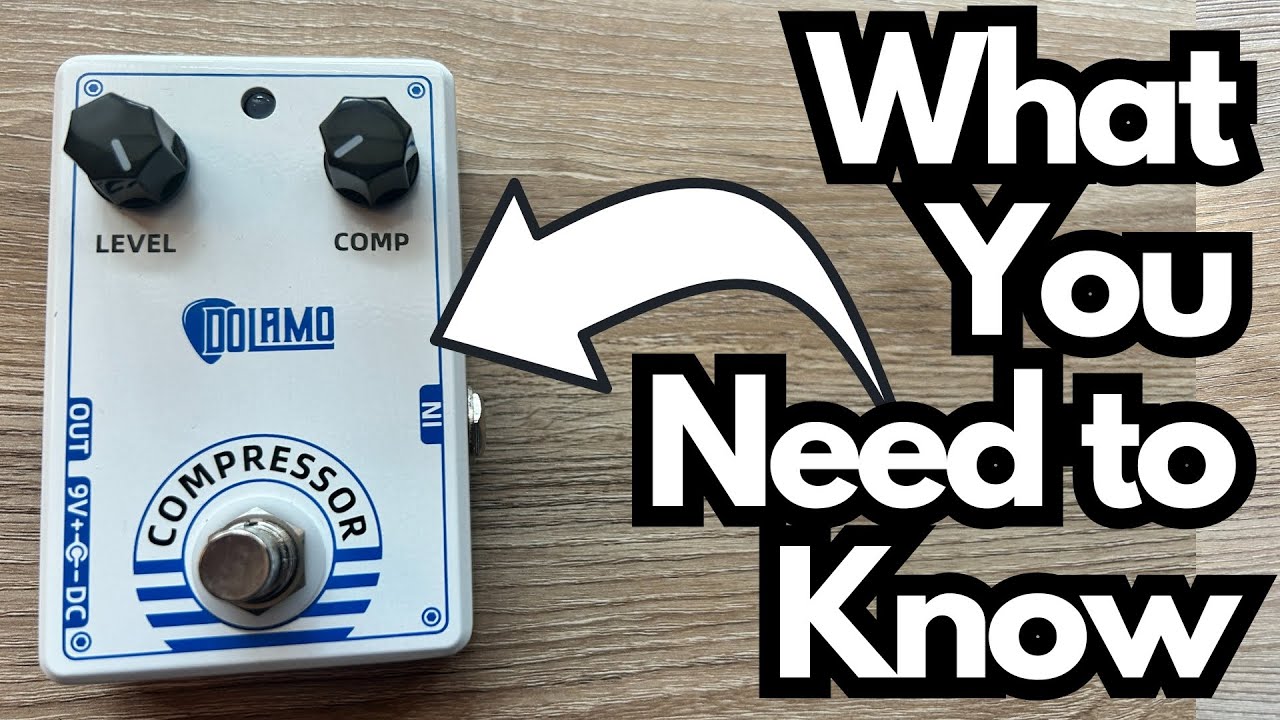
Compression pedals can be expensive. That’s why this little budget compressor caught my attention. I plugged it in not expecting much, and it ended up punching way above its price class. You can grab one here on Amazon if you’re interested.
This is a simple, no-nonsense compressor that can hang with far more expensive pedals. If you’re a guitarist looking for subtle sustain, smoother dynamics, and a more “finished” feel under the fingers—without dropping serious cash—this one’s worth a look.
Overview / First Impressions
My first reaction: this thing sounds better than it has any right to for the money.
- It delivers a very usable range of compression, from light leveling to heavy squash.
- It plays nicely with overdrives (I paired it with a JHS Morning Glory).
- It’s quiet enough and transparent enough for most real-world use.
With the compression (or “level”) knob cranked, it goes into that super-squashed, country-pickin’ territory—way more compression than I’d ever use personally, but it’s there if you want it.
Dialed back, it becomes a very musical, always-on style compressor.
Build Quality & Design
Physically, the pedal is solid and functional, but there are a couple of design decisions worth noting:
- Sturdy enclosure: It feels like it can handle regular use on a pedalboard.
- Compact footprint: Easy to squeeze onto a crowded board.
- Power jack placement: The 9V DC input is on the left-hand side, not on the top. This is inconvenient if you like neat cable runs or have pedals tightly packed. Top-mounted jacks would have been far better.
- No battery option: This pedal is power-supply only. It does not take a 9V battery. Not a dealbreaker for most players these days, but something to be aware of if you like battery-only setups.
Overall, nothing is “wrong” with the build, but the power jack placement is annoying from a pedalboard management standpoint.
Features & Functions
This pedal keeps things simple, which is actually a plus for many guitarists who don’t want to wrestle with studio-style controls.
Typical controls you’ll find on a compressor like this:
- Level / Volume: Controls the overall output. This can be used to match or boost your signal.
- Compression / Sustain: Determines how much your signal is being compressed—how much it clamps down on peaks and lifts quieter notes.
- Possibly a Tone or Attack control: Depending on the exact model, but the main behavior is straightforward: more compression equals more sustain and more “squish.”
There are no deep menus or hidden functions here. Plug in, set your compression amount, adjust volume, and you’re ready.
How It Sounds / Use Cases
Here’s how I found it most useful from a guitarist’s perspective:
1. Light, Always-On Compression
With the compression dialed way down—just a touch above minimum—the pedal adds:
- A bit of sustain
- Slight evening out of your picking dynamics
- A more “polished” feel, especially for clean tones
This is where it shines for rhythm guitar, arpeggios, and general clean playing.
2. Stacked with Overdrive
Running it into a JHS Morning Glory (or any low-gain overdrive) works really well:
- The compressor helps push the overdrive slightly harder.
- Notes sustain longer and feel more controlled.
- You get a more consistent drive tone, especially useful for lead lines.
Set the compressor fairly mild and let the overdrive do the heavy lifting. The result is a responsive, expressive tone that doesn’t feel overly squashed.
3. Heavy Compression (If You Want It)
When you crank the compression/level control:
- It gets into that “clucky” country / funk territory.
- Notes pop out evenly, but the natural dynamics are heavily reduced.
- Great if you want that very obvious, effect-like compression.
Personally, that amount of compression is overkill for my tastes, but it’s there if you need it.
Limitations / Things to Know
A few practical caveats:
- Side-mounted power jack: Makes cable management more awkward, especially on tight boards.
- No battery support: Requires a 9V DC adapter—no option to just toss in a battery and go.
- Not a deep, studio-style compressor: You don’t get attack/release/ratio controls like a high-end studio unit. This is more of a plug-and-play stompbox compressor.
None of these are dealbreakers, especially at the price point, but they’re worth knowing upfront.
Final Thoughts
This compressor surprised me.
In terms of sound and feel, it stands up well against more expensive compressor pedals. It gives you:
- Usable, musical compression for clean and driven tones
- Enough range to go from subtle leveling to full-on squash
- A simple control set that doesn’t get in your way
The main downsides are ergonomic rather than tonal: the left-side power jack and the lack of a battery option. If you can live with that—and you probably can if you’re running a power supply anyway—this is a very solid choice for a budget-friendly compressor that doesn’t feel cheap where it matters: your tone.
Resources & Further Study
If you’re looking to not just sound better but also play smarter, especially when it comes to navigating the fretboard, check out:
- Fretboard Memorization Cheat Sheet at travelingguitarist.com
A collection of major and minor triads in every key, plus strategies like octave mapping to:- Memorize the notes on the fretboard
- Understand the harmonic foundation (triads) behind chords and solos
- Improvise more confidently across the neck
- Traveling Guitarist Forum at forum.travelingguitarist.com
A place to talk guitar, gear, music theory, and anything else guitar-related with other players.
Pairing a solid compressor with a solid understanding of the fretboard is a powerful combo: better tone, better control, and better musical ideas.