

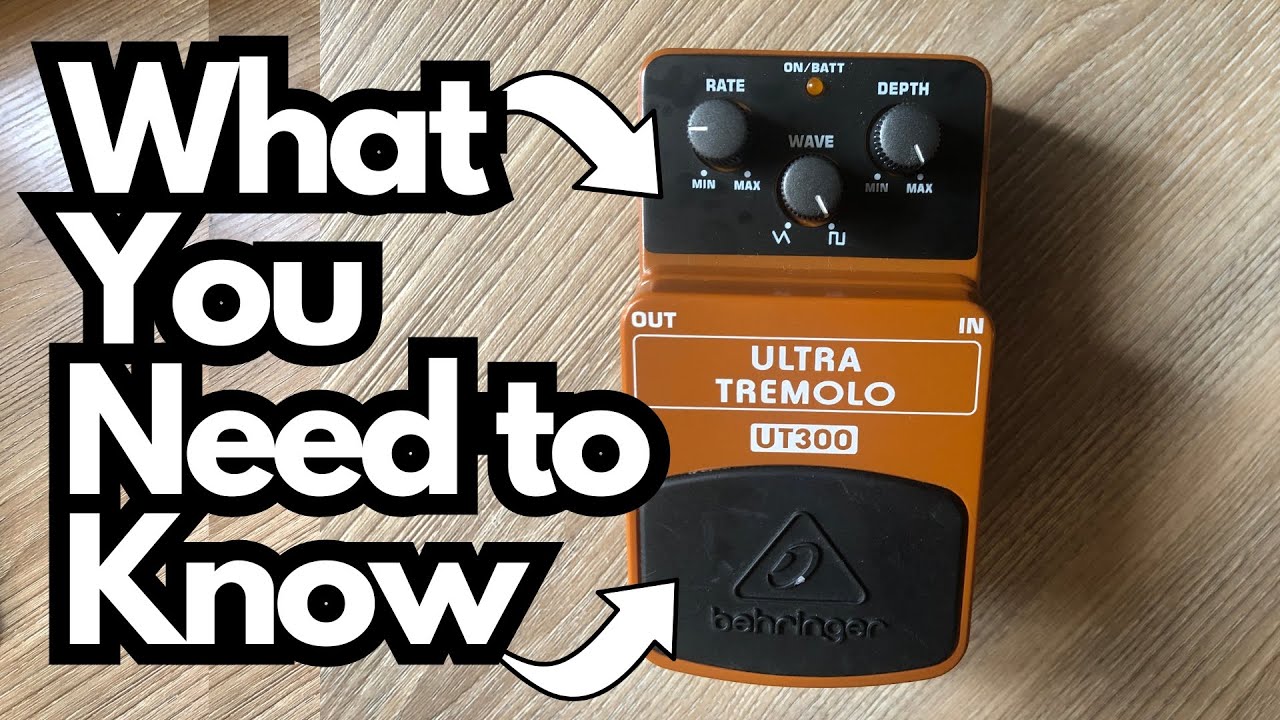
If you’re looking to add classic tremolo to your rig without spending a fortune, the Behringer tremolo pedal is one of those “why not?” pieces of gear. It’s cheap, easy to use, and delivers surprisingly solid tones for the price. Grab one on Amazon if you’re interested.
This pedal is ideal for:
- Beginners building their first pedalboard
- Players on a budget who still care about tone
- Guitarists who just need a simple tremolo effect without extra bells and whistles
Let’s break down what you’re actually getting, how it sounds, and what to watch out for.
Overview / First Impressions
Behringer’s line of compact pedals is known for one thing above all: cost-effectiveness.
This tremolo pedal follows that formula:
- Very inexpensive compared to most tremolo pedals
- Great sound for the money
- Housed in a plastic enclosure instead of metal
So you’re not getting boutique build quality, but you are getting a genuinely usable tremolo effect that can hang in a mix, whether you’re playing clean arpeggios, surf rock, or adding movement to chords.
Build Quality & Design
This is where the trade-off for the low price really shows.
Housing & Durability
- The pedal is made from plastic, not metal.
- It’s lightweight, but also more fragile.
- You don’t want to drop it or stomp it like a tank-style pedal.
If you treat your gear gently, it’s fine. If you’re gigging hard or constantly throwing pedals in and out of a bag, you’ll want to be a bit more careful with this one.
Power & Connections
- Standard 9V DC power input on the right-hand side.
- Also supports 9V battery power, but:
- You need to use a pen or similar object to press the side tabs.
- That releases the cover so you can access and replace the battery.
It functions like a normal stompbox:
- Press to turn on, press again to turn off.
No hidden modes, no menus—just straightforward operation.
Features & Controls
The pedal keeps things simple, with three main controls that give you all the core tremolo functions you need.
Rate
- Controls the speed of the tremolo.
- Slow settings: gentle, pulsing movement—great for ambient parts or slow ballads.
- Fast settings: choppy, rhythmic effects that can border on helicopter-style tremolo.
You’ll likely set this based on:
- The tempo of your song
- Whether you want tremolo to be subtle or a rhythmic feature of the part
Depth
- Controls the intensity of the effect.
- Low depth: the volume dips are less pronounced, more of a mild shimmer.
- High depth: the effect becomes very obvious, with strong peaks and valleys in volume.
For most musical uses, a medium setting works well—strong enough to hear, but not so extreme that it distracts from the song.
Wave
- Controls the shape of the tremolo wave.
- At one end: more like a sine wave – smooth and less abrupt.
- At the other: closer to a triangle/square-like shape – sharper, more pronounced peaks and valleys.
In practice:
- Smooth wave: subtle, musical tremolo that blends well.
- Sharper wave: strong, choppy tremolo that cuts through and feels more dramatic.
How It Sounds / Use Cases
From a guitarist’s perspective, the sound is where this pedal punches above its weight.
Tonal Character
- The tremolo itself is clean and usable.
- At moderate settings, it gives you that classic amp-style tremolo feel.
- At higher depth and faster rates, it can get more aggressive and rhythmic.
Practical Use Cases
- Clean chords: Add movement to sustained chords for worship, indie, or ambient styles.
- Arpeggios and picked parts: Slow tremolo adds a nice swirl without getting in the way.
- Vintage flavors: Pair it with a bit of overdrive for a pseudo-vintage amp tremolo vibe.
- Rhythmic textures: Faster rates and sharper wave settings can create pulse-like, almost synthy textures.
It’s not trying to be a complex multi-mode modulation pedal. It just does tremolo—and does it well enough that it’s easy to dial in a musical sound.
Limitations / Things to Know
This pedal is absolutely worth considering, but it’s not perfect. A few things to keep in mind:
1. Plastic Enclosure
- The biggest downside is durability.
- It’s not something you want to throw around a stage or drop repeatedly.
- Best suited for:
- Home use
- Careful gigging
- Players who aren’t overly rough on their pedals
2. No Extra Features
- No tap tempo
- No stereo outs
- No presets or advanced shaping controls
If you need deep control or live tempo syncing, you’ll want a higher-end tremolo. This one is about simplicity and affordability.
3. Battery Access Is a Bit Fiddly
- You need a pen or similar tool to open the case for battery changes.
- Not a dealbreaker, but not as convenient as a simple flip-open compartment.
Final Thoughts
If you need a tremolo effect and don’t want to spend much, this Behringer pedal is a smart, budget-friendly choice.
Pros:
- Very affordable
- Good-sounding tremolo that covers subtle to strong effects
- Simple, intuitive controls (Rate, Depth, Wave)
- Can be powered by 9V adapter or battery
Cons:
- Plastic housing – not as durable as metal pedals
- No advanced features (tap tempo, stereo, etc.)
- Battery access requires a bit of effort
For beginners, home players, or anyone building a low-cost board, it’s a genuinely useful tool. Treat it with care, and it will give you all the tremolo you need without draining your wallet.
Resources & Further Study
If you’re working on your playing alongside your tone, there are a couple of helpful resources mentioned:
Fretboard Memorization Cheat Sheet – available at travelingguitarist.com.
- Covers major and minor triads in every key
- Uses octave mapping and other techniques to help you:
- Memorize the notes on the fretboard
- Understand the foundation of harmony
- Start improvising in multiple keys using triads
Traveling Guitarist Forum – at forum.travelingguitarist.com.
- A place to talk guitar, music, and related topics with other players.
Pair a solid understanding of triads and fretboard navigation with a few well-chosen effects like this tremolo, and you’ll have both the theory and tone to make your playing stand out.