

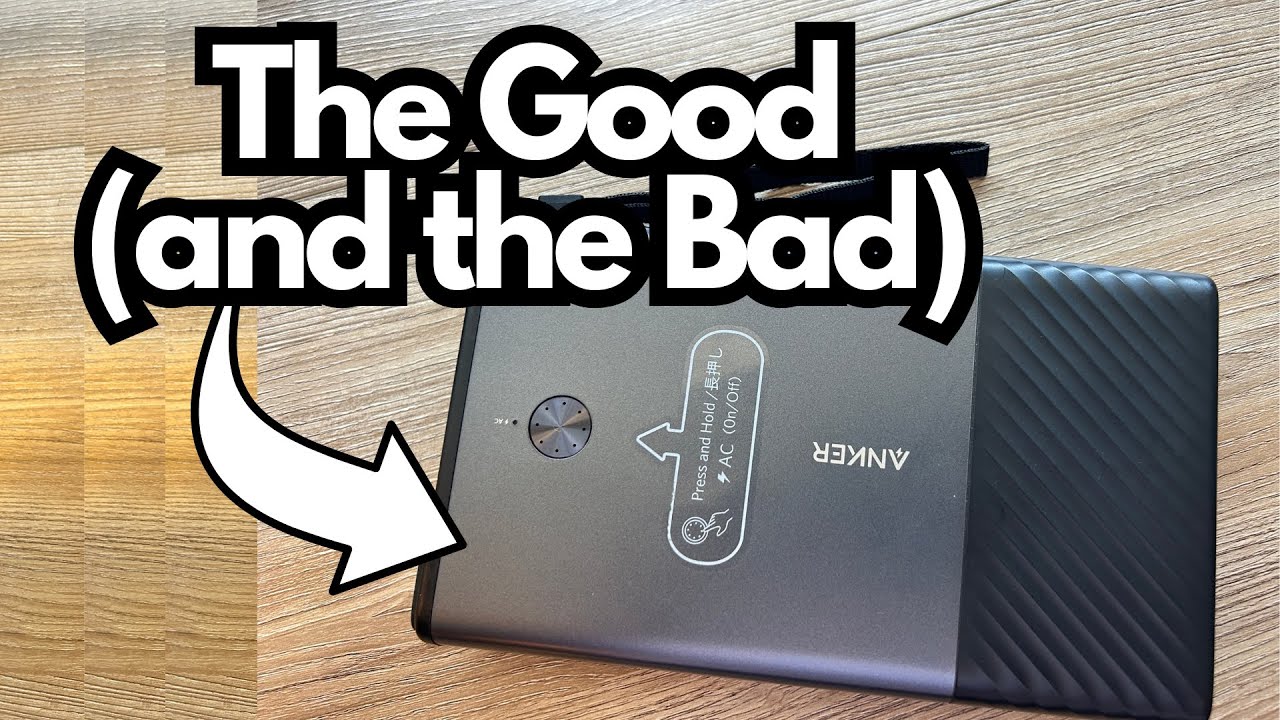
If you’re a guitarist, content creator, or anyone who spends time working in cafés, rehearsal spaces, or on the road, a reliable power bank can be a lifesaver.
The Anker PowerHouse 100 (on Amazon) is one of those “throw it in the gig bag and forget about it until you need it” pieces of gear that quietly makes your life easier.
This isn’t a flashy gadget—it’s a practical tool. If you’re running your phone for charts and setlists, an iPad for amp sims, or a laptop for recording and editing, this kind of portable power can keep your rig alive when outlets are scarce.
Here’s what it actually does well, where it falls short, and who it’s best for.
Overview / First Impressions
The Anker PowerHouse 100 is a compact, high-capacity power bank designed to keep your everyday devices going:
- Charges an iPhone multiple times (real-world: around 5 full charges).
- Can top up AirPods or similar earbuds an absurd number of times (around 20).
- Can charge an iPad Pro (2021) roughly once.
- Can bring a MacBook Pro up to about 80% from empty in real-world use, despite the marketing suggesting a full charge.
In practice, it’s a “day saver” rather than a full replacement for wall power—perfect for a long day out, travel, or working in a café where outlets are either taken or badly placed.
Build Quality & Design
The PowerHouse 100 feels solid and purpose-built:
- Compact and bag-friendly – Easy to throw into a backpack, gig bag, or tech pouch.
- Sturdy construction – Feels durable enough for everyday carry.
- Simple layout – Ports are clearly laid out and easy to access.
It also includes a built-in flashlight. That’s more of a novelty than a serious feature—handy in a pinch, but not a selling point. If you’re buying this for power, the flashlight is just an extra you’ll probably forget is there.
Features & Functions
The PowerHouse 100 keeps things straightforward:
- USB-C port
This is the primary, faster-charging port. It’s ideal for modern devices like iPads, newer phones, and some laptops. - Standard USB-A port
Great for older cables and accessories. It’s often labeled with Anker’s “IQ” branding (their smart charging tech), but in real-world use, you can ignore the marketing name and just treat it as a normal USB port. - Multiple ways to charge the unit itself
You can recharge the PowerHouse 100 via its input using a compatible charger and cable.
From a guitarist or creator’s perspective, the USB-C port is the star. It’s what you’ll likely use to keep your iPad or phone powered while running charts, backing tracks, or amp/effects apps.
How It Fits Musicians & Creators
Obviously this isn’t an audio device, but it does play a role in your signal chain support system. Here’s how it fits into a musician’s or creator’s workflow:
- For guitarists using iPad rigs
Running apps like Neural DSP, Tonex, Bias, or other amp sims on an iPad Pro? This will comfortably get you through a rehearsal or writing session without hunting for an outlet. - For mobile recording and content creation
Filming lessons, demos, or social content on your phone? The PowerHouse 100 can recharge your phone multiple times in a day, so you’re not stuck at 5% halfway through shooting. - For café or travel work sessions
Writing tabs, editing videos, or working on your website from a café? Instead of fighting for that one wall outlet, you can just plug into the PowerHouse 100 and stay put. - For on-the-go practice
If you’re using Bluetooth earbuds or AirPods, this will keep them topped up many, many times over—no more dead buds halfway through a practice session.
Limitations / Things to Know
1. Picky About Chargers and Cables
The biggest downside is that it doesn’t always “play nice” with every charger or cable:
- It can act weird when you’re charging the PowerHouse itself.
- It seems to prefer the original Anker charger that comes with it.
- It can be selective about which USB-A cable works best for charging it reliably.
Practical tip: Once you find a charger and USB cable combo that works perfectly with it, stick with that setup. Don’t assume any random cable you grab on your way out the door will behave the same.
2. Real-World Capacity vs. Marketing
Anker might advertise things like:
- Full laptop charge (e.g., MacBook Pro) – in practice, expect closer to 80%.
- Multiple phone charges – real-world use suggests around 5 full iPhone charges, not the theoretical 8.
It still offers plenty of power, but it’s better to plan around realistic expectations.
3. Not a Wall Power Replacement
This is backup power, not a full-time power solution:
- Great for a day out, a session, or travel.
- Not meant to run a laptop for an entire full workday or multiple long editing sessions without recharging.
Final Thoughts
The Anker PowerHouse 100 is a genuinely useful tool if you:
- Work or practice away from reliable power outlets.
- Rely on a phone or iPad for charts, backing tracks, amp sims, or recording.
- Travel frequently and need a dependable power backup.
Its strengths are:
- Solid real-world capacity for phones, tablets, and partial laptop top-ups.
- Fast and practical USB-C charging.
- Durable, bag-friendly design.
Its main weak spot is how picky it can be about chargers and cables—you’ll want to find a combo that works and stick to it.
If you can live with that quirk, it’s a very practical piece of gear that quietly supports your guitar and content-creation workflow every single day.
Resources
- Manufacturer page: Check Anker’s official site for detailed specs, compatibility, and any updated models in the PowerHouse line.
- Tip: If you pick one up, label the charger and cable you know work well with it and keep them together in your gig bag or tech pouch.