

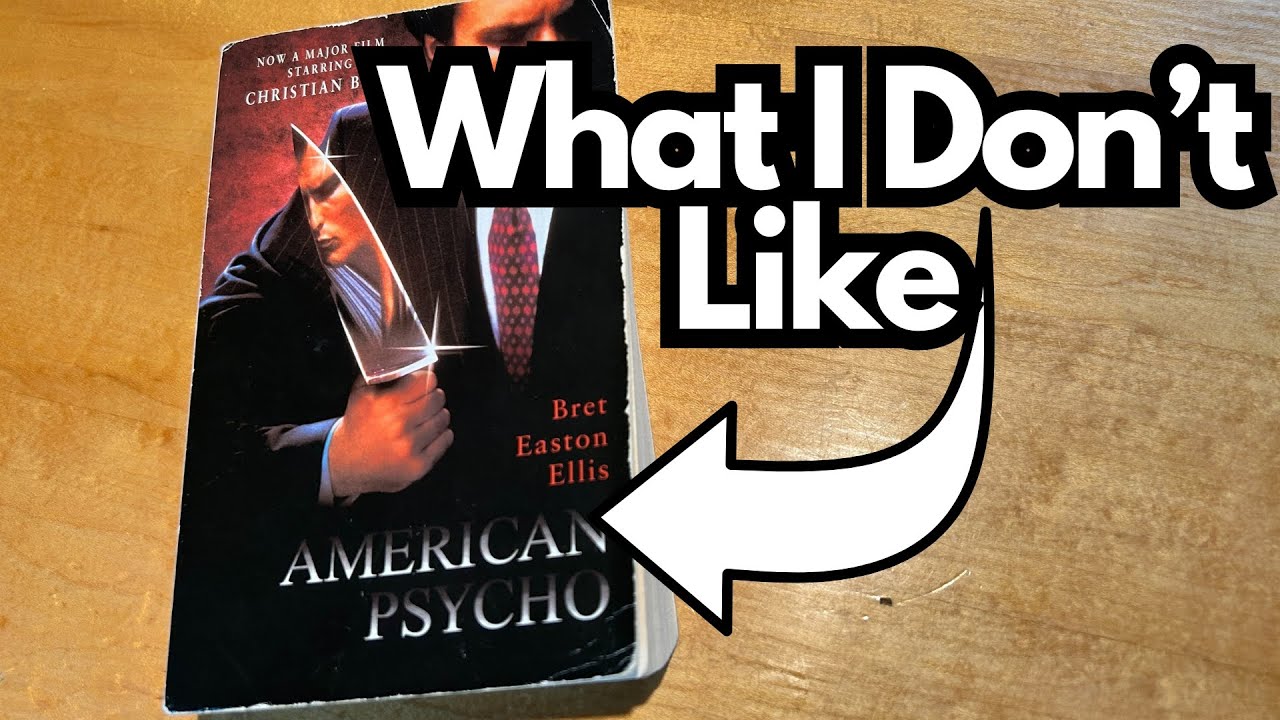
If you’re into dark, psychological stories that blur the line between reality and delusion, American Psycho (on Amazon) is one of those books that sticks with you long after you close the cover.
Whether you discovered it through Christian Bale’s infamous performance in the film adaptation or you’ve just seen the stark, unsettling cover on a bookstore shelf, this novel has earned its place as a modern cult classic.
This isn’t a light read—either in tone or subject matter. But for readers who appreciate complex characters, unreliable narration, and a slow, unnerving psychological unraveling, American Psycho is a standout.
Overview / First Impressions
American Psycho is widely considered Bret Easton Ellis’s best work. Set in the late 1980s, it follows Patrick Bateman, a wealthy Wall Street investment banker who moves through a world of excess, vanity, and status obsession.
On the surface, Bateman is successful, stylish, and socially accepted. Beneath that surface, though, his mind is coming apart. The story tracks his descent into hallucinations, violent fantasies, and possibly real acts of brutality.
A key part of the book’s power is that you’re never fully sure what’s real and what isn’t. You’re stuck inside Bateman’s head, and that’s an increasingly unstable place to be.
What the Book Does Well
From a reader’s perspective, here’s what American Psycho brings to the table:
- Unreliable Narrator
Patrick Bateman is one of modern fiction’s most infamous unreliable narrators. The novel never clearly tells you which events are real and which are hallucinated. That ambiguity is intentional and central to the experience. - Psychological Unraveling
The book is less about “a killer doing bad things” and more about a mind disintegrating. You watch Bateman slide from shallow vanity into full-blown madness, and the progression is both disturbing and compelling. - Social Satire
While some readers try to project specific political messages onto the story, it works best as a broader critique of 1980s consumerism, status obsession, and emotional emptiness. The violence and absurdity mirror the excess of that culture. - Tension Through Uncertainty
You’re never fully sure:
- What Bateman has actually done
- What exists only in his head
- How much the people around him even notice
That uncertainty is the engine of the book’s tension.
How It Reads
This is not a casual bedtime read, and it’s definitely not for everyone. But if you’re the kind of reader who likes:
- Dark, psychological character studies
- Stories that leave room for interpretation
- Narratives where you have to actively question every scene
…then American Psycho is a strong recommendation.
It’s especially interesting if you’ve only seen the movie. The film captures the tone and key moments, but the book gives you a much deeper, more immersive look into Bateman’s mind. The internal monologue, the repetition, the obsessive detail—all of that makes the reading experience more intense than the film.
Things to Know
Before diving in, there are a few important caveats:
- Graphic content: The violence and disturbing imagery can be extremely intense. If you’re sensitive to that, this may not be the right book.
- Ambiguity is the point: If you like clear answers and neatly resolved plots, the open-ended nature of what’s real vs. imagined might frustrate you.
- Not a straightforward “message” book: While it’s easy to read political or social commentary into it, the story works best as a portrait of a man losing his grip on reality, rather than a neat ideological statement.
Final Thoughts
American Psycho endures because it’s more than just shock value. Beneath the infamous violence and controversy is a sharply written, deeply unsettling exploration of identity, sanity, and the emptiness of a life built entirely on surface-level success.
At its core, it’s about a man who is slowly unraveling, and a narrative that forces you to question where reality ends and delusion begins.
If that kind of psychological tension appeals to you—and you can handle the darker content—this is absolutely worth reading and easily stands as Bret Easton Ellis’s strongest work.
Further Reading
If American Psycho grabs you and you want to go deeper:
- Explore more of Bret Easton Ellis’s work, especially Less Than Zero and The Rules of Attraction, to see how he handles similar themes of alienation and excess.
- Watch the film adaptation with Christian Bale after reading; comparing the two versions adds another layer to how you interpret Bateman and his world.