

If you care about your guitars, you need to care about humidity. Wood moves with changes in moisture, and that can mean fret sprout, cracking finishes, warped necks, and all kinds of expensive headaches.
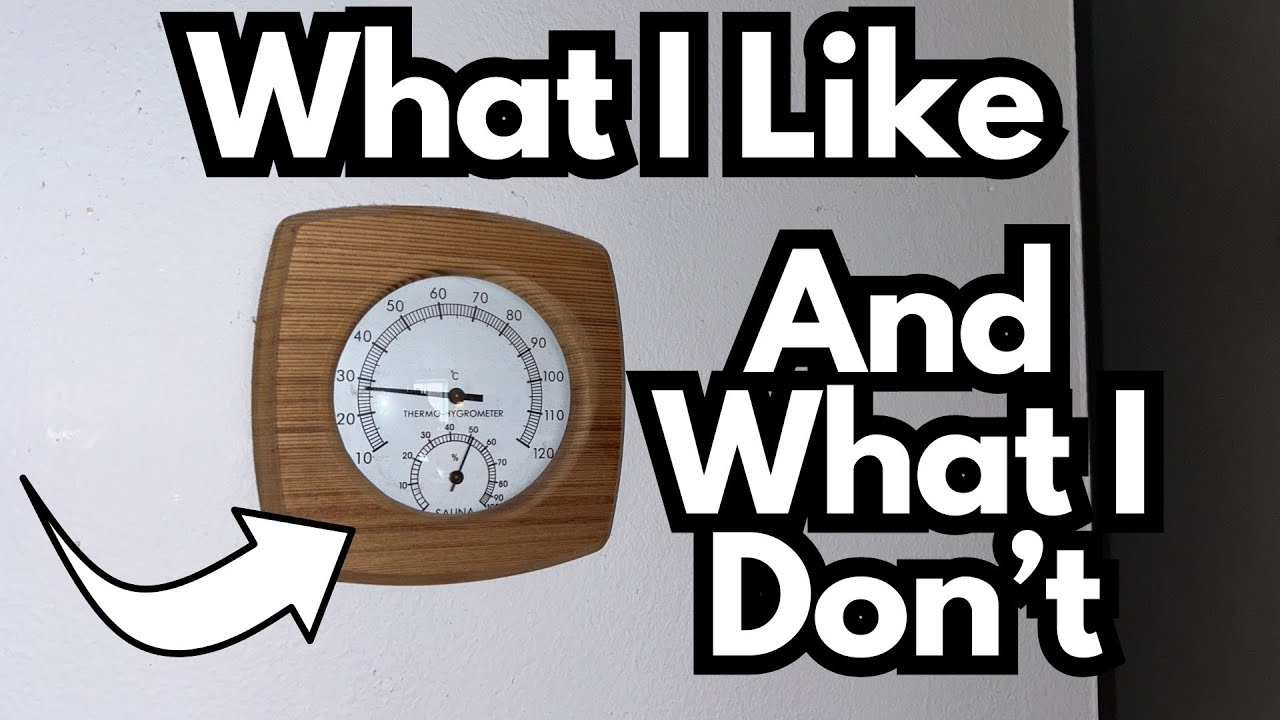
That’s why I picked up this simple sauna-style hygrometer on Amazon: not because I’m obsessed with room temperature, but because I want my guitars living in a safe humidity range as much as possible.
Overview / First Impressions
The goal was straightforward: get a reliable way to monitor humidity in a very dry apartment so my guitars stay in a safe zone.
For acoustic and electric guitars, a typical “safe” range is about 30–50% relative humidity, with many players aiming for roughly 40% as a sweet spot. In my space, I’m realistically targeting 30–40%, given how dry it can get.
This analog sauna hygrometer gives me a quick visual read on:
- Humidity (the main reason I bought it)
- Temperature (nice bonus, but secondary)
Out of the box, it looks clean and classy—not like a cheap plastic gadget. It feels more like something you’d see in a sauna or spa, which is a plus if you care what your space looks like.
Build Quality & Design
From a guitarist’s perspective, this thing checks a few important boxes:
- Attractive design – It has that classic analog dial look that doesn’t clash with a studio, practice room, or living room full of gear.
- Simple mounting – On the back, there are just a couple of basic holes. I’ve got a small hook on the wall and the hygrometer simply hangs on it.
- Stable on the wall – Once it’s on the hook, it sits flat and doesn’t wobble or swing around. You can position it however you like and it stays put.
No fancy stands, no complicated mounting brackets. Just hang it and forget it.
Features & Functions
This hygrometer is very straightforward—no apps, no Bluetooth, no batteries to worry about. Here’s what it offers:
- Humidity measurement
Shows current relative humidity as a percentage. Accurate enough for home guitar care and general room monitoring. - Temperature measurement
Displays the current room temperature. Not the main reason to buy it, but handy to have. - Analog dial
Easy to read from across the room, with no menus or modes to scroll through.
It’s designed as a sauna hygrometer, which means it’s built to handle warm, humid environments. In a normal apartment or studio, that’s more than enough durability.
How It Fits Guitar Use
Obviously, this isn’t a pedal or an amp, so it doesn’t “sound” like anything—but it absolutely affects how your guitars will sound and feel over time.
Here’s how I actually use it day to day:
- Monitoring guitar room humidity
I keep it on the wall near where my guitars live. A quick glance tells me if I’m in the safe range:- Around 30–40%: I’m happy. Guitars are in a good zone.
- Up around 50% or more: It’s on the humid side, so I’ll think about airflow or dehumidifying if it stays there.
- Below 30%: Time to get serious about humidification—soundhole humidifiers, a room humidifier, or storing guitars in cases with in-case humidifiers.
- Deciding when to use humidifiers or dehumidifiers
Instead of guessing based on how the air “feels,” I can actually see a number and react accordingly. - Checking seasonal changes
In winter, apartments can get extremely dry; in summer, they can swing the other way. This hygrometer makes those shifts obvious so I’m not surprised by fret sprout or neck movement.
Limitations / Things to Know
A few realistic points to keep in mind:
- It’s basic by design
No data logging, no phone app, no alerts. If you want graphs and long-term tracking, you’ll need a smart hygrometer instead. - Not a precision lab instrument
It’s accurate enough for home guitar care, but if you need scientific-grade measurements down to tiny tolerances, this isn’t that. For most players, “roughly in the 30–50% range” is what matters, and this does that job well. - Best for wall-mounted use
It’s ideal on a wall hook. You can move it around, but it’s not really built as a handheld meter you constantly carry from room to room.
Final Thoughts
For what I needed—a simple, good-looking way to keep an eye on humidity for my guitars—this sauna hygrometer does exactly what it’s supposed to do:
- It looks great in the room.
- It hangs securely and is easy to position.
- It gives a clear, quick read on humidity and temperature.
- It helps me protect my guitars from the silent damage that comes from overly dry or overly humid environments.
I don’t have anything negative to say about it in the context of basic guitar care. If you want a no-fuss, analog way to know whether your instruments are living in a safe environment, this type of hygrometer is a simple, effective solution.
Resources
If you’re new to humidity and guitar care, it’s worth reading up on:
- Recommended humidity ranges for acoustic vs. electric guitars
- How to use soundhole humidifiers and case humidifiers
- Signs of too-dry guitars (fret sprout, top sinking, sharp frets) vs. too-wet guitars (swollen tops, high action)
Pairing a basic hygrometer like this with a decent room or case humidification setup can save you a lot of repair bills—and keep your guitars playing and sounding their best.