

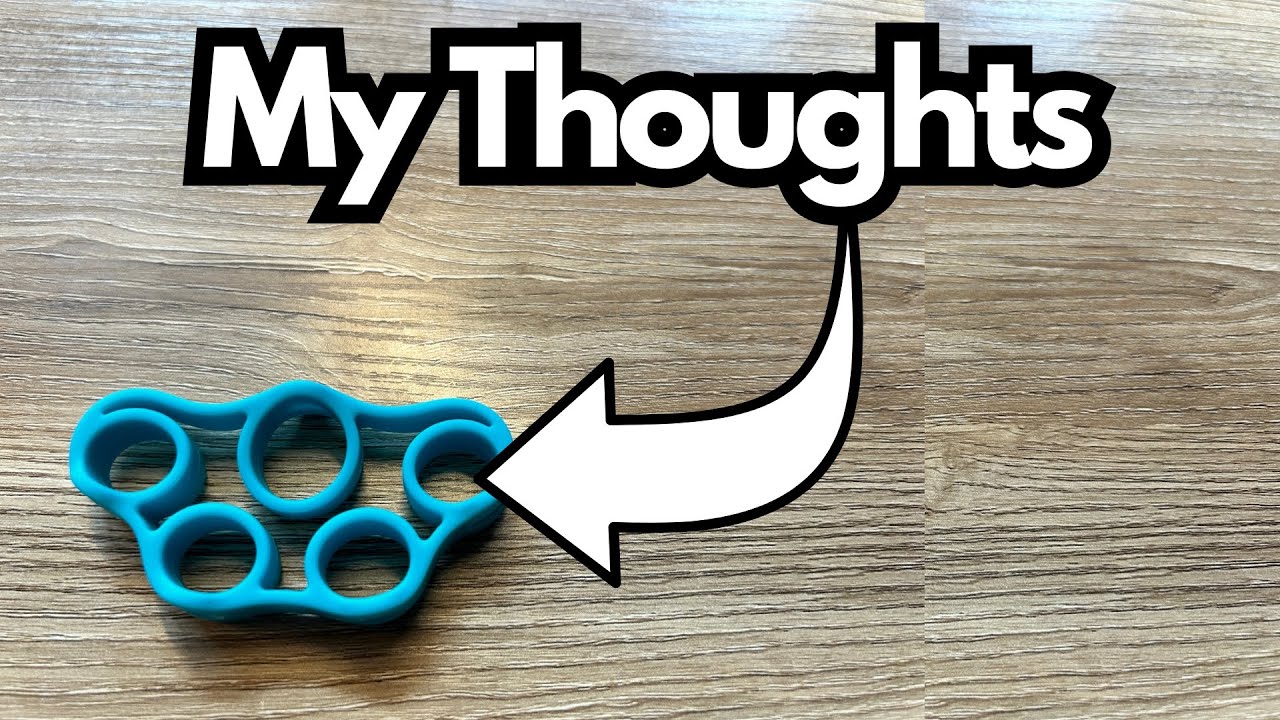
If you play guitar regularly, your hands, wrists, and elbows take a beating. Long practice sessions, repetitive motions, and tense fretting or picking can all add up to discomfort—or even injury—over time (grab it here on Amazon).
One low-tech tool that can make a real difference is a basic grip strength trainer. It’s inexpensive, easy to use, and can help reduce elbow strain and support healthier technique. Here’s how this particular finger-based grip tool works and why it’s become a daily habit.
Overview / First Impressions
This grip strength tool is a simple, elastic-style device that slips over your fingers. Once it’s on, you work your fingers against the resistance by opening and closing your hand.
There are more expensive versions on the market, but this basic model hits a sweet spot: it does exactly what it needs to do, feels good in use, and offers excellent value for the price.
For guitarists, it’s especially useful if:
- You’re dealing with forearm or elbow discomfort from playing
- You want to build finger and forearm endurance
- You’re looking for a simple warm-up or rehab tool you can use away from the guitar
Build Quality & Design
The design is minimalist:
- Finger loops: You slide each finger into its own loop. This keeps the device stable as you move.
- Elastic resistance: The material provides the tension you work against as you open and close your hand.
Despite its simplicity, it feels solid in use. It doesn’t need fancy materials or moving parts to be effective—it just needs consistent, comfortable resistance, and this one delivers.
Features & How to Use It
The way you use this tool matters more than any spec sheet. Here’s the basic routine:
- 1. Slip it onto your fingers
Place each finger into the loops so the device sits comfortably and securely. - 2. Extend and release
- Hold your forearm out straight in front of you.
- Open your hand against the resistance, then let it come back in.
- Repeat for controlled reps—no jerking, just smooth movement.
- 3. Reps and sets
- Aim for at least 50 reps at a time.
- Try to do around 3 sets per day.
- Adjust based on how your hand and forearm feel—focus on quality over speed.
This kind of volume gives your forearm muscles a real workout without needing heavy equipment or a gym.
How It Feels & Why It Helps Athletes (Guitarists Too)
From a guitarist’s perspective, the benefits are practical, not theoretical.
- Forearm strength: Strengthening the forearm muscles helps support the tendons and joints that take a beating during long playing sessions.
- Reduced elbow strain: When your forearm is stronger, it can take some of the load off the elbow joint, which is often where repetitive-strain issues show up.
- Nerve comfort: In this case, the user has some nerve damage near the elbow area and finds that using this tool actually feels good. That gentle, repetitive movement with resistance can promote blood flow and help things feel less tight or irritated.
For guitar players, that can translate to:
- More comfortable long practice sessions
- Less fatigue when playing fast or with a lot of tension
- A bit of “prehab” and rehab for overworked fretting and picking hands
It’s also something you can do away from the guitar—while watching TV, taking a break from the DAW, or between practice blocks.
Limitations / Things to Know
A few important points to keep in mind:
- Not a medical device: If you have serious pain, numbness, or ongoing nerve issues, talk to a doctor or physical therapist before starting any new exercise.
- Start conservatively: If you’re not used to this kind of work, don’t jump straight into high-rep sets. Build up gradually.
- Not a magic fix for technique problems: It can help your body handle more stress, but it won’t replace good posture, relaxed hands, and efficient picking and fretting technique.
- Basic model, basic features: There are more expensive grip trainers with adjustable resistance and more complex designs, but for simple forearm and finger work, this basic unit is usually enough.
Final Thoughts
For such a small, inexpensive tool, this grip strength trainer punches well above its weight. It’s:
- Simple to use
- Comfortable in daily practice
- Genuinely helpful for forearm strength and elbow relief
If you’re a guitarist dealing with mild elbow or forearm discomfort—or you just want to build some extra endurance in your hands—this kind of grip trainer is absolutely worth having in your practice toolkit. You don’t need the priciest model out there; a solid, basic one like this can be the perfect value for what it does.