

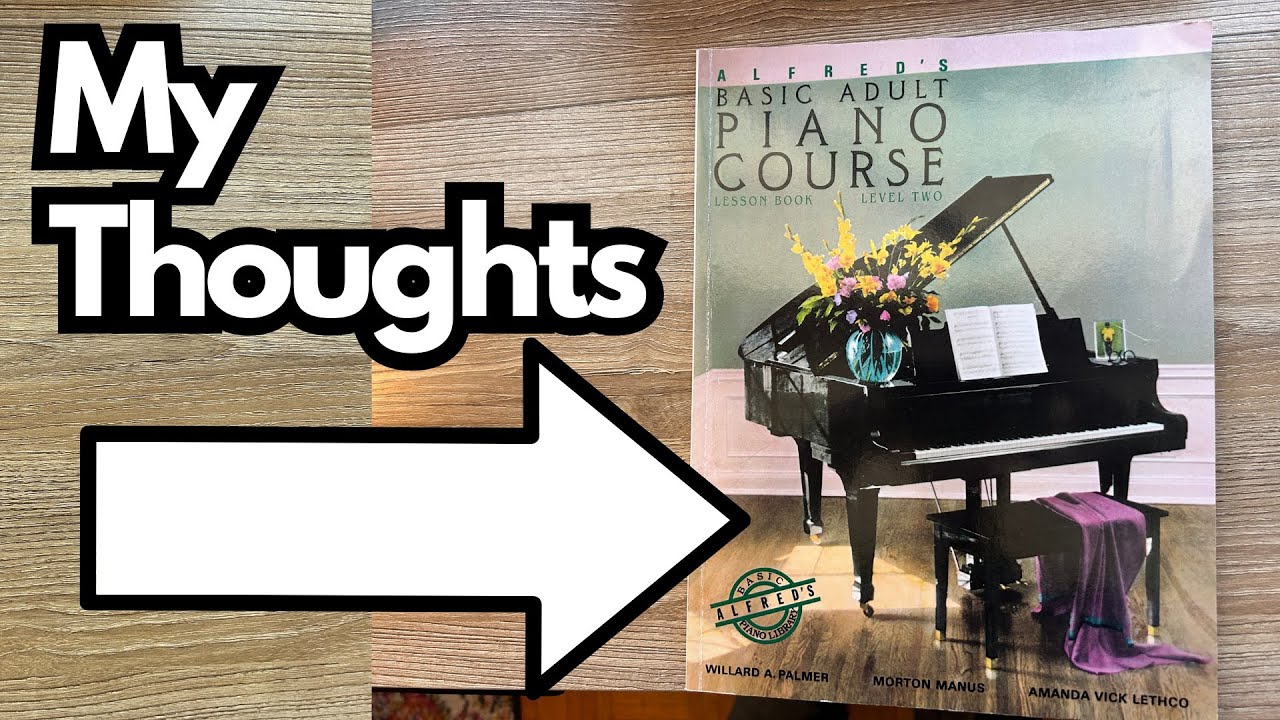
If you’re a guitarist who’s been flirting with the idea of learning piano—or you’ve already dipped a toe in with beginner material—Alfred’s Basic Adult Piano Course: Level 2 is one of those classic method books you’ll see recommended over and over.
You can grab it here on Amazon if you’re interested.
It’s not flashy, and it’s not “instant gratification.” Instead, it’s a slow, steady, well-structured way to build real musicianship on the keys. For guitarists, that means better theory understanding, stronger rhythmic sense, and a new way to visualize harmony.
Here’s what this book actually offers, who it’s for, and how it fits into a guitarist’s practice routine.
Overview / First Impressions
Alfred’s Basic Adult Piano Course: Level 2 is a continuation of the Level 1 book in the same series. It’s designed for adult learners who already have the basics down and want to keep progressing in a structured, gradual way.
Key points up front:
- You absolutely need Level 1 first. Jumping straight into Level 2 is likely to feel overwhelming if you haven’t already worked through the earlier material.
- The pacing is deliberate and gradual. It doesn’t rush you into advanced concepts; instead, it builds brick by brick.
- The focus is on reading, technique, and musicality, not just “play these cool songs quickly.”
If you’re the kind of player who likes a methodical, step-by-step path (especially if you’re coming from guitar and want to take piano seriously), this book fits that mindset well.
Build Quality & Design
Like most Alfred method books, Level 2 is:
- Clearly laid out – Lessons, exercises, and songs are organized in a logical progression.
- Readable and approachable – The notation is large enough to be easy on the eyes, and explanations are written for adults, not kids.
- Practice-friendly – You can easily work through a page or two per session without feeling lost.
It’s not a glossy, photo-heavy “coffee table” music book. It’s a practical, working method book meant to live on your music stand and get used.
Features & What It Teaches
Level 2 continues where Level 1 leaves off, so it assumes:
- You can already read basic notation in both treble and bass clefs
- You’re familiar with simple rhythms
- You can play with both hands together at a basic level
From there, it moves into deeper territory.
1. Hand Independence
One of the main goals of this level is developing real hand independence:
- Different rhythms in each hand
- Simple accompaniment patterns in the left hand while the right plays melody
- Coordinating finger movement and timing between both hands
For guitarists, this is similar to separating your picking-hand rhythm from your fretting-hand movement—but on piano, the independence is more exposed and demands more precision.
2. Playing in More Keys
You’ll start working in different keys, not just C major and one or two basics:
- New key signatures
- More accidentals (sharps and flats)
- A broader sense of tonality
This is huge for understanding harmony in a more complete way. If you’re a guitarist, this directly helps you:
- Recognize key centers more quickly
- Connect what you see on the staff with what you know on the fretboard
- Hear how chords and scales function in different tonalities
3. Reading Skills
Expect a steady push on sight-reading and general reading fluency:
- Reading both clefs simultaneously
- Tracking rhythm and pitch at the same time
- Gradually increasing the complexity of the music
The payoff is that you become more comfortable reading real music, not just chord charts or tab—something that feeds right back into your guitar playing and theory understanding.
How It Sounds & Where It Fits
Musically, the pieces in Level 2 are:
- Melodic and functional, not just dry exercises
- Mostly in the classical and traditional song vein—perfect for building technique and reading
From a guitarist’s perspective, this book is especially useful if you:
- Want to strengthen your theory foundation using the piano’s clear layout
- Are interested in composing or arranging, and need better command of harmony
- Want to hear and see triads, chords, and voice leading in a more linear, visual way
The real value isn’t that the songs themselves are performance showstoppers; it’s that they train your hands and ears in a way that translates directly back to guitar.
Limitations / Things to Know
A few important caveats:
- Do not skip Level 1. Level 2 assumes you already understand the basics. Jumping in cold will feel like starting a book in the middle of a chapter.
- It’s not a “play hit songs fast” method. If you want instant gratification or pop-song tutorials, this isn’t that. It’s a methodical course.
- You’ll need consistent practice. The material is approachable, but it still demands time in the chair (or on the bench).
If you’re okay with a traditional, structured approach, none of this is a downside—it’s just the nature of a serious method.
Final Thoughts
Alfred’s Basic Adult Piano Course: Level 2 is a solid, well-designed continuation for anyone who’s already worked through Level 1 and wants to keep building real piano skills.
For guitar players, it’s especially valuable because:
- It deepens your understanding of harmony and keys.
- It trains your rhythm and coordination.
- It gives you a new, highly visual way to think about triads, chords, and voice leading.
If you’re serious about using piano as a second instrument to support your guitar playing and theory knowledge, this is a book worth working through—just make sure you start at the beginning of the series.
Resources & Further Study
If you’re looking to connect what you learn on piano back to the guitar neck, these resources can help:
Fretboard Memorization Cheat Sheet (travelingguitarist.com)
A practical guide to memorizing the fretboard using:
- Major and minor triads in every key
- Octave mapping and a few other visualization techniques
This helps you not only memorize notes, but also improvise more confidently by understanding triads—the core building blocks of chords and harmony.
Traveling Guitarist Forum (forum.travelingguitarist.com)
A place to discuss:
- Guitar technique and practice
- Music theory and harmony
- Gear, practice strategies, and general music talk
Used together—a structured piano method like Alfred’s Level 2 plus focused fretboard and triad work on guitar—you’ll build a much deeper, more connected understanding of music across both instruments.