

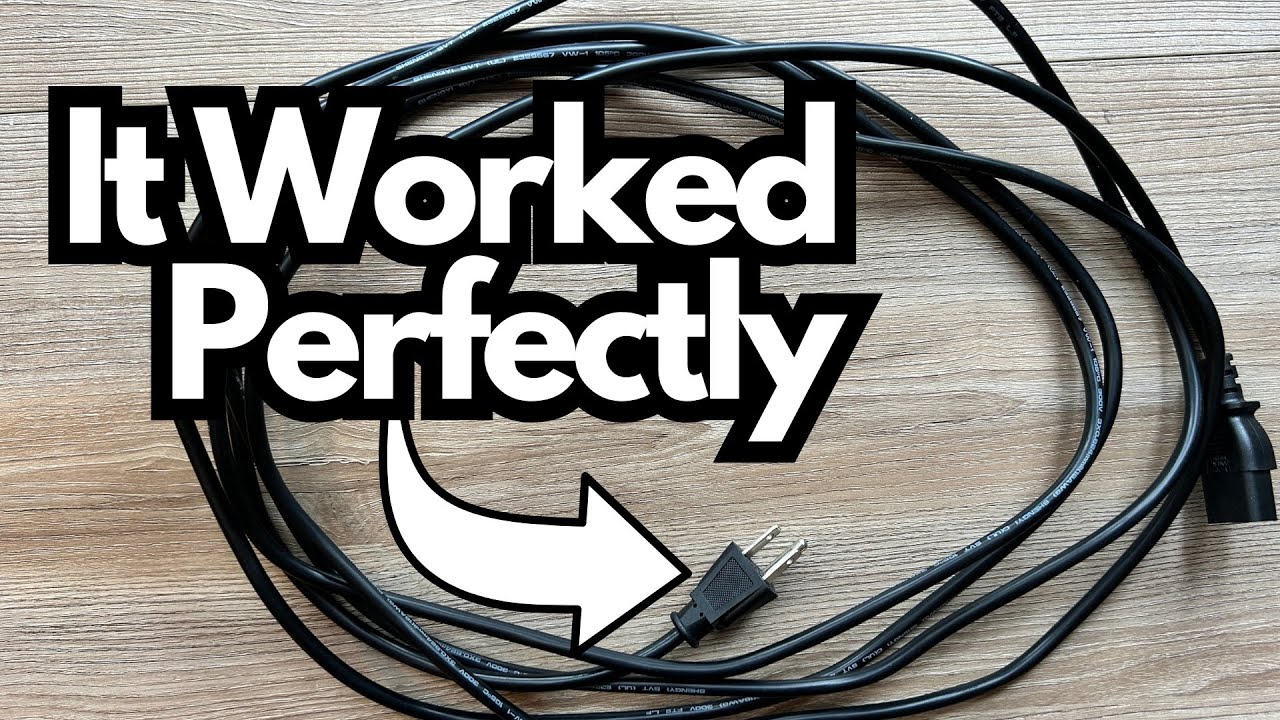
If you’re running an amp a little farther from your playing position—across the room, under a desk, around a corner—you quickly realize not all guitar cables are created equal. Length, noise, durability, and basic compatibility can make the difference between a smooth practice setup and a constant headache.
I’ve been using a 15-foot cable (this one right here on Amazon) in my home setup since last July, mainly to run from my guitar, under my desk, and into my Orange Crush 35RT. Here’s how it’s held up, what it does well, and what you should know if you’re considering a similar long cable for your rig.
Overview / First Impressions
I picked up the extra-long 15-foot version specifically because of my layout:
- Guitar at my usual playing spot
- Cable runs across the room
- Under the table/desk
- Back up into my Orange Crush 35RT
From day one, it simply worked. No weird noise, no intermittent signal, no crackling when I moved around. I plugged it in, it reached exactly where I needed it to go, and it’s been doing its job ever since.
I was initially a bit unsure about compatibility with the Orange Crush 35RT—some amps can be picky with certain cables or low-quality connectors—but in this case, there were zero issues.
Build Quality & Design
While I’m not dissecting the internal wiring, I can comment on how it’s held up in a real-world setup:
- Length (15 ft): Ideal for running under furniture and still having enough slack to move around comfortably.
- Routing under a desk: The cable has handled being bent around corners and run under a table without any obvious strain or failure.
- Daily use: After months of plugging in and out, there’s been no sign of fraying, loose connections, or noisy jacks.
For a cable that’s not babied—just used like any normal player would—it’s proven to be reliable.
Features & Functions (From a Guitarist’s Perspective)
While a cable is a pretty straightforward piece of gear, there are a few functional points that matter to guitarists:
Length for home setups
Fifteen feet is a sweet spot if:
- Your amp isn’t right beside you
- You need to route around obstacles or furniture
- You want a bit of freedom to move without yanking on the jack
Compatibility with solid-state practice amps
I’m using this with an Orange Crush 35RT, and it’s been completely plug-and-play:
- No strange grounding issues
- No unexpected hum beyond normal single-coil noise (if you’re using those)
- Works across clean and dirty channels the same
In other words, it behaves exactly like a good cable should: invisible.
How It Sounds / Use Cases
Cables can subtly affect tone, especially at longer lengths, but in the 15-foot range with a solid cable, any tonal difference is negligible for most players.
In practice:
- Noise level: Quiet. No added buzz or hiss beyond what’s typical for the guitar and amp.
- Tone: Feels transparent. The Orange Crush 35RT’s character comes through clearly on both:
- Clean tones (chimey, articulate)
- Overdriven tones (tight, punchy)
Best use cases:
- Home practice setups where the amp is off to the side or across the room
- Desk or studio layouts where the cable needs to snake under a table and come up neatly to the amp
- Players who move around a bit but don’t need a super long stage cable
Limitations / Things to Know
A few things to keep in mind when you’re dealing with a 15-foot cable in general:
Cable management matters
Running under a desk means you should:
- Avoid sharp bends when possible
- Not wedge it under chair legs or heavy furniture
- Use a couple of clips or cable ties to keep it from being stepped on
Not a “stage length” cable
Fifteen feet is great for home and small rooms, but if you’re planning to play on a bigger stage, you might want:
- A 20–25-foot cable, or
- A wireless system
Quality still matters
Longer cheap cables can be noisy or unreliable. If you’re buying a 15-foot lead, it’s worth making sure it’s from a reputable brand with solid connectors.
Final Thoughts
This 15-foot cable has turned out to be exactly what I needed: a long, dependable workhorse that lets me run from my guitar, under my desk, straight into my Orange Crush 35RT without fuss.
If your practice or studio layout requires a bit of distance between you and your amp—and you want something you can plug in and forget about—this length and style of cable is a smart, practical choice.
Resources & Further Study
If you’re looking to go beyond just plugging in and actually improve your playing and fretboard knowledge, here are a couple of helpful resources mentioned:
Fretboard Memorization Cheat Sheet – Available at
travelingguitarist.com/fretboard-cheatsheet
This focuses on:
- Major and minor triads in every key
- The “mapping” approach to seeing triads all over the neck
- Using triads as the foundation of harmony and improvisation
Guitar & Music Forum –
forum.travelingguitarist.com
A place to talk guitar, music theory, gear, and related topics with other players.
Pair a solid cable with a bit of structured study, and your rig—and your playing—will both feel a lot more dialed in.