

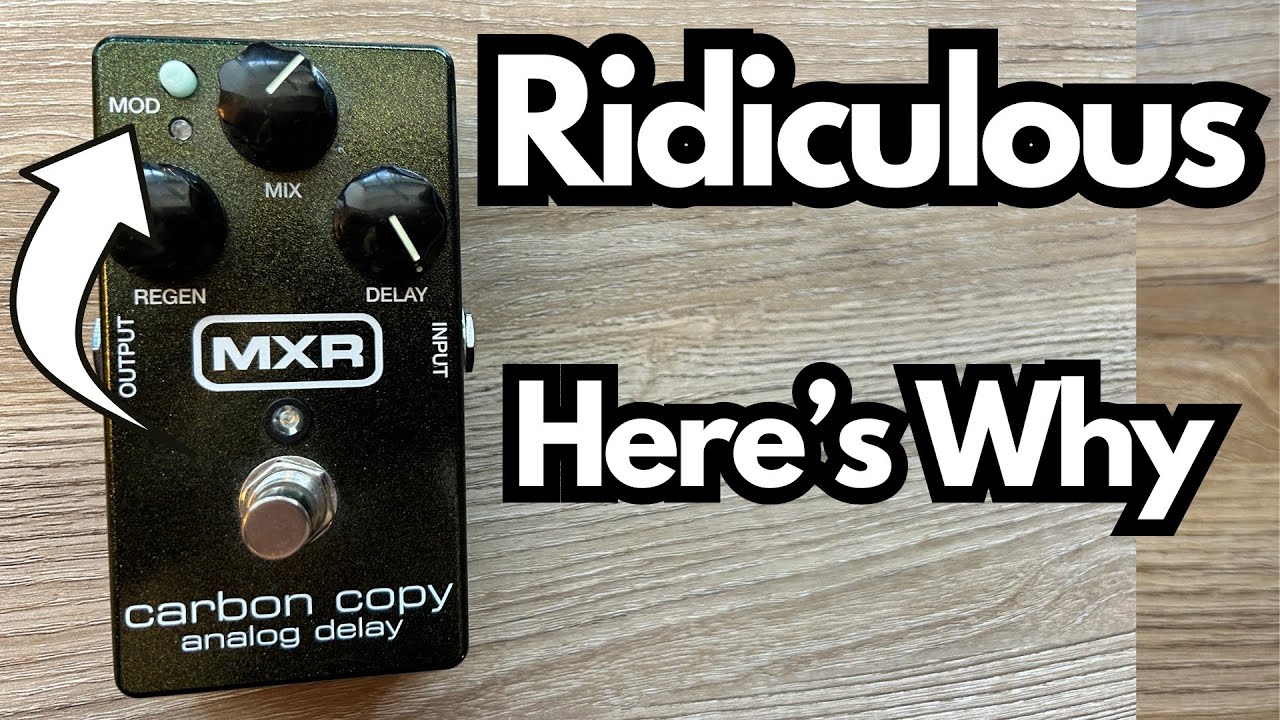
Analog delay pedals are everywhere, but every now and then one comes along that just feels different under your fingers. This one is all about vibe: warm repeats, musical saturation, and a modulation section that’s way more important than most players give it credit for.
If you’re a guitarist chasing lo‑fi textures, ambient washes, or just a fat, musical slap-back that sits perfectly in a mix, this analog delay deserves a serious look. You can grab one here on Amazon.
Overview / First Impressions
This pedal is a classic-style analog delay with a twist: the modulation circuit isn’t just an add‑on, it’s the secret sauce.
The overall character is:
- Warm and saturated – the repeats aren’t sterile; they have a thickness that makes everything feel “bigger.”
- Juicy and lush – there’s a pleasing, almost gooey quality to the delay tails that’s hard to replicate with digital units.
- Musical modulation – instead of a gimmicky wobble, the modulation blends into the repeats in a way that enhances the sound rather than distracting from it.
If you’re into tones that bloom rather than cut, this pedal is very much in that lane.
Build Quality & Design
Physically, it’s a solid, roadworthy stompbox. The enclosure feels sturdy and the controls are laid out in a familiar, intuitive way: delay time, repeats (often labeled “regen”), mix, and modulation controls.
There are, however, a couple of design decisions worth noting:
- Power jack on the side
The power input is on the side of the pedal rather than the top. From a pedalboard perspective, that’s not ideal:- It eats up extra horizontal space.
- It makes neat cabling a bit harder.
For modern boards, top-mounted power and audio jacks are just more practical, and this is one area where the design feels dated. - Mono only
No stereo inputs or outputs. If you run a stereo rig or like ping‑pong delays and wide ambient spreads, this pedal will have to sit in the mono part of your chain.
If you’re running a straightforward mono board, none of this is a dealbreaker—but it’s worth knowing before you buy.
Features & Functions
At its core, this is a straightforward analog delay, but the way the controls interact gives you a lot of musical ground:
- Delay Time
- Goes from short slapback to medium/long ambient echoes.
- It does not get super slow/long—if you’re after extreme, cavernous delay times, this won’t go as far as some digital or more modern analog units.
- Regen / Feedback
- Controls how many repeats you get.
- Lower settings give a subtle slap or short echo.
- Higher settings push into long, evolving repeats and can get quite intense if you want it to self‑oscillate or hover on the edge.
- Mix / Level
- Lets you blend in the delayed signal, from subtle thickening to very wet ambient textures.
- Modulation Section – this is the star of the show.
- Adds a gentle pitch modulation to the repeats.
- Can be dialed from barely-there movement to more noticeable warble.
- Crucially, it sounds musical—not seasick or gimmicky.
Engaging the modulation transforms the pedal from a basic analog delay into a lush, almost tape‑like ambience machine.
How It Sounds / Use Cases
From a guitarist’s perspective, this pedal shines in a few specific roles:
1. Warm, Vintage-Style Delay
With short to medium delay times and moderate repeats, you get:
- Classic rock and blues slapback.
- Subtle thickening behind solos.
- A “produced” feel without needing post‑processing.
The saturation and slight softening of the repeats help the delay sit behind your dry tone rather than competing with it.
2. Lo‑Fi & Chill Beats
If you’re into:
- Lo‑fi hip‑hop guitar loops,
- Chill, vibey chord progressions,
- Bedroom producer aesthetics,
this pedal is perfect. The modulation and analog warmth combine to create:
- Slightly warbly, nostalgic repeats.
- A soft, hazy texture that works beautifully with clean or lightly overdriven tones.
Even if you’re primarily a guitarist, it can also sound great on synths, keys, or sample loops in a studio setup.
3. Ambient & Textural Playing
Crank up:
- The regen/feedback,
- The modulation,
- And set a longer delay time,
and you’re in ambient territory:
- Swelling chords with a volume pedal or reverb after the delay sound huge and cinematic.
- Single notes trail off into a wash of warm, modulated echoes.
It’s not an infinite‑shimmer ambient pedal, but for organic, analog ambience, it’s very inspiring.
Limitations / Things to Know
This pedal is fantastic for what it does, but it’s not for everyone. A few key limitations:
- Delay time range
- It doesn’t go as slow/long as some players might want.
- If you need ultra‑long delays for experimental soundscapes or dotted‑eighth U2‑style lines at very slow tempos, you may find its maximum delay time a bit restrictive.
- Mono only
- No stereo in/out.
- Not ideal if your whole rig is built around stereo delays and reverbs.
- Side-mounted power jack
- Makes pedalboard layout and cable management slightly more annoying.
- If you’re tight on space, this can be a real consideration.
None of these break the core experience: as a mono, analog, vibe-first delay, it absolutely delivers. But if you’re expecting a modern, stereo, multi-function delay, this isn’t that pedal.
Final Thoughts
This analog delay stands out not because of a massive feature list, but because of feel:
- The repeats are juicy, lush, and saturated in a way that’s hard to fake.
- The modulation is genuinely underrated and turns a good delay into a great one.
- It’s particularly strong for lo‑fi, ambient, and warm vintage-style tones.
On the downside, the delay time could be longer, the power jack placement is dated, and the lack of stereo will matter to some players.
If you’re a guitarist who values character and warmth over pristine, surgical precision—and you don’t mind running mono—this is a pedal that can easily become a “leave it always on” part of your sound.
Resources & Further Study
If you’re looking to actually use a delay like this musically—beyond just turning it on and hoping for the best—knowing your fretboard and harmony is huge. A couple of helpful tools mentioned:
- Fretboard Memorization Cheatsheet
A resource that lays out:- Major and minor triads in every key
- Across the neck using octave mapping and other visualization techniques
This helps you:- Memorize the notes on the fretboard
- Improvise confidently in multiple keys
- Understand the triads that form the foundation of chords and harmony
- Guitar & Music Forum
An online community where you can:- Talk guitar, gear, and music theory
- Share tones and pedalboard ideas
- Ask questions and get feedback from other players
Combining a musical, characterful delay with a solid understanding of triads and the fretboard is a powerful way to make your playing—and your tone—stand out.