

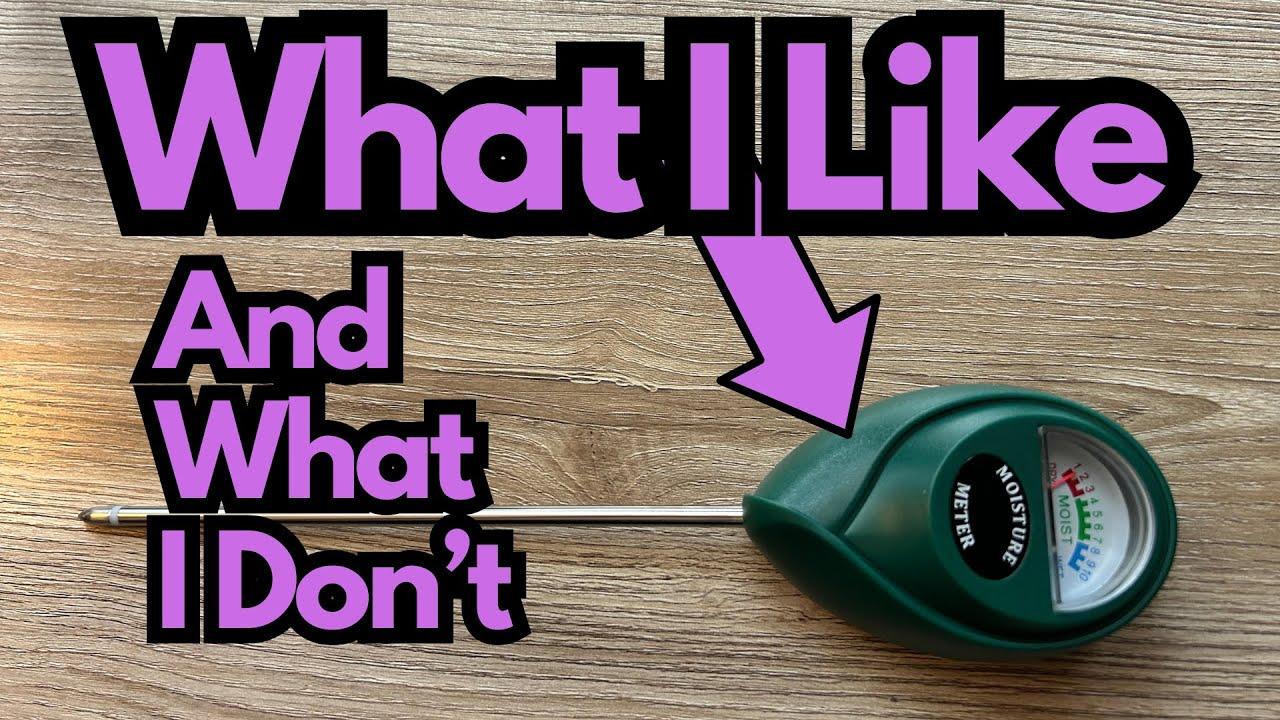
If you’ve ever struggled to figure out when to water your plants—too soon, too late, or somewhere in between—a soil moisture meter can make life a lot easier. The soil moisture meter I’ve been using turned out to be more useful than I expected, especially for keeping indoor plants happy and healthy. You can grab it here on Amazon if you’re interested.
This is a quick look at what it’s like to use, what it does well, and a few tips to get the most accurate readings.
Overview / First Impressions
I was honestly surprised by how nice this soil moisture meter feels in person. The display section has a simple, clear layout that gives it a nice, almost analog vibe—very easy to glance at and understand.
In practice, it’s straightforward:
- Insert the probe into the soil.
- Read how moist or dry the soil is.
- Decide whether it’s time to water.
It’s a simple tool, but for anyone who tends to overwater or underwater, it can be a game-changer.
Build Quality & Design
While I don’t have the exact dimensions, the probe is long enough (around 7 inches or so) to get a good reading deeper into the soil, not just at the surface.
Key design points:
- Long probe: Reaches into the root zone for a more accurate reading.
- Clear meter display: Easy to see the moisture range at a glance.
- Lightweight and compact: Easy to move from plant to plant.
Overall, it feels solid enough for regular use without being bulky or awkward.
Features & Functions
This particular model is marketed as a meter, but the main function I’ve been using—and the most important for most people—is the soil moisture reading.
What it does well:
- Reads moisture levels in the soil
- Gives you a clear indication of whether the soil is dry, moist, or wet
Even if you don’t use all six functions, the core moisture-reading feature is what makes it valuable for everyday plant care.
How to Use It (and Get Better Readings)
Here’s how I’ve been using it for more reliable results:
- Insert it almost all the way into the soil.
Push the probe in deep enough that it reaches the root zone, not just the top layer. - Check both sides of the pot.
I like to insert it twice: once on one side of the plant, then again on the opposite side. This helps account for uneven watering or soil that dries faster on one side. - Aim for “Moist,” not “Wet.”
After watering, I want the meter to read moist—not soaking wet and not at the bottom end of dry.
In the example I tested, I had just watered the plant, and the meter showed a bit moist, which is exactly where I want it to be.
How It Helps / Use Cases
This soil moisture meter is especially useful if:
- You’re new to houseplants and unsure when to water.
- You’ve killed plants before by overwatering.
- You have larger pots where it’s hard to judge moisture below the surface.
- You want a more objective way to time your watering instead of guessing.
It takes the guesswork out of plant care and gives you a simple, visual cue.
Limitations / Things to Know
A few practical notes:
- Not a substitute for observation: It’s a great tool, but you should still pay attention to plant health, leaf color, and overall growth.
- Probe care: Don’t force it into very hard or rocky soil, as that can damage the probe.
- Readings can vary: That’s why I like to take readings from two sides of the pot for a better average.
Used correctly, it’s very helpful—but like any tool, it’s only as good as how you use it.
Final Thoughts
I’ve been pleasantly surprised by this soil moisture meter and I’m genuinely glad I picked it up. It’s simple, intuitive, and does exactly what I need: tells me when the soil is actually ready for more water.