

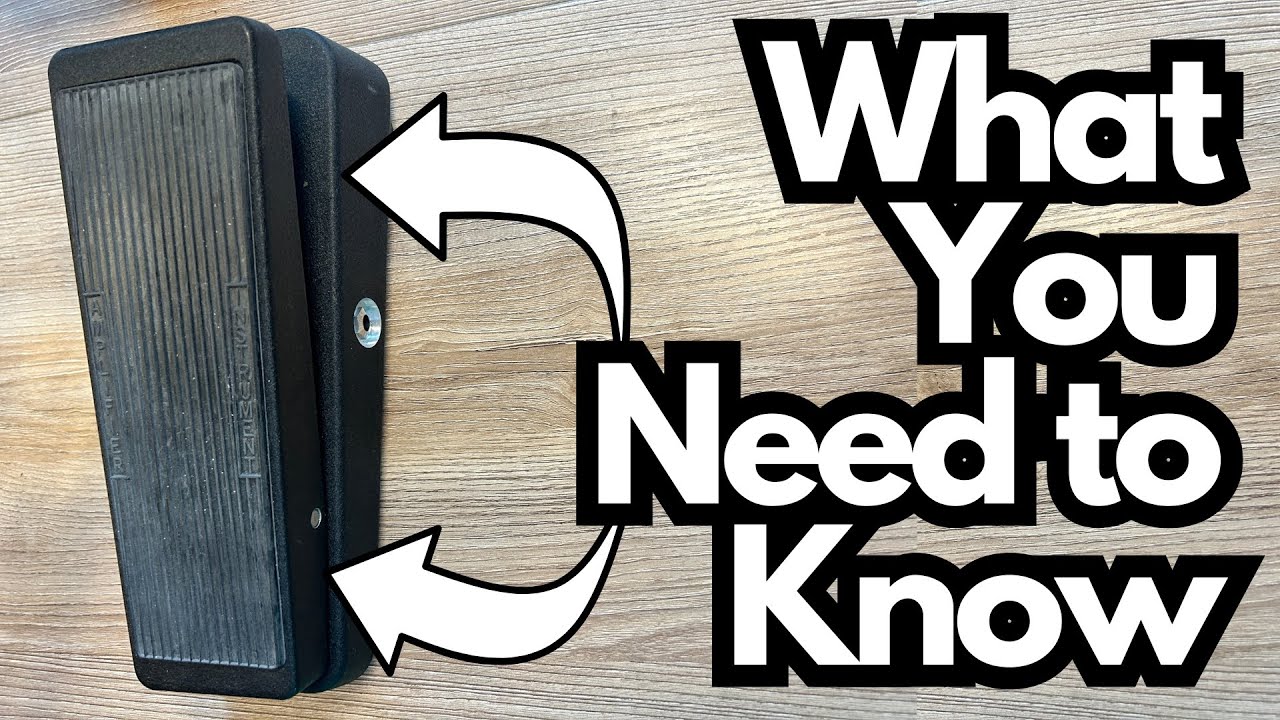
The Cry Baby wah is almost unavoidable. It’s on countless classic records, it’s been under the feet of legends, and it pretty much defines what most of us think a wah should sound like. You can grab one here on Amazon if you’re interested.
But how does the original Dunlop Cry Baby hold up today, when there are so many modern variants and competitors? Is it still a smart choice for your pedalboard, or is it more of a nostalgia piece?
Let’s dig in.
Overview / First Impressions
The original Dunlop Cry Baby wah still delivers that sound: vocal, expressive, and instantly recognizable. Step on it, and you’re right in the territory of classic rock, funk, and expressive lead tones.
From a tone perspective, it absolutely does the job:
- Classic, familiar wah sweep
- Cuts through a mix nicely
- Works great for leads, funky rhythm parts, and adding movement to clean or driven tones
However, as good as it sounds, the original Cry Baby shows its age in a few practical areas: switching, tone preservation, power, and size.
Build Quality & Design
The Cry Baby is built like a tank. The chassis is solid metal, and it feels like it could survive years of gigging abuse. That’s one of the reasons it’s still on so many boards: you can trust it physically.
A few design notes from a guitarist’s perspective:
- Rugged treadle: The rocker feels substantial and stable underfoot.
- Switch engagement: You have to push fairly hard at the toe to click it on and off. It’s not the most effortless wah to engage, especially if you’re trying to be precise on stage.
- Size: It’s big. On a modern, tightly packed pedalboard, the original Cry Baby can be a bit of a space hog. You may find yourself rearranging other pedals just to make it fit.
- Improved battery access (on the reissue): Earlier versions required you to unscrew the bottom plate at all four corners just to change the battery. The reissue version improves this with a dedicated battery compartment on the bottom, making battery swaps much quicker and less annoying.
Overall, it’s a solid, no-nonsense piece of gear, but not optimized for compact modern setups.
Features & Functions
The original Cry Baby is simple and straightforward:
- Single wah circuit: No EQ, no voicing switches, no internal trim pots for Q or sweep on this basic version.
- Standard rocker operation: Heel-down is darker, toe-down is brighter, with a smooth sweep in between.
- Top-mounted treadle, side-mounted power: The power jack placement is one of its quirks (more on that in a moment).
This simplicity is part of the charm: plug in, step on it, and you’re good to go. There’s no menu diving or tweaking, just a classic wah response.
Power & Connectivity Quirks
One notable annoyance is the power jack on the side of the pedal. It’s not just the location—it’s the size of the opening around the jack.
Some power plugs fit fine, but others, especially from certain power supplies, can be too bulky to fit into the recessed hole cleanly. For example:
- A standard slim power plug works without issue.
- A bulkier plug from something like a Voodoo Lab Pedal Power 3 Plus can be just a bit too large to fit comfortably into that opening.
It’s a small design detail, but if you rely on a specific power supply and use right-angle or oversized plugs, this can be frustrating.
Battery operation, on the other hand, is easy on the reissue version thanks to the dedicated compartment on the bottom—no more unscrewing the entire baseplate.
How It Sounds / Use Cases
Core Tone
- Classic wah voice: It has that mid-focused, vocal sweep that works beautifully for rock, blues, funk, and fusion.
- Expressive and musical: It responds well to your foot and playing dynamics, making it great for solos and rhythmic textures.
In a Pedal Chain
The Cry Baby pairs especially well with:
- Compression before the wah: Running a compressor (like a Dyna Comp-style pedal) before the Cry Baby can really make it sing. The added sustain and evened-out dynamics help the wah feel more responsive and vocal.
- Overdrive after the wah: Putting a low-to-mid gain overdrive (like a JHS Morning Glory) after the wah is a classic setup. The wah shapes the tone going into the drive, giving you those expressive, vowel-like lead tones.
- Delay and reverb after drive: Add a Carbon Copy-style analog delay and some reverb after your drive, and the Cry Baby sits beautifully in the chain—perfect for atmospheric leads and expressive lines.
In a full rig like that—compressor → wah → overdrive → delay → reverb—the Cry Baby still sounds fantastic and very “record-ready.”
Limitations / Things to Know
While the original Cry Baby sounds great, there are a few important caveats in a modern context.
1. Tone Suck
The big one: it’s not true bypass.
When the pedal is off, it can slightly dull your tone, robbing it of some clarity and high-end sparkle. If you’re running a long chain of pedals or long cable runs, this becomes more noticeable.
Many modern wahs (including updated Cry Baby models) offer true bypass or improved buffering to avoid this issue.
2. Stiff Engagement
Engaging the pedal requires a fairly firm push at the toe to click the switch. This can be:
- Annoying when you want to turn it on or off quickly mid-song
- Tricky if you’re trying to be precise with your footwork
Some newer wahs offer softer switches, auto-on sensors, or more comfortable engagement mechanisms.
3. Size and Board Real Estate
The original Cry Baby takes up a lot of room. On a compact board, that can be a deal-breaker. Dunlop and other manufacturers now offer mini wahs that deliver similar tones in a much smaller footprint.
4. Power Jack Design
As mentioned, the recessed side power jack can be finicky with certain power cables. If your power plugs are on the larger side, you may need to:
- Use a slimmer plug
- Re-route cabling
- Or rely on battery power in some setups
5. Better Modern Variants Exist
Dunlop alone makes multiple updated Cry Baby models that address many of these issues:
- True bypass
- Smaller enclosures (Baby/Mini versions)
- Built-in EQ or voicing options
- More convenient switching
If you’re buying new today, these updated versions are often more practical while still capturing the essence of the original sound.
Who Is the Original Cry Baby For?
You’ll probably appreciate the original Cry Baby if:
- You want the classic wah sound and don’t mind some old-school quirks.
- You have enough pedalboard space for a full-sized wah.
- You’re okay with non–true-bypass and can live with a bit of tone loss, or you’re willing to use a loop switcher or buffer to compensate.
- You like rugged, simple gear that “just works” without menus or multiple modes.
If you’re extremely picky about tone purity, board space, or modern convenience features, you might be happier with a newer Cry Baby model or another brand’s modern wah.
Final Thoughts
The original Dunlop Cry Baby wah is a classic for a reason. Sonically, it still absolutely delivers: expressive, vocal, and instantly familiar. Paired with a compressor in front and a tasteful overdrive behind it, it can sound downright incredible.
However, from a modern guitarist’s perspective, it’s not perfect:
- It’s not true bypass and can suck some tone.
- The switch takes a firm stomp to engage.
- The enclosure is large, and the power jack design can be finicky.
If you’re buying today and want maximum practicality, a mini, true-bypass Cry Baby with EQ control is likely the smarter move. It’s essentially the same idea, just evolved for modern rigs.
But if you already own the original—or you love the idea of using the same style of wah as so many classic players—you’re not making a bad choice at all. It still sounds great, and in the end, that’s what really matters.
Resources & Further Study
If you want to get more out of your wah playing and overall fretboard knowledge, check out:
- Fretboard Memorization Cheat Sheet at travelingguitarist.com – A triad-based guide that lays out major and minor triads in every key using octave mapping and other techniques. It’s a solid tool for:
- Memorizing the notes on the fretboard
- Understanding harmony at a deeper level
- Improving your improvisation across multiple keys
- Traveling Guitarist Forum at forum.travelingguitarist.com – A place to talk guitar, gear, and music with other players, ask questions, and share ideas.
Understanding triads and fretboard mapping will make all your expressive tools—wah included—far more musical and intentional.