

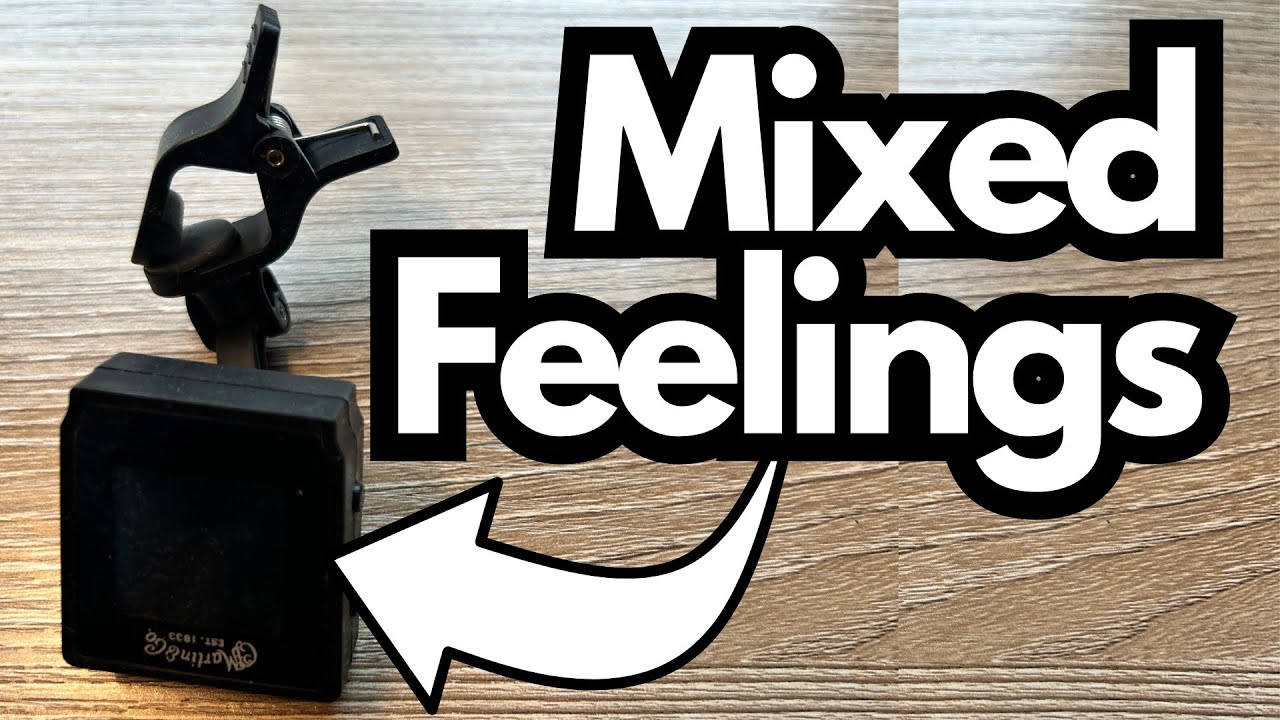
If you play acoustic or electric guitar regularly, a reliable clip-on tuner is almost as essential as a good set of strings. The Martin clip-on tuner might not look like much at first glance—it’s made of very lightweight plastic—but after spending some real time with it, it turns out to be a surprisingly solid little tool for everyday tuning.
This review is for players who want a no-fuss, accurate tuner that lives on the headstock and just works, whether you’re practicing at home, teaching, or playing small gigs.
Overview / First Impressions
My first reaction to the Martin clip-on tuner was honestly not great. It feels cheap in the hand, mostly because of the lightweight plastic construction. If you’re used to something with a bit more heft, it can come off as “toy-like.”
But after using it for a while, a few things really grew on me:
- It’s very adjustable thanks to its multi-axis swivel and grooved joints.
- The rubber pads on the clamp are more durable than those on many popular tuners (like the Snark).
- It’s simple to use: hold the power button, choose your mode and reference pitch, clip it on, and you’re good to go.
So while the initial impression isn’t premium, it redeems itself in actual day-to-day use.
Build Quality & Design
To be clear: this is not a metal, boutique, heirloom-grade tuner. It’s a small, plastic, clip-on unit.
Key points on build:
- Material: Lightweight plastic body. It doesn’t feel fragile, but it definitely doesn’t feel “luxury.”
- Clamp pads: The rubber pads on the clip are a strong point. They’re more durable than the ones on many Snark tuners. On my Snark, the pad actually fell off, which is a problem because:
- You risk scratching or marking your headstock when the bare plastic or metal clamp contacts the finish.
- It makes the tuner less stable.
The Martin’s pads have held up much better so far.
- Adjustability: The tuner has multiple grooves and a swivel joint, allowing you to:
- Rotate and angle the display to face you, no matter how you clip it.
- Use it comfortably on different headstock shapes (acoustic, electric, 3+3, 6-in-line, etc.).
The design isn’t flashy, but it’s practical. Once it’s on the headstock, you stop thinking about the plastic and just enjoy the flexibility.
Features & Functions
Despite its basic look, the Martin tuner gives you a decent set of features for everyday guitar use.
Power & Operation
- Power button on the side:
- Press and hold to turn it on.
- Once it’s on, you’re immediately ready to tune.
Tuning Modes
The display cycles through several modes:
- C
- G
- B
- A
- U
- V
These are typically:
- C – Chromatic (detects any pitch)
- G – Guitar
- B – Bass
- U – Ukulele
- V – Violin
For guitar, C (chromatic) is usually the most versatile mode, especially if you use alternate tunings. That’s where I keep it.
Adjustable Reference Pitch (Hz)
You can change the tuning reference pitch (A4) if needed:
- Range: 430 Hz to 450 Hz
- Standard tuning: 440 Hz
Most players will want to leave this at 440 Hz, but having the option to adjust is useful if you’re:
- Playing with older instruments tuned slightly sharp or flat.
- Matching a piano or recording that isn’t at 440 Hz.
- Doing historical or specialized music that uses a different reference pitch.
Battery & Power
- The tuner uses a standard watch-style battery (coin cell).
- To replace it:
- Pull out the small compartment on the tuner body.
- Swap the battery and slide the compartment back in.
It’s simple, and replacement batteries are cheap and easy to find.
How It Performs (From a Guitarist’s Perspective)
Strictly speaking, a tuner doesn’t “sound” like anything—but how it reads your sound matters a lot.
Accuracy & Readability
The Martin tuner displays:
- The note name you’re tuning to.
- How far off you are in cents (a cent is 1/100 of a semitone).
That cent readout is a big plus:
- It lets you see exactly how sharp or flat you are.
- You can dial in your tuning very precisely, which is especially nice if:
- You’re recording.
- You’re playing in alternate tunings like Drop D or D Standard.
- You care about intonation and want each string as close to perfect as possible.
In practice, it works well in tunings like Drop D and D Standard, tracking the lower pitches reliably when clipped to the headstock.
Practical Use Cases
This tuner shines in:
- Home practice – Lives on the headstock, always ready to go.
- Teaching – Easy to see, easy to explain to students.
- Acoustic sessions – Quick tuning between songs or takes.
- Alternate tunings – Chromatic mode and cent display help keep everything tight.
It’s not tied to one instrument, either—you can use it on acoustic, electric, bass (in the right mode), and even ukulele or violin.
Limitations / Things to Know
No piece of gear is perfect, and this tuner has a few quirks and trade-offs to be aware of:
- Cheap-feeling plastic
- If you like gear that feels solid and premium, this won’t wow you out of the box.
- That said, the plastic hasn’t affected functionality in normal use.
- Not a “luxury” display
- The screen is functional, not fancy.
- It’s readable enough for normal use, but don’t expect ultra-high-res graphics or super-bright color.
- Battery type isn’t labeled in the script
- It uses a standard coin cell (watch-style) battery, but you’ll want to check the actual unit or packaging for the exact model.
- Overkill modes for some players
- If you’re only using it for guitar, you might never touch the other instrument modes. They’re nice to have, but not essential.
If you can live with the plasticky feel and basic display, the functionality is solid.
Final Thoughts
The Martin clip-on tuner is a good example of a piece of gear that feels underwhelming at first, but wins you over in everyday use.
What it does well:
- Accurate tuning with cent readout for precision.
- Durable clamp pads that protect your headstock better than some popular alternatives.
- Highly adjustable positioning so you can always see the display.
- Simple controls, multiple modes, and adjustable reference pitch.
What it doesn’t do:
- It doesn’t feel premium in the hand.
- It doesn’t offer flashy aesthetics or advanced “smart” features.
If you want a reliable, practical, no-nonsense clip-on tuner that you can leave on your headstock and trust, this little Martin unit is absolutely worth considering—especially if you’ve been burned by tuners with pads that fall off or limited adjustability.
Resources & Further Study
If you’re looking for something musical to work on once your guitar is in tune, there are a couple of helpful resources:
- Fretboard Memorization Cheat Sheet – Available at
travelingguitarist.com
This guide covers major and minor triads in every key, mapped across the fretboard using techniques like octave mapping. It’s designed to help you:- Memorize the notes on the fretboard.
- Understand the foundation of harmony through triads.
- Start improvising more confidently in multiple keys.
- Traveling Guitarist Forum –
forum.travelingguitarist.com
A place to talk about guitar, music theory, gear, and more with other players. A good spot to ask questions, share progress, and get feedback.
Get your guitar in tune, then dig into triads and fretboard knowledge—the tuner gets you started, but the real fun begins when you start making music with it.