

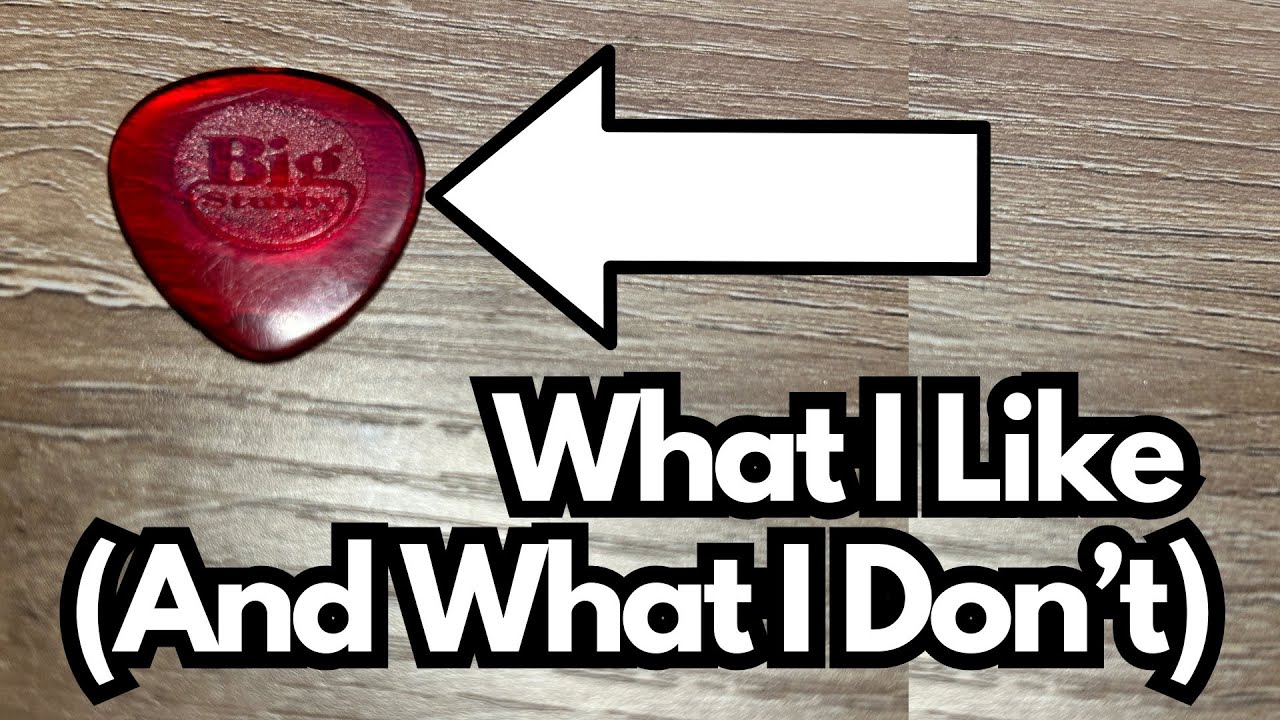
You know how much that tiny piece of plastic can change your tone and feel. Big Stubby picks are one of those options that catch your eye immediately—chunky, sculpted, and a bit different from the standard thin celluloid teardrop. You can grab it here on Amazon.
This post breaks down what Big Stubby picks are like in real-world use, who they’re best for, and where they might fall short for certain playing styles.
Overview / First Impressions
Big Stubby picks are solid, sculpted guitar picks with a comfortable grip and a rounded point. They:
- Look distinctive and a bit futuristic
- Feel substantial in the fingers
- Deliver a smooth, controlled attack rather than a super sharp, aggressive bite
They’re not extreme in any one direction—more of a solid, middle-of-the-road choice that will work for a lot of players, especially in rock and jazz contexts.
Build Quality & Design
The first thing you notice is the feel:
- Thicker profile: They’re chunkier than your average pick, which gives a sense of control and stability.
- Comfortable grip: The sculpted design helps them sit nicely between your fingers, reducing slippage.
- Rounded tip: The point isn’t razor-sharp, which changes how they interact with the strings.
They’re well-made and durable—nothing flimsy here. If you’re used to thin, flexible picks, these will feel like a serious upgrade in solidity.
Features & Functions
From a guitarist’s perspective, here’s what stands out:
- Smooth attack: Because the tip isn’t super pointy, the string release feels smooth and a bit rounded.
- Controlled feel: The thicker, ergonomic design makes them easy to hold, especially for players who tend to drop picks.
- Versatile enough for many styles: They can handle rhythm, lead, and chord work without feeling out of place.
They don’t specialize in any one niche, but they do a lot of things well.
How It Sounds / Use Cases
Rock Players
For most rock players, Big Stubby picks work well:
- Solid attack for riffs and power chords
- Enough precision for lead lines
- The rounded tip tames some of the harshness you might get from ultra-pointy picks
You get clarity and control without too much pick noise.
Jazz Players
Jazz players will likely appreciate:
- The warm, rounded tone from the less-pointy tip
- The control you get when playing single-note lines or chord melodies
- A feel that encourages dynamic picking and subtle articulation
They’re a good match if you like a more rounded, vocal tone rather than a super bright, snappy attack.
Shred / High-Speed Players
If you’re into shred or very fast alternate picking, these may not be the ideal choice:
- The less-pointy tip means slightly less immediate attack
- Players who rely on ultra-precise, sharp picks might find them a bit too rounded and “soft” on the string
They’ll still work, but they’re not optimized for hyper-technical, high-BPM playing where every micro-second of attack matters.
Limitations / Things to Know
A few points to keep in mind:
- Not the sharpest attack: If you love super-pointy picks (like Jazz III–style), these may feel a bit dull on the string.
- Best for feel and comfort over speed: The comfort and control are great, but they’re not aimed at extreme shred performance.
- Tone is on the smoother side: Great for warmth and control, less ideal if you’re chasing maximum bite and aggression.
Final Thoughts
Big Stubby picks are solid, comfortable, and versatile. They’re especially well-suited for:
- Rock players who want a reliable, comfortable pick that delivers a strong but smooth attack
- Jazz players who like a warm, rounded tone with good control
If your main focus is shred-level speed and ultra-sharp precision, you might want something pointier. But for most everyday playing—rock, fusion, jazz, and general lead and rhythm work—Big Stubby picks absolutely get the job done and feel great in the hand.
Resources & Further Study
If you’re working on your overall playing and want to get more out of any pick or guitar setup, having the fretboard mapped out in your mind is huge. A helpful resource mentioned was a fretboard memorization cheat sheet available at:
Combining solid gear choices (like the right pick for your style) with strong fretboard knowledge is one of the fastest ways to tighten up your tone, phrasing, and overall confidence on the instrument.