

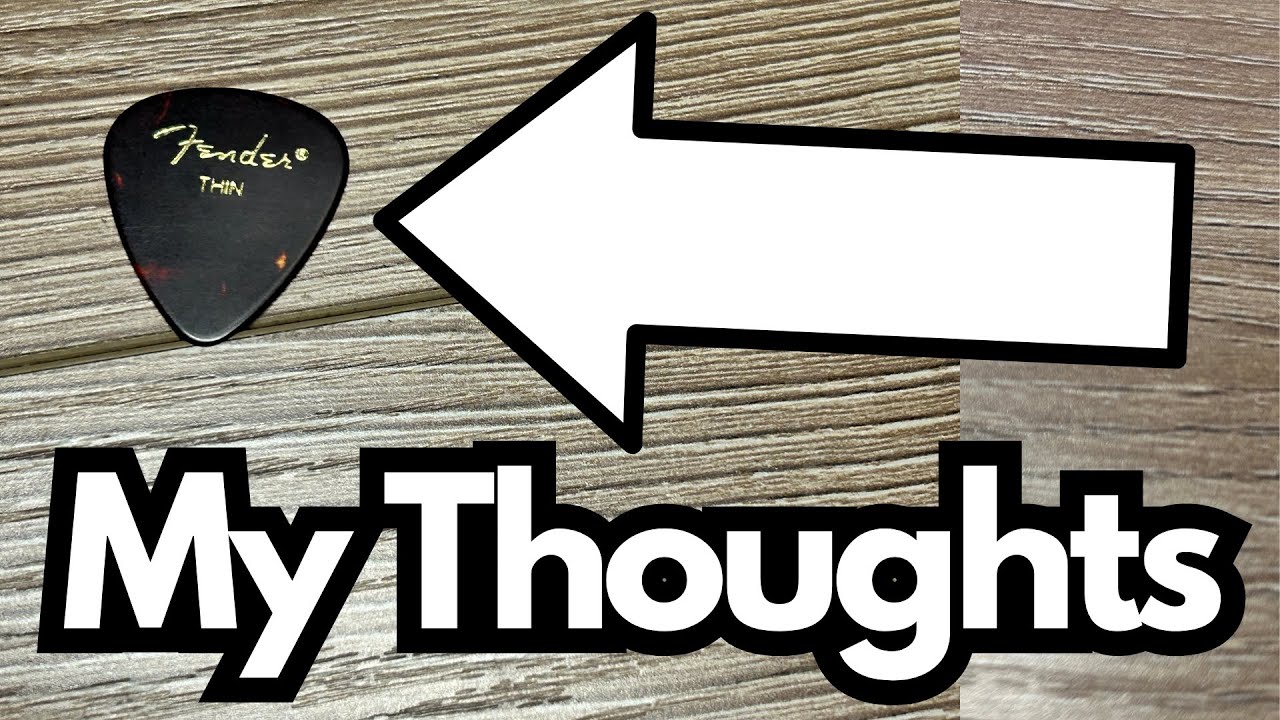
If you’ve ever browsed a wall of Fender picks and thought, “Those look cool, but how do they actually play?” this one’s for you.
In this post, we’re looking at one of Fender’s smaller, decorative-style picks—a jazz-sized plectrum with a thin, flexible feel and an eye-catching design. It’s not your typical Jazz III clone, and that difference really shows up in the attack and overall feel. You can grab one here on Amazon.
This pick will appeal to players who care about aesthetics, a lighter touch, and flexibility more than brute-speed shredding or ultra-precise metal riffing.
Overview / First Impressions
This particular Fender pick is:
- Roughly Jazz III-sized (small, compact footprint)
- Thin and flexible, with a lot of give
- Decorated with one of Fender’s “beautiful design” graphics
At first glance, it looks like a Jazz III alternative, but once you start playing, it becomes clear that it behaves quite differently. The point isn’t as sharp, and the feel against the string is softer and more forgiving.
If you’re used to stiff, pointy picks for high-speed runs, this will feel like a completely different tool.
Build Quality & Design
Fender has really leaned into making visually striking picks, and this one fits right in:
- Attractive print/design on the surface
- Smaller footprint, ideal for players who like compact picks
- Nicely shaped point, though not as aggressive as a true Jazz III
Despite its thinness, it doesn’t feel cheap or flimsy in terms of manufacturing. The edges are smooth, and the tip is shaped well enough to give you a defined point of contact with the string.
However, the key design choice here is the thin gauge and flexibility—that’s what defines how this pick actually plays.
Features & Functions
From a guitarist’s perspective, here’s what stands out:
- Size: Similar to a Jazz III, which many players love for precision and control.
- Thickness: Thin, with a lot of flex.
- Tip Shape: Pointed enough for clarity, but not razor-sharp.
- Feel: Soft attack and a bit of “give” when you hit the strings.
This combination makes it more of a light-touch, expressive pick rather than a surgical, high-gain weapon.
How It Sounds / Use Cases
Because of its thinness and flexibility, this pick has:
- A softer attack compared to a traditional Jazz III
- A bit more “flap” or give when striking the string
- A less percussive, more rounded tone
From a stylistic standpoint:
- If you play fast jazz lines, metal riffs, or shred and rely on a stiff, precise pick, this probably won’t be your first choice. The flex can slow down your picking and blur your attack a bit.
- If you like lighter strumming, cleaner tones, or more dynamic control, this could be useful. The flexibility lets you dig in without the same harshness you’d get from a thicker pick.
- It might work well for rhythm guitar, clean chord work, or players who prefer a gentler, more forgiving feel under the fingers.
Personally, for fast playing—jazz-fusion, metal, or technical runs—this pick wouldn’t be my go-to. A stiffer pick makes it easier to keep things tight and articulate at high speed.
But that doesn’t mean it’s useless; it just has a different niche.
Limitations / Things to Know
A few important caveats:
- Not ideal for speed-focused players. If you’re into shred, metal, or fast bebop lines, the flex can feel like it’s fighting you.
- Less aggressive attack. Great if you want smoothness, not so great if you want bite and precision.
- Thin feel. Some players simply don’t like how a very thin pick feels between the fingers, especially when digging in hard.
In short, this is not a one-size-fits-all pick. It’s more of a specialty tool for players who prefer a softer, more flexible response.
Final Thoughts
This Fender jazz-sized art pick is a cool little piece of gear:
- Visually appealing
- Comfortable and flexible
- Best suited to lighter-touch playing, clean tones, and rhythm work
If you’re a fast picker who lives on articulate runs and tight metal riffs, you’ll likely gravitate toward thicker, stiffer picks with a sharper point.
But if you enjoy experimenting with feel and tone, or you like a smaller pick with a softer, more forgiving response, this one is worth trying. Picks are cheap, and sometimes a small change like this can inspire a different approach to your playing.
Resources & Further Study
If you want to go beyond gear and actually level up your fretboard knowledge and improvisation, check out:
Fretboard Memorization Cheat Sheet at
travelingguitarist.com
It covers major and minor triads in every key, using octave mapping and other techniques to help you:
- Memorize the notes on the fretboard
- Understand the triads that form the foundation of harmony and chords
- Start improvising more confidently in multiple keys
Traveling Guitarist Forum at
forum.travelingguitarist.com
A place to talk with other players about guitar, music, and related topics.
Gear like picks can change how you play, but understanding the fretboard and harmony will change what you play—and that’s where the real long-term progress happens.