

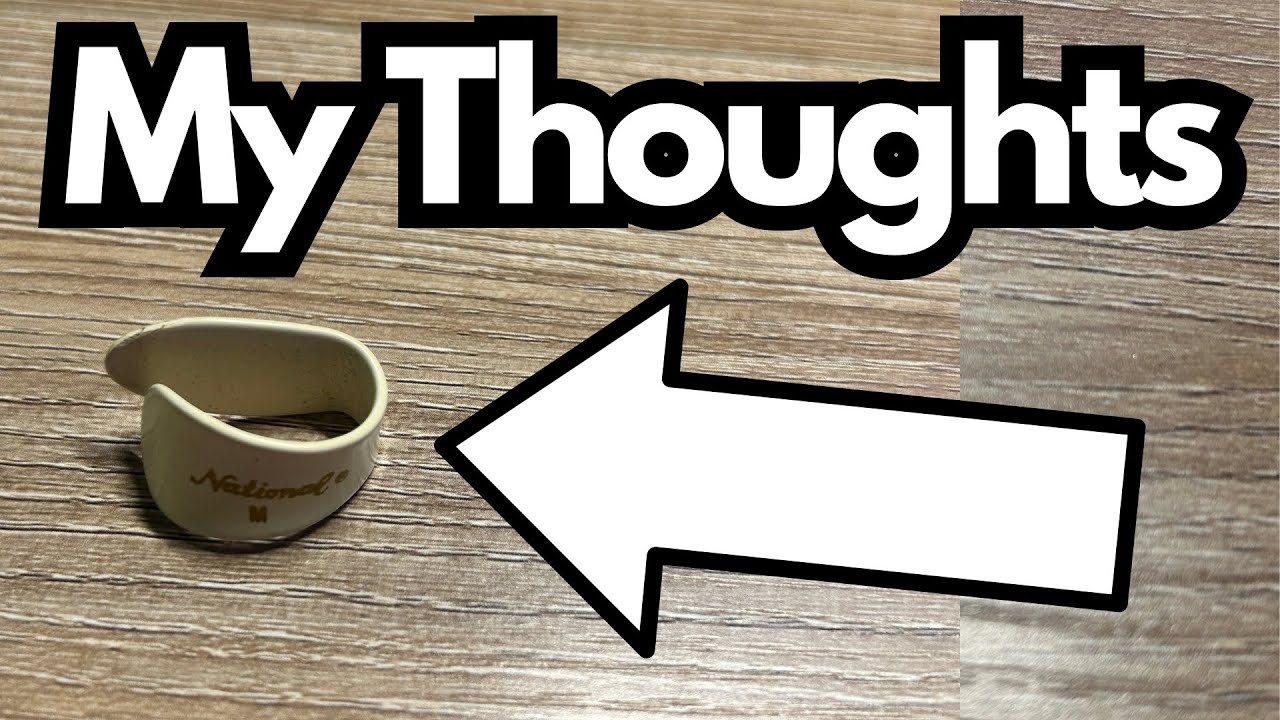
If you’re getting into acoustic fingerstyle—especially artists like Antoine Dufour, Tommy Emmanuel, or modern percussive players—you’ve probably seen them use a thumb pick and wondered if you should too.
Thumb picks can feel strange at first, but they open up a lot of tonal and technical options: stronger bass, clearer separation between melody and accompaniment, and a more consistent attack.
This post walks through what a thumb pick does, how to tweak it so it actually feels good, and who it’s really for.
Overview / First Impressions
When I first got serious about acoustic guitar and started chasing those modern fingerstyle sounds, I had to grab a thumb pick. Out of the package, it didn’t feel quite right—too big, too pointy, and a bit awkward.
The solution? I literally took a grinder to it and reshaped it.
That little mod made a huge difference. The pick suddenly felt more natural and controllable, and it was much easier to play the kind of lines and patterns I was hearing from my favorite players.
If you’re into:
- Fingerstyle acoustic
- Percussive techniques
- Alternating bass patterns
- Hybrid picking with a strong low-end
…a thumb pick is absolutely worth trying.
Build Quality & Design (What to Expect)
Most off-the-shelf thumb picks share a few traits:
- Thicker than standard flat picks – for a strong, punchy attack on the bass strings.
- Curved band that wraps around your thumb – so it stays in place without you having to grip it.
- Longer, pointy tip when new – which can feel clumsy until you shape it to your preference.
Out of the box, that extra length and point can make the pick feel “in the way,” especially if you’re used to bare-thumb playing. That’s normal. The design is meant to be a starting point, not the final form.
Features & Functions: What a Thumb Pick Actually Does
From a guitarist’s perspective, a thumb pick is basically a specialized tool for your picking hand. It helps in a few key ways:
- Consistent bass notes
The rigid tip gives you a strong, even attack on the low strings, perfect for Travis picking, alternating bass, or any style where the thumb holds down a groove. - Clear separation between parts
You can treat your thumb like a mini “bass player” while your fingers handle chords, melodies, or harmonics. The tone difference between the pick and your fingers helps separate those layers. - More volume and presence
On acoustic, a thumb pick can really bring out the low end and make your playing cut more in a mix or live setting. - Hybrid picking on electric or acoustic
Some players use a thumb pick on electric to free up extra fingers while still having a pick-like attack.
Making It Playable: Shaping and Modding Your Thumb Pick
This is where things get personal and practical.
When you first buy a thumb pick, you’ll probably notice:
- The tip is longer than you need.
- The point can feel too sharp or “grabby.”
- The angle might not match how your thumb naturally hits the strings.
The fix is simple: reshape it.
How to Modify a Thumb Pick
- Shorten the tip
Use a file, sandpaper, or a grinder (carefully) to take some length off the tip. A slightly shorter profile gives you more control and makes it feel closer to a regular flat pick. - Round the point
Softening the point gives a smoother, less scratchy tone and can make string crossing feel more natural. - Test, then refine
Don’t take too much off at once. Shape a bit, play for a few minutes, then adjust again. You’re aiming for a shape that feels like an extension of your thumb, not a foreign object.
This small amount of work can turn a “meh” thumb pick into something you actually enjoy using.
How It Sounds / Use Cases
From a tonal and musical standpoint, a thumb pick shines in a few scenarios:
1. Fingerstyle Acoustic
If you’re learning arrangements in the style of Antoine Dufour or other modern fingerstyle players, the thumb pick lets you:
- Keep a strong, steady bass line
- Play clear melodies on top with your fingers
- Get more dynamic range and clarity out of your acoustic
2. Travis Picking & Folk/Country Styles
For classic alternating bass patterns, a thumb pick is almost a cheat code:
- The bass notes stay loud and even.
- You don’t have to dig in as hard with your bare thumb.
- It’s easier to maintain a groove while your fingers handle syncopation.
3. Practice & Technique Development
Even if you don’t use one all the time, a thumb pick can:
- Force you to clean up your right-hand accuracy
- Help you develop a stronger sense of independence between thumb and fingers
- Make you more aware of tone production on the bass strings
Limitations / Things to Know
Thumb picks aren’t for everyone, and they do come with trade-offs:
- Adjustment period
They will feel weird at first, especially if you’re used to playing with just your fingers. - Less “naked thumb” dynamics
You lose some of the soft, fleshy nuance of a bare thumb. You can compensate a bit with touch and angle, but the feel is different. - Fit and comfort
Some picks may feel too tight or too loose. You might need to try a few brands or sizes to find one that works, and occasionally reshape the band. - Not ideal for every style
If you’re mostly strumming, flatpicking leads, or playing electric rock tones, a thumb pick might feel unnecessary or even get in the way.
Final Thoughts
A thumb pick is one of those small pieces of gear that can quietly transform your acoustic playing—especially if you’re exploring fingerstyle, modern percussive approaches, or strong bass-driven accompaniment.
Off the shelf, they’re rarely perfect. But with a little shaping—shortening the tip, rounding the point, and dialing in the feel—you can turn a basic thumb pick into a tailored tool that supports your style.
If you’re chasing the sound and independence of players like Antoine Dufour, it’s absolutely worth spending some time with one and seeing where it takes your technique.
Resources & Further Study
If you want to go deeper than just technique and really understand what you’re playing over, it helps to know the fretboard and triads cold.
Fretboard Memorization Cheat Sheet – TravelingGuitarist.com
There’s a helpful fretboard cheat sheet that lays out major and minor triads in every key, using approaches like octave mapping to make the neck more visual and logical. It’s useful for:
- Memorizing notes across the fretboard
- Understanding the harmonic foundation behind your chord shapes
- Learning to improvise in multiple keys using triads as building blocks
Traveling Guitarist Forum – forum.travelingguitarist.com
You can also join the forum to talk guitar, music, and related topics with other players. It’s a good place to bounce ideas, ask questions, and stay motivated as you work on new techniques like thumbpicking and triad-based improvisation.