

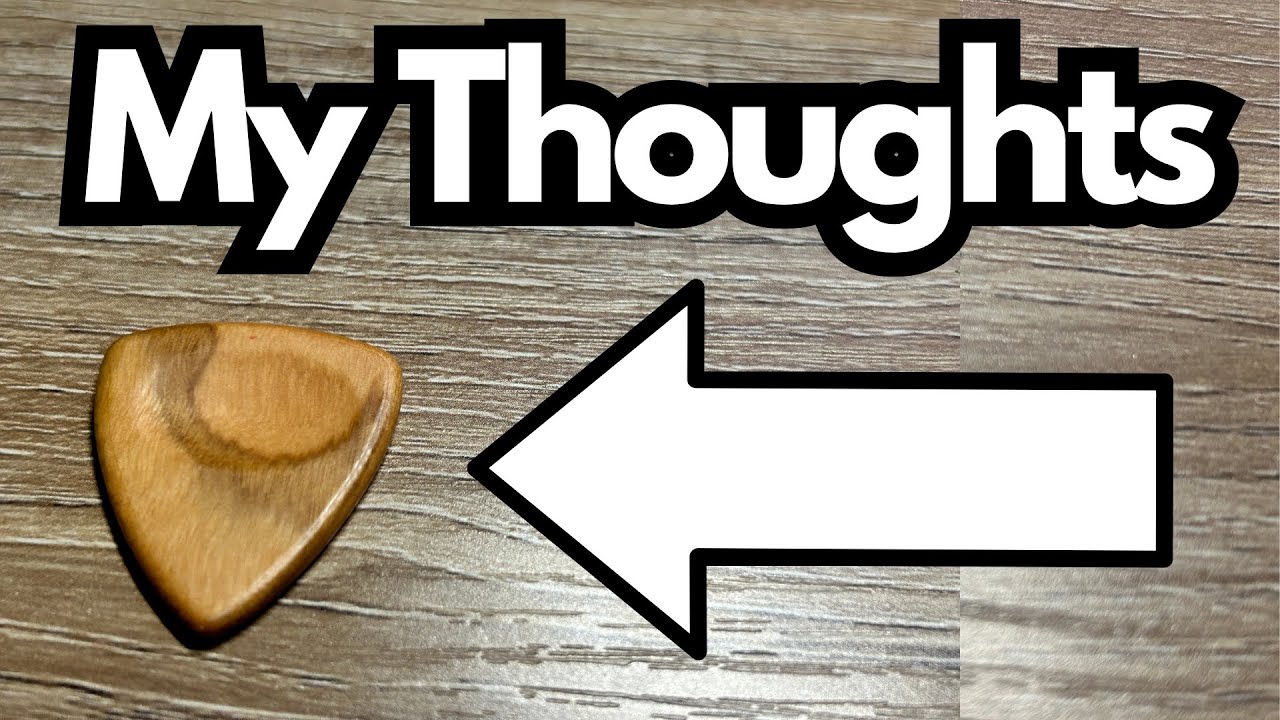
If you’ve only ever played with standard plastic picks, a wooden guitar pick can feel like stepping into a different world. It changes the tone, the feel, and even the way you approach the strings.
This post is for curious guitarists—especially acoustic players—who are wondering whether a wooden pick is worth adding to their toolkit, what it actually sounds like, and what to watch out for before buying one. You can grab one here on Amazon if you’re interested.
Overview / First Impressions
The wooden pick I’ve been using is… okay.
It’s not high-end, and it definitely doesn’t compare to the premium wooden pick my old guitar teacher used to have. He paid around $30 for his, and you could tell: better craftsmanship, better feel, and a noticeably richer tone.
The cheaper one I’ve been playing around with does give a different sound and vibe, but it never quite delivered that “beautiful wooden tone” I was hoping for. If I were to buy another wood pick, I’d invest more and go for a higher-quality one.
That said, even a modest wooden pick can:
- Change the attack and brightness of your tone
- Give your acoustic guitar a slightly more organic, earthy vibe
- Make you play a bit differently, often more delicately
It’s especially interesting if you’re used to something like a Dunlop Jazz III or a standard Delrin pick. The contrast is huge.
Build Quality & Design
Wooden picks vary a lot depending on:
- Type of wood (harder woods vs. softer woods)
- Thickness
- Beveling and edge shape
- Overall finish
The inexpensive wooden pick I used felt decent in the hand, but you can tell it’s not a premium piece:
- The edges aren’t as precisely shaped as a good plastic or boutique pick.
- The finish is fine, but not luxurious.
- It works, but it doesn’t scream “lifetime tool” the way a well-made $30 wooden pick might.
With wood, small details matter. A better bevel and smoother finish can change how it glides across the strings, and that’s a big part of both tone and feel.
Features & Functions (Compared to a Standard Pick)
From a guitarist’s perspective, here’s how a wooden pick behaves compared to something like a regular Delrin pick.
Feel in the Hand
- Wood feels warm and organic.
- Grip can be good, especially if the surface is slightly textured.
- It’s noticeably different from the slick, consistent feel of plastic.
Attack on the Strings
- The attack is often softer and rounder.
- You don’t get quite the same sharp “click” you hear with a hard plastic pick.
- It can encourage a more controlled, delicate picking style.
Tone
- On acoustic guitar, wood can add a subtle warmth and a more natural character.
- It slightly tames some of the brightness and harshness you might get with a stiffer plastic pick.
- It’s not night-and-day, but it’s definitely a different flavor.
How It Sounds / Use Cases
On acoustic guitar, a wooden pick can sound really nice—especially when you approach it with a lighter touch.
When you play delicately:
- Chords have a smoother, more blended quality.
- The top end isn’t as sharp or brittle.
- Arpeggios and fingerstyle-inspired lines can sound more intimate and mellow.
When you compare it to a regular Delrin pick:
- The Delrin has a snappier, brighter attack.
- You get more pick noise and a more defined initial transient.
- The wooden pick feels more rounded and slightly softer in tone.
Where a wooden pick shines:
- Acoustic strumming when you want a warm, singer-songwriter vibe
- Gentle arpeggios and chord-melody work
- Situations where you want less pick noise and a more organic sound
Where a standard pick still wins:
- Fast, articulate lead playing (especially electric)
- Tight, aggressive rhythm parts that need a sharp attack
- Any context where consistency and precision are more important than tonal color
Limitations / Things to Know
Before you rush out and buy a wooden pick, a few caveats:
- Quality matters a lot.
A cheap wooden pick probably won’t show you the full potential of what wood can do. My lower-end pick was interesting, but it never gave me that “wow” wooden tone I’ve heard from more expensive ones. - Durability can be an issue.
Wood can wear down faster than some plastics, especially if you play aggressively or use heavy-gauge strings. - Not ideal for every style.
If you’re into fast alternate picking, metal, or super-precise fusion lines, you’ll likely prefer a Jazz III or similar. - It’s a flavor, not a replacement.
Think of a wooden pick as another color on your tonal palette rather than a permanent substitute for your main pick.
Final Thoughts
A wooden guitar pick is a fun and genuinely useful experiment for any guitarist, especially if you play acoustic and care about nuance in your tone.
If you’re curious:
- Try one—but if you can, invest in a higher-quality pick rather than the absolute cheapest option.
- Use it on your acoustic first, and play with a lighter, more deliberate touch.
- Treat it as a way to change your feel and approach, not just your sound.
You might not switch to wood full-time, but you may find it becomes your go-to for certain songs, sessions, or moods.
Resources & Further Study
If you’re looking for something practical to work on while you experiment with different picks, check out:
Fretboard Memorization Cheat Sheet – TravelingGuitarist.com
This resource lays out major and minor triads in every key using the “octave mapping” approach and a few other techniques. It’s designed to help you:
- Memorize the notes on the fretboard
- Understand triads as the foundation of chords and harmony
- Start improvising more confidently in multiple keys
Traveling Guitarist Forum – forum.travelingguitarist.com
A place to chat with other players about guitar, music, gear, and whatever else you’re into.