

Learning guitar can feel overwhelming at first. There’s posture, picking, tuning, chords, reading diagrams, even basic music theory—all before you ever feel like you’re really “playing.”
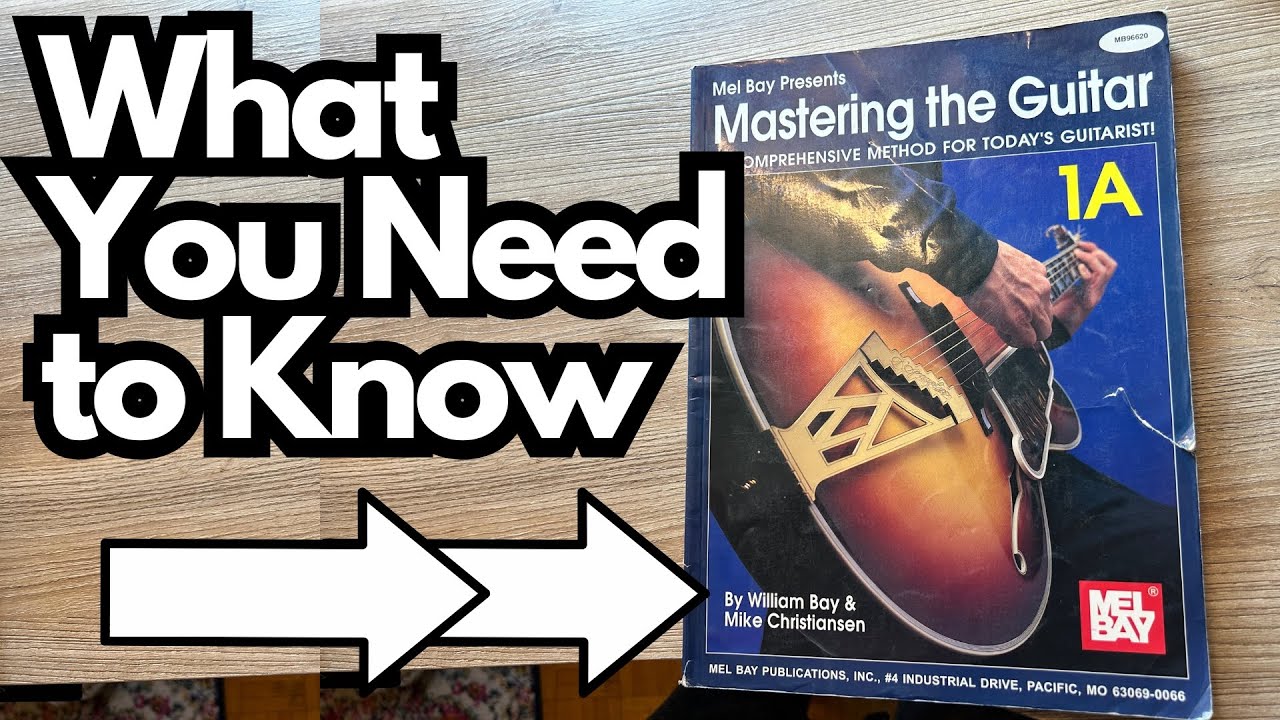
That’s why a good beginner book matters so much: it can either set you up for success or confuse you right out of the gate. You can grab it here on Amazon if you’re interested.
This post is about the very first guitar book I used as a kid—the one my teacher (a serious jazz player and sight-reader) swore by.
Years later, I still think it’s one of the best structured beginner methods out there and an excellent choice if you’re teaching yourself or starting a new student.
Overview / First Impressions
What makes this book stand out is how logically it’s laid out. It truly starts at square one and doesn’t skip steps:
- How the guitar works mechanically
- How to hold the instrument (with different options and what to watch out for)
- How to hold a pick correctly
- How to tune the guitar
- How to read chord diagrams and basic notation
From there, it moves gradually into:
- Single-note playing
- Basic keys (C major, A minor, G major, E minor)
- Note values (quarter notes, eighth notes, etc.)
- Simple music theory concepts
- Basic tablature near the end
It’s clearly written for absolute beginners, but in a way that quietly builds real musicianship instead of just teaching you a bunch of riffs.
Design and Flow Of The Book
This is a traditional method-style guitar book: printed notation, chord diagrams, and exercises laid out in a clean, readable way. A few things it does well from a design standpoint:
- Clear diagrams – Chord boxes and fretboard illustrations are easy to understand, even if you’ve never seen one before.
- Logical progression – Each page builds naturally on the last, so you’re never guessing why you’re learning something.
- Readable notation – The staff notation and rhythm examples are spaced well, which is important when you’re just learning to read.
It feels like a book written by people who actually teach beginners regularly, not just players who threw together some exercises.
Features & Functions
1. Guitar Mechanics & Setup Basics
Right away, the book explains:
- The different parts of the guitar and what they do
- How the instrument produces sound
- How to hold the guitar in different positions
- Common posture mistakes to avoid
This is unglamorous stuff, but it’s exactly what beginners need to avoid bad habits that are hard to fix later.
2. Proper Pick Technique
The book walks you through how to hold a pick correctly, and I actually agree with the method it teaches:
- Pick held between the thumb and side of the index finger
- Enough pick exposed to strike the string cleanly, but not so much that it flops around
- A relaxed but controlled grip
Getting this right early makes everything else—strumming, alternate picking, single-note lines—much easier down the road.
3. Tuning and Basic Reading
Before you play anything, you learn:
- How to tune the guitar
- How to read chord diagrams
- What the slashes and symbols in the diagrams mean
This is the “language” of guitar, and the book explains it in simple, practical terms.
4. Single Notes, Keys & Terminology
Instead of throwing you straight into full chords, the book starts with single-note playing. This is a smart move because it:
- Builds finger independence
- Helps you learn the fretboard
- Sets you up to understand melody, not just shapes
You’ll also get introduced to:
- The key of C major
- A minor, its relative minor
- Later on, G major and E minor
Along the way, the book explains basic terminology so you’re not just memorizing shapes—you’re actually understanding what you’re doing.
5. Rhythm & Notation Basics
A big strength of this book is how it introduces real music reading:
- Quarter notes
- Eighth notes
- Stems and flags
- Basic rhythmic patterns
You’re not getting a full conservatory-level theory course, but you are learning enough notation and rhythm to:
- Read simple melodies
- Understand timing
- Communicate with other musicians
6. Intro to Tablature
Near the end, the book even touches on tab (tablature). This is helpful if you’re coming from the internet/guitar tab world, because you’ll understand how tab and standard notation relate rather than treating them as two separate universes.
Who It’s For / Use Cases
This is not a “play your favorite radio hits on day one” type of book. The songs and exercises are:
- Musically simple
- Sometimes a bit bland
- Chosen more for educational value than excitement
That said, from a guitarist’s perspective, this approach works:
- You build clean technique from the ground up
- You learn to read music, not just patterns
- You get comfortable in a few foundational keys (C, A minor, G, E minor)
- You develop timing and note recognition alongside your physical skills
If you’re:
- Teaching a young student
- A serious beginner who wants to truly understand the instrument
- Or a self-taught player who never learned to read and wants to fill in the gaps
…this book fits the bill really well.
Limitations / Things to Know
No method is perfect. A few honest caveats:
- Some songs are boring. The material is effective, but not always exciting. Expect a few tunes that feel more like drills than music.
- It’s traditional in style. If you only care about learning riffs and songs by ear, this might feel too formal.
- It’s notation-focused. While it does cover tab at the end, the core of the book is about reading standard notation and understanding basic theory.
From a guitarist’s point of view, though, these “limitations” are also what make it such a strong teaching tool. It’s more about building musicianship than instant gratification.
Final Thoughts
I completely understand why my first guitar teacher—a highly trained jazz player and flawless sight-reader—chose this book series for his students.
It:
- Starts at the true beginner level without assuming prior knowledge
- Builds technique, reading, and theory together
- Covers essential keys (C, A minor, G, E minor) in a sensible order
- Ends with enough foundation that you can move into almost any style afterward
If you’re looking for a first serious guitar method—either for yourself or for a student—this is a fantastic place to start. The songs may not always be thrilling, but the skills you build will serve you for the rest of your playing life.
Resources & Further Study
If you’re working through a method like this and want something to reinforce your fretboard knowledge and harmony, there are a couple of useful resources mentioned:
Fretboard Memorization Cheat Sheet – TravelingGuitarist.com
This cheat sheet lays out major and minor triads in every key, using octave mapping and other visual approaches. It’s great for:
- Memorizing the notes on the fretboard
- Understanding triads as the foundation of chords and harmony
- Starting to improvise in different keys using solid harmonic building blocks
Traveling Guitarist Forum – forum.travelingguitarist.com
An online forum where you can:
- Talk guitar and music with other players
- Ask questions as you work through books and exercises
- Share progress, tips, and practice ideas
Paired with a solid beginner book, tools like these can help bridge the gap between “I can follow the page” and “I really understand the fretboard and how music works on the guitar.”