

The good news: you don’t need a university degree or a stack of dense textbooks to get there. With just a couple of well-chosen books, you can cover almost everything you actually need to know to understand harmony, build chords, and make sense of what you’re playing.
In this post, we’ll look at two complementary theory books, how they differ, and why using them together can give you a rock-solid foundation—especially if you’re a guitarist. You can grab the first on Amazon here.
We’ll also touch on a practical fretboard resource that helps you turn theory into something you can actually use on the neck.
Overview / First Impressions
There are two main books in play here:
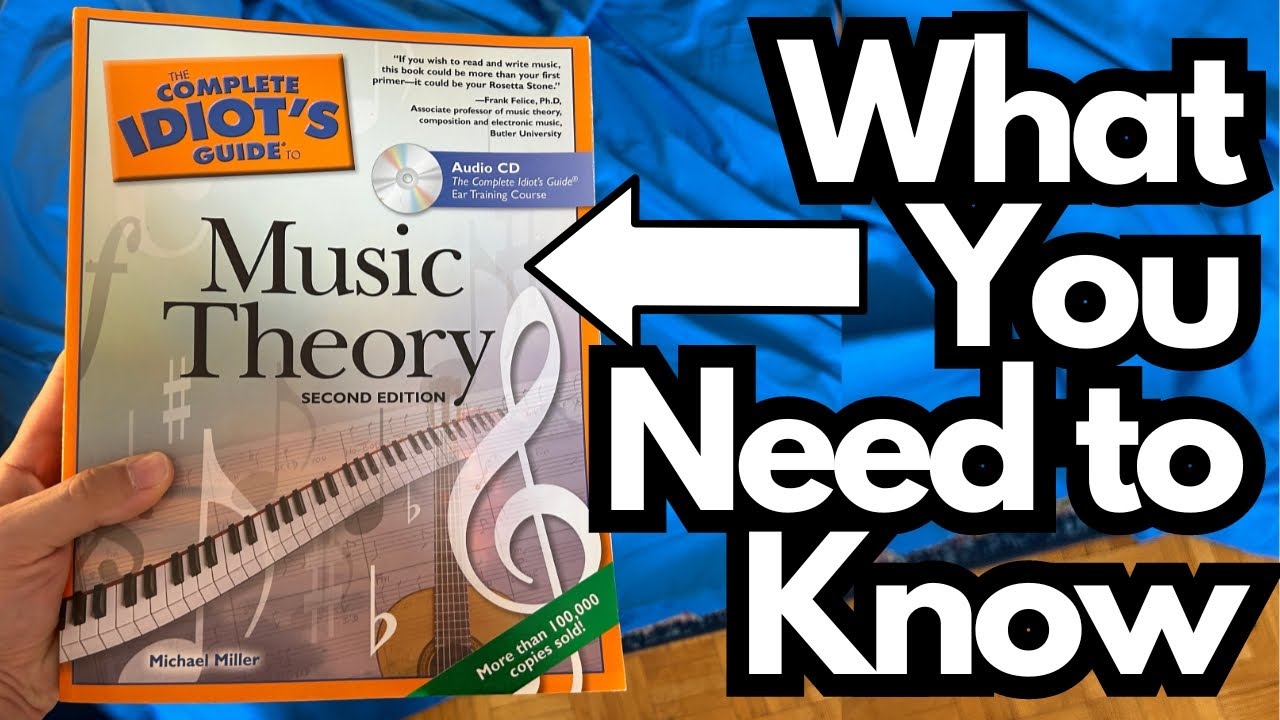
- A general music theory book
- A surprisingly good introduction to music theory.
- Goes into real depth on a wide range of concepts.
- Strong on explanations and conceptual clarity.
- Complete Elementary Rudiments by Mark Sarnecki
- A more structured, “rudiments-style” theory book.
- Excellent for drills, exercises, and testing your understanding.
- Widely regarded as one of the better entry-level theory texts.
Individually, each book is solid. Together, they cover both sides of the learning process:
- Book 1 (general theory): Explains concepts clearly and in detail.
- Sarnecki’s book: Forces you to apply those concepts through exercises.
If you’re serious about understanding theory in a practical way—especially as a guitarist—this combo is more than enough to carry you quite far.
Build Quality & Design
General Theory Book
- Layout: Explanatory text with examples; more like a guided tour through theory.
- Extras: Comes with a CD (audio examples and possibly ear training or demonstrations).
- Usability: Great for reading through chapters and really absorbing the “why” behind the concepts.
Features & Functions
1. The General Music Theory Book
This book shines in its explanations. It doesn’t just tell you, “Here’s a scale.” It walks you through core concepts and then connects the dots.
Core music theory concepts:
- Notes, intervals, and scales
- Key signatures and the circle of fifths
- Chords and harmony
- Rhythm and meter
Deeper conceptual understanding:
- Why certain chords work together
- How harmony is built from triads
- How different keys relate
It’s the kind of book you can sit down with and read, almost like a course. For guitarists who’ve always played by ear but never understood what’s happening under the hood, this is where the lightbulb moments happen.
The included CD offers audio examples, but you don’t need it to benefit from the book. You can get plenty of value just by reading and working through the material.
Use Cases for Guitarists
These are theory books, so they don’t “sound” like a pedal or an amp—but they absolutely affect how you sound as a guitarist.
Here’s how they translate to real-world use on the fretboard:
Understanding Triads (the Foundation of Chords)
Both books emphasize harmony and triads. Once you grasp major and minor triads, you can:
- Build chords in any key.
- See chord tones across the neck.
- Understand why certain progressions sound good.
Improvisation in Multiple Keys
With solid theory, you’re not just running memorized scale shapes:
- You know which notes are chord tones.
- You can target strong notes over each chord change.
- You can move your ideas to different keys confidently.
Composing and Arranging
Theory gives you:
- The tools to write your own chord progressions.
- The ability to reharmonize songs.
- A way to communicate with other musicians, regardless of instrument.
Used together, these books give you enough theory to:
- Decode most songs you play.
- Build your own chord voicings.
- Navigate the entire fretboard with intention, not guesswork.
Limitations / Things to Know
A few honest notes before you dive in:
- Not guitar-specific: These books are about music, not just guitar. You’ll need to do the extra step of mapping concepts to the fretboard yourself.
- CD is optional: The general theory book comes with a CD, but you can get a ton of value without ever using it. Reading and doing the written work is already powerful.
- You still need fretboard work: Knowing theory on paper is different from seeing it on the neck. To really benefit as a guitarist, you’ll want a system for:
- Memorizing fretboard notes.
- Practicing triads and chord tones in all keys.
That’s where a dedicated fretboard resource becomes extremely helpful.
Final Thoughts
If you’re looking to build a real understanding of music theory—enough to actually change how you play guitar—pairing:
- A deep, explanatory theory book, and
- Complete Elementary Rudiments by Mark Sarnecki
is a smart move.
The first gives you the “why.” Sarnecki gives you the “do.” Together, they cover more than enough theory for most players, from intermediate hobbyists to serious students.
From there, the missing piece is simply connecting all that knowledge to the fretboard in a practical way.
Resources & Further Study
If you want to turn this theory into something you can see and use on the guitar neck, here are a couple of helpful resources mentioned:
Fretboard Memorization Cheat Sheet – TravelingGuitarist.com
A practical tool that lays out:
- Major and minor triads in every key.
- Multiple mapping approaches (including octave-based mapping).
This helps you:
- Memorize the fretboard notes.
- Visualize triads all over the neck.
- Start improvising confidently in different keys by focusing on chord tones.
Traveling Guitarist Forum – forum.travelingguitarist.com
A place to:
- Talk guitar and music with other players.
- Ask questions about theory, fretboard mapping, and practice.
- Share ideas and get feedback as you work through these concepts.
Use the books to build your theory foundation, then use tools like the fretboard cheat sheet and community discussion to make that theory come alive under your fingers.